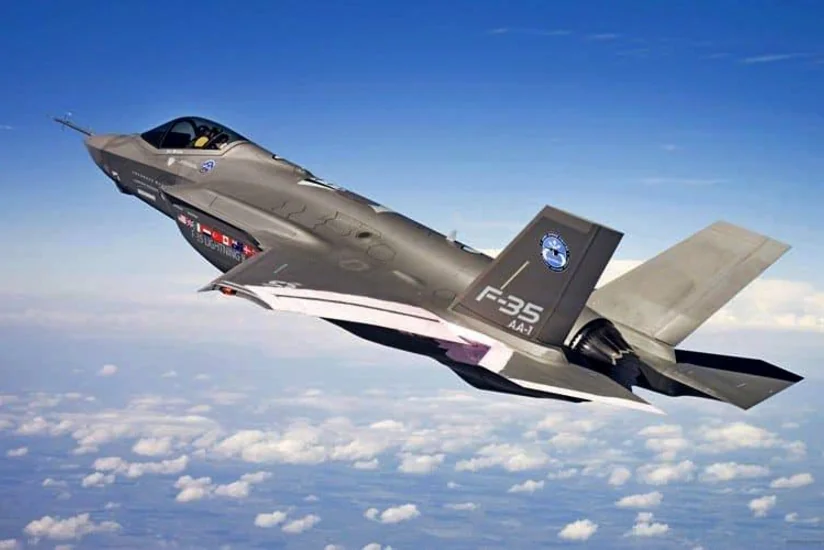
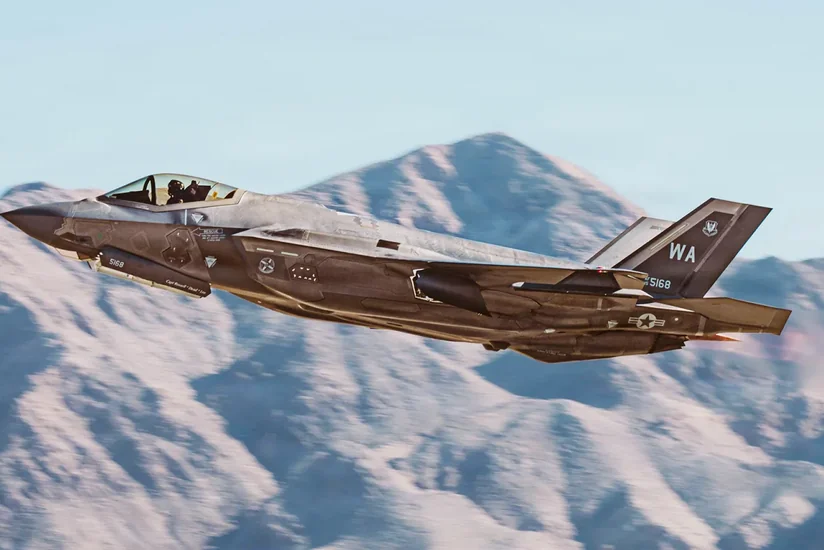
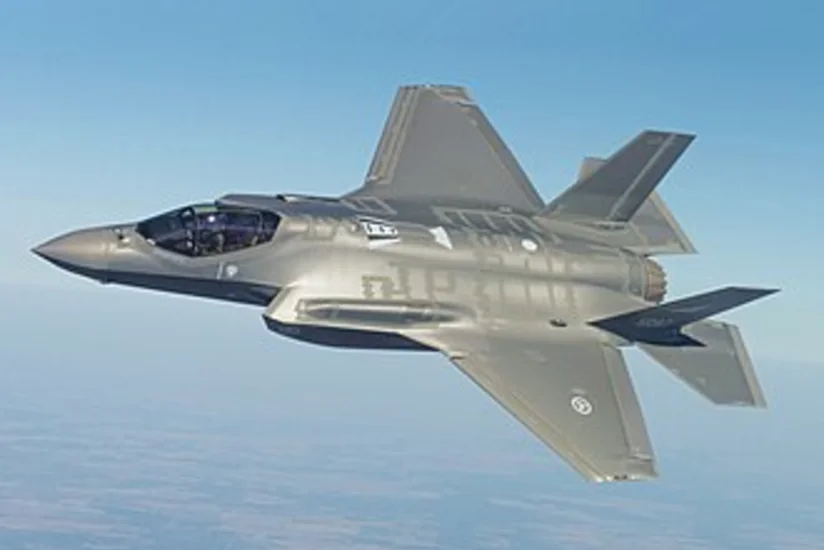
The F-35 Lightning II is a family of fifth-generation, stealth multirole fighter-bombers developed by the American company Lockheed Martin. Today, it stands as one of the most technologically complex, expensive, and mass-produced military aviation projects in history.
This aircraft is designed not merely as a fighter for aerial combat, but as a universal "flying information platform" capable of managing the battlefield, delivering high-precision strikes, and conducting electronic warfare.
The "fifth generation" in aviation is defined not only by speed or maneuverability but primarily by stealth technologies and data integration.
Stealth Technology (Low Observability): The shape of the fuselage, internal weapons bays, and radar-absorbent materials make the F-35 an extremely difficult target for enemy radars.
Sensor Fusion: Onboard computers collect data from radars, infrared cameras, and radar warning receivers, merging them into a single, cohesive tactical picture. The pilot sees processed, ready-to-use information about targets and threats directly on the helmet display, rather than scattered data from various instruments.
Virtual Reality Helmet: A specialized helmet (Gen 3 HMDS) literally allows the pilot to "see through" the aircraft's skin, thanks to the Distributed Aperture System (DAS)—a network of infrared cameras arranged around the perimeter of the fuselage.
The Joint Strike Fighter (JSF) program initially aimed to create a unified base for different military branches to reduce production costs. As a result, three versions adapted for specific operational needs were developed:
Modification Purpose and Operator Design Features F-35A (CTOL) Base version for the Air Force (Conventional Takeoff and Landing). Standard takeoff and landing. It is the lightest, most maneuverable, and cheapest version to produce. Equipped with an internal four-barrel 25mm cannon. F-35B (STOVL) Version for the US Marine Corps (Short Takeoff and Vertical Landing). Capable of taking off from a short runway (or ski-jump) and landing vertically. Equipped with a lift fan behind the cockpit. Consequently, it has a shorter combat radius and carries less internal fuel. F-35C (CV) Version for the US Navy (Carrier Variant). Adapted for catapult-assisted takeoff and arrested recovery on aircraft carriers. Features a larger wing area (for better low-speed handling) and reinforced landing gear.Despite a lengthy development process, early technical challenges, and the colossal cost of the program (estimated at over $1.7 trillion including its lifecycle up to 2070), the F-35 has de facto become the standard for the air forces of NATO and its allies.
Global Integration: The fighter is being procured by dozens of countries (including the UK, Israel, Japan, South Korea, Germany, Finland, and others). This creates a unified logistics network and allows allied air forces to instantly share tactical information in the air.
Economic Driver: Enterprises worldwide are involved in manufacturing the aircraft's components, tethering partner countries to the US military-industrial complex for decades to come.
Essentially, the F-35 is a "flying server" that fundamentally alters the doctrine of modern air warfare, betting heavily on information superiority rather than close-range dogfights.

 Baku 19° C