Baku 20° C
South Korean court orders formal arrest of President Yoon over martial law decree
- 19 January, 2025
- 07:51
Stay up to date with the top news!
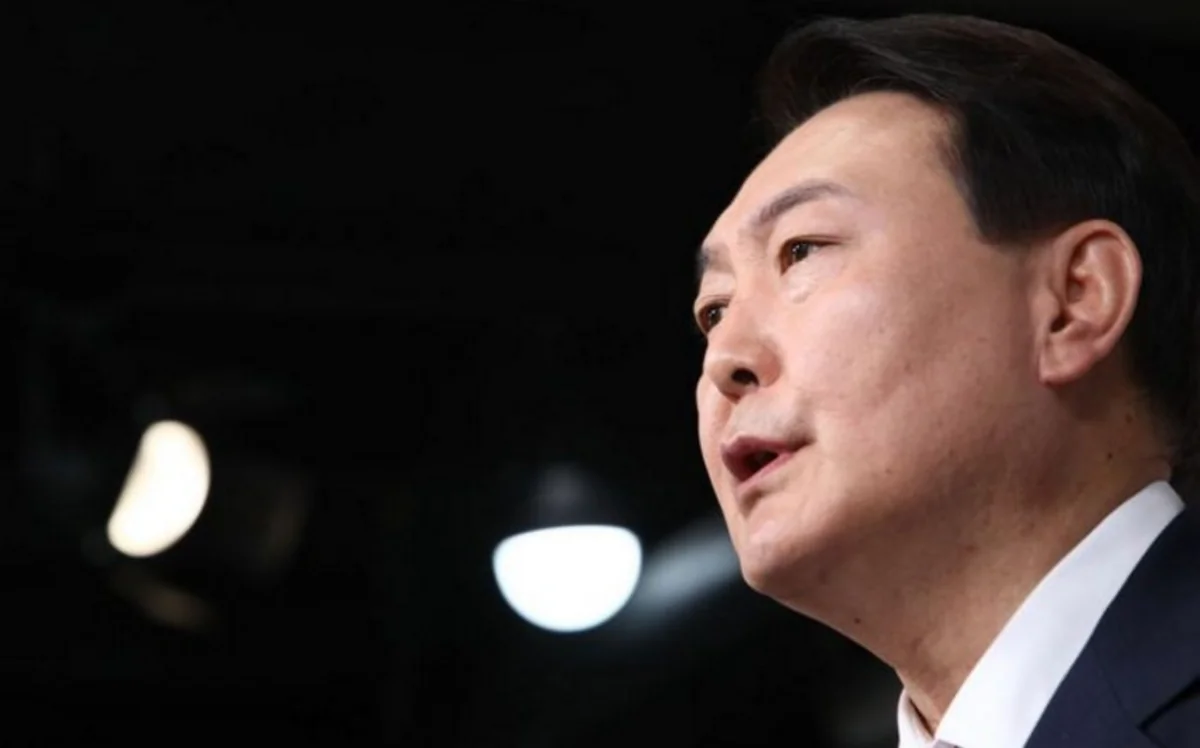
South Korea's impeached president, Yoon Suk Yeol, was formally arrested early Sunday, days after being apprehended at his presidential compound in Seoul. He faces possible imprisonment over his ill-fated declaration of martial law last month, Report informs via NPR.
Yoon's arrest could mark the beginning of an extended period in custody for him, lasting months or more.
The decision to arrest Yoon triggered unrest at the Seoul Western District Court, where dozens of his supporters destroyed the court's main door and windows. They used plastic chairs and police shields that they managed to wrestle away from officers. Some got inside a hallway and were seen throwing objects and using fire extinguishers.
Hundreds of police officers were deployed to suppress the riot at the court. Dozens of people were arrested on-site, while some injured police officers were seen being treated at ambulance vans. It wasn't immediately clear whether any court staff were injured.
Following an hourlong deliberation, the court granted law enforcement's request for an arrest warrant on Yoon, seeing him as a threat to destroy evidence. Yoon and his lawyers on Saturday appeared before the court's judge during a hearing and argued for his release.
Yoon, who has been in detention since he was apprehended Wednesday in a massive law enforcement operation at his residential compound, faces potential rebellion charges linked to his declaration of martial law on Dec. 3, which set off the country's most serious political crisis since its democratization in the late 1980s.
The Corruption Investigation Office for High-Ranking Officials, which is leading a joint investigation with police and the military, can now extend Yoon's detention to 20 days, during which they will transfer the case to public prosecutors for indictment.
Yoon's lawyers could also file a petition to challenge the court's arrest warrant.
Yoon's appearance in court triggered chaotic scenes in nearby streets, where thousands of his fervent supporters rallied for hours calling for his release. Even before the court issued a warrant for Yoon's arrest, protesters repeatedly clashed with police who detained dozens of them, including about 20 who climbed over a fence in an attempt to approach the court. At least two vehicles carrying anti-corruption investigators were damaged as they left the court after arguing for Yoon's arrest.
Author