 Baku 25° C
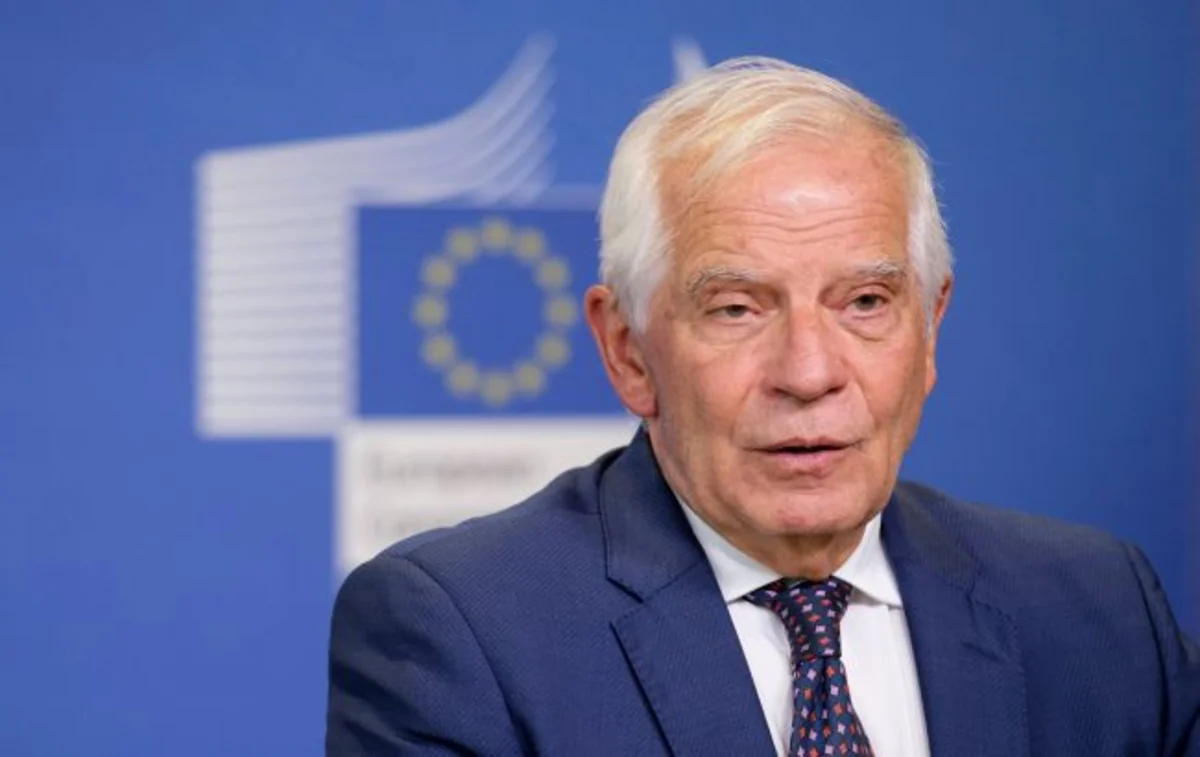
Borrell explains how Western sanctions affect Russia
- 27 August, 2023
- 10:45
Stay up to date with the top news!
Within a year, European sanctions have already limited Moscow’s options considerably causing financial strain, cutting the country from key markets and significantly degrading Russia’s industrial and technological capacity, Report informs referring to the press service of the EU, citing head of EU diplomacy Josep Borrell.
"To stop the war, we need to stay the course," he wrote.
"Since the start of the invasion of Ukraine, the EU has imposed 11 rounds of ever-tighter sanctions against Russia.
Our restrictive measures, to use the technically correct term, are unprecedented in their scope, focusing on key sectors of the Russian economy that are crucial to Moscow’s war effort. In addition, the EU has also imposed travel bans and asset freezes on more than 1,500 individuals and almost 250 entities."
"The Russian economy contracted in 2022 by 2.1%. Manufacturing in particular - growing steadily before the invasion - was down 6% at the end of 2022, with high and medium-high technology manufacturing recording a 13% annual loss. The production of motor vehicles was down 48% year-on-year, other transport equipment by 13% and computer, electronic and optical production by 8% while retail trade was 10% lower and wholesale trade 17%," he wrote.
"Compared to 2021, 58% of total EU imports from Russia were already cut off in 2022 - an unprecedented decoupling. Non-energy imports from Russia have fallen close to 60%, with the most visible drops for iron and steel, precious metals and wood. This movement is accelerating: the decline in imports of non-energy goods is above 75% for the first quarter of 2023, and the fall is even greater for energy goods, at minus 80%. The IEA also estimates that total Russian oil revenues are down 27% from a year before."
Author