Baku 20° C
Škoda Group: We are ready to become Azerbaijan's strategic partner in public transport development — INTERVIEW
- 19 October, 2026
- 14:42
Stay up to date with the top news!
Developing transport infrastructure and improving the quality of passenger services require not only fleet renewal but also the introduction of technologies that make public transport more accessible, comfortable and energy-efficient. For Azerbaijan, which is modernising its railway network and strengthening its position on international transport routes, cooperation with leading European transport equipment manufacturers is becoming particularly important.
The Czech company Škoda Group, with decades of experience in railway engineering and urban transport solutions, sees Azerbaijan as a promising market for expanding cooperation. The company sees opportunities to contribute to projects aimed at modernising the country's transport systems, ranging from urban and suburban services to railway transportation.
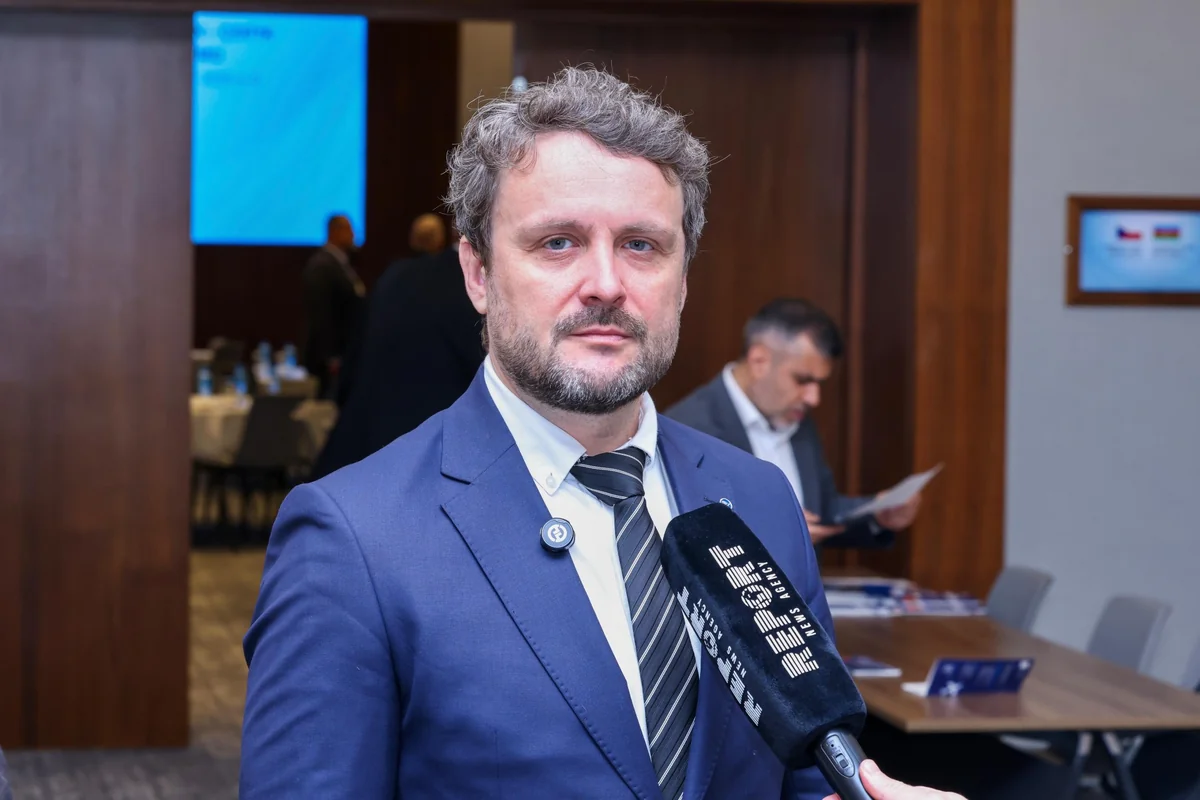
Roman Sorkin, Škoda Group's Vice President of Sales for Central Asia and the South Caucasus, spoke to Report about the company's technological advantages, potential areas of cooperation with Azerbaijan and prospects for developing passenger transport.
We present the interview to our readers.
- Is Škoda Group considering participating in projects to restore tram services in Baku or develop modern light rail transit (LRT) lines in other major Azerbaijani cities, such as Ganja or Sumgayit?
- We are developing our relations with Azerbaijan with the aim of becoming the country's strategic partner in sustainable urban mobility. This covers all forms of mass public transport, including tram systems and light rail transit.
We are ready to partner in modernisation projects needed in Baku and other cities across the country, including Azerbaijan's liberated territories. Škoda Group has the technologies required to address a wide range of these needs.
- Is Škoda Group ready to offer specialised rolling stock and technological solutions for the Baku Metro, taking into account the specific features of its infrastructure?
- We regard the Baku Metro as a strategic project. At Škoda Group, we consider ourselves one of Europe's most experienced manufacturers of metro trains designed for systems built using Soviet-era infrastructure solutions, which have been preserved in cities such as Prague and Baku.
We have been supplying trains for these and similar metro systems for more than two decades and have accumulated substantial experience working with such infrastructure.
Our key advantage is the combination of advanced European technologies with the ability to integrate them into the existing Baku Metro infrastructure. This makes Škoda Group a distinctive and competitive potential supplier for the project.
- What solutions can Škoda Group offer in the regional and suburban electric train segment, including single- and double-decker trains, for routes such as Baku–Sumgayit, Baku–Ganja and other destinations?
- One of our competitive advantages is our longstanding experience in manufacturing railway equipment for markets using the 1,520 mm gauge. Historically, Škoda played an important role in providing passenger rail services on the Soviet Union's main railway lines. Over more than six decades, the company supplied more that 70,000 units of equipment. This experience gives us an in-depth understanding of the specific requirements of railway infrastructure, including that used in Azerbaijan.
Over the past decade, we have developed a modern regional train that is already in service in the Baltic states of Latvia and Estonia. We have supplied or are supplying these markets with approximately 60 trains in total. In addition, we recently signed a contract with Uzbekistan to supply another 10 trainsets.
An important feature of this train is its full compatibility with the 1,520 mm broad-gauge railway network used in Azerbaijan and several other countries. At the same time, it meets modern European standards for passenger comfort, quality and transport efficiency.
The train features a spacious interior, a low-floor entrance and high energy efficiency. This is more than just rolling stock renewal: the solution makes rail travel more accessible to a wider range of passengers, including people with reduced mobility, without requiring major station reconstruction or additional construction work.
The experience of the Baltic states shows that improving train comfort and accessibility can naturally boost passenger numbers. We expect to see a similar effect in Uzbekistan and, in the longer term, in Azerbaijan as well.
- Is the company interested in supplying locomotives and traction equipment to support freight and passenger transport along international transport corridors passing through Azerbaijan?
- Škoda Group has been actively involved in the European Union's Global Gateway initiative from the outset and is monitoring the development of the Trans-Caspian International Transport Route.
We have extensive experience in manufacturing electric locomotives and other electrically powered rolling stock. We are therefore ready to participate in projects related to the development of these transport routes and invite Azerbaijan to consider us a reliable technology partner.
Author