
 Baku 22° C
Potential of vehicle production until 2033 and transformation into major transport hub in Eurasia evaluated in Azerbaijan
- 09 May, 2024
- 11:00
Stay up to date with the top news!
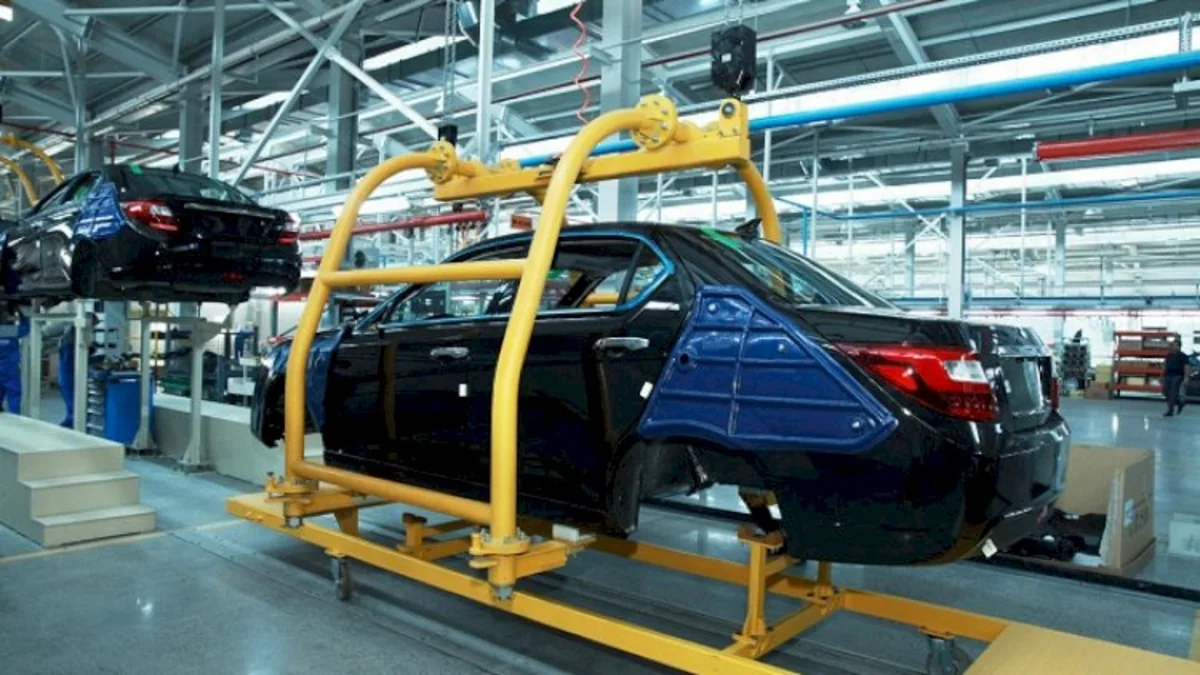
Due to the expected expansion of production capacity in Azerbaijan in 2024-2033, vehicle production will increase by 43.4% and reach an annual volume of just under 100,000 units by 2033, reads a survey by Fitch Solutions (a structural division of the Fitch Ratings), Report informs.
“While Azerbaijan’s total vehicle production remained below 5,000 units in 2023, we expect growth to accelerate significantly from 2024 to 2028 as more manufacturing plants come online in the country. In January 2024, the Economic Zones Development Agency, and the companies Uzavtosanoat and Azermash signed an agreement to establish a plant with an annual capacity of 30,000 units in Azerbaijan by 2026 [investments will amount to 88 million manats, $51.764 million]. We expect this investment, along with planned investments by Lada and a partnership with Iran’s Khodro Company (IKCO), to support an output growth of 43.4% over 2024-2033 to reach an annual production volume of just under 100,000 units by 2033,” reads the report.
The Chinese company BYD Co Ltd, together with the Azerbaijan Investment Company, will launch the production of electric buses in Azerbaijan in 2025 with an annual volume of 500 units. The initial investment volume will be $34 million, followed by an additional investment of approximately $60 million.
“We believe that the automotive manufacturing industries in Central Asian countries will continue to benefit from the ongoing war in Ukraine and the Red Sea Crisis. This is due to Kazakhstan, Azerbaijan, and Uzbekistan’s access to the Russian market and the arrival of skilled Russians seeking to avoid the war in Ukraine. This has positioned the countries in the region, especially those with significant ties and dependence on Russia, as crucial investment locations for automakers seeking to access the large Russian market while minimizing the sanction risk. Automakers from Mainland China have emerged as among the most active investors in the region since 2022, with BYD, Chery, and Lifan among the recent investors. We also note that Russian original equipment manufacturers (OEMs) are increasingly looking to access the labor that left Russia since 2022, by establishing vehicle manufacturing plants in Central Asian states,” reads the report.
“We expect more foreign OEMs from Europe, China, and South Korea to invest in manufacturing operations in this region, given the strategic location of countries such as Kazakhstan, Azerbaijan, and Uzbekistan. The markets mentioned sit on a key transport corridor connecting China to Europe, which also offers Western OEMs potential access to the Iranian market over the medium term, making the region a perfect hedge for trade risk.”
“Furthermore, Azerbaijan occupies a key position on the International North-South Transport Corridor, which connects Russia to Iran by rail and then to India by sea. Moscow and Tehran are taking steps to develop this corridor, which also intersects with the Middle Corridor in Azerbaijan. This will likely strengthen Azerbaijan’s position as a major transportation hub in Eurasia.
The importance of developing the Middle Corridor has become even more vital in recent months with rising geopolitical risks in the Middle East that have impacted the sea route via the Suez Canal that connects Asia to Europe. In late-January 2024, the EU committed up to 10 billion euros in investment into the Middle Corridor route, which remains underdeveloped and suffers from capacity constraints, to help find a viable alternative to the Northern Corridor. With Kazakhstan being a key stakeholder in the development of this route, we highlight that the Middle Corridor will need to continue on its reform path to becoming a more attractive route to Western investors,” Fitch Solutions noted.
“The Russian automotive sector has also seen a drastic change since the start of the war in 2022 with non-Russian OEMs withdrawing from the Russian market and sanctions restricting the availability of Western parts and components. This means that Russia will increasingly rely on importing vehicles to fill domestic demand. Indeed, we expect Russia's net vehicle trade will go from net imports of 42,000 units in 2021 to an expected net import average of around 430,000 units over 2023-2025, highlighting the potential for vehicle production in Central Asia.”
“Vehicle production in Uzbekistan and Azerbaijan is likely to see the greatest benefits from the growing interest in the Central Asia region, thanks to their strong relationships with Russia, Iran, and Mainland China.
Although Kazakhstan has been reducing its ties with Russia since the war in Ukraine began, its key position in the Middle Corridor trade route and its favourable relations with European countries are expected to draw investments from both European and Asian investors,” reads the report.
Author