
 Baku 23° C
ING Group: Falling oil prices may cost Azerbaijan 2% of GDP over 2 years
- 08 May, 2025
- 19:30
Stay up to date with the top news!
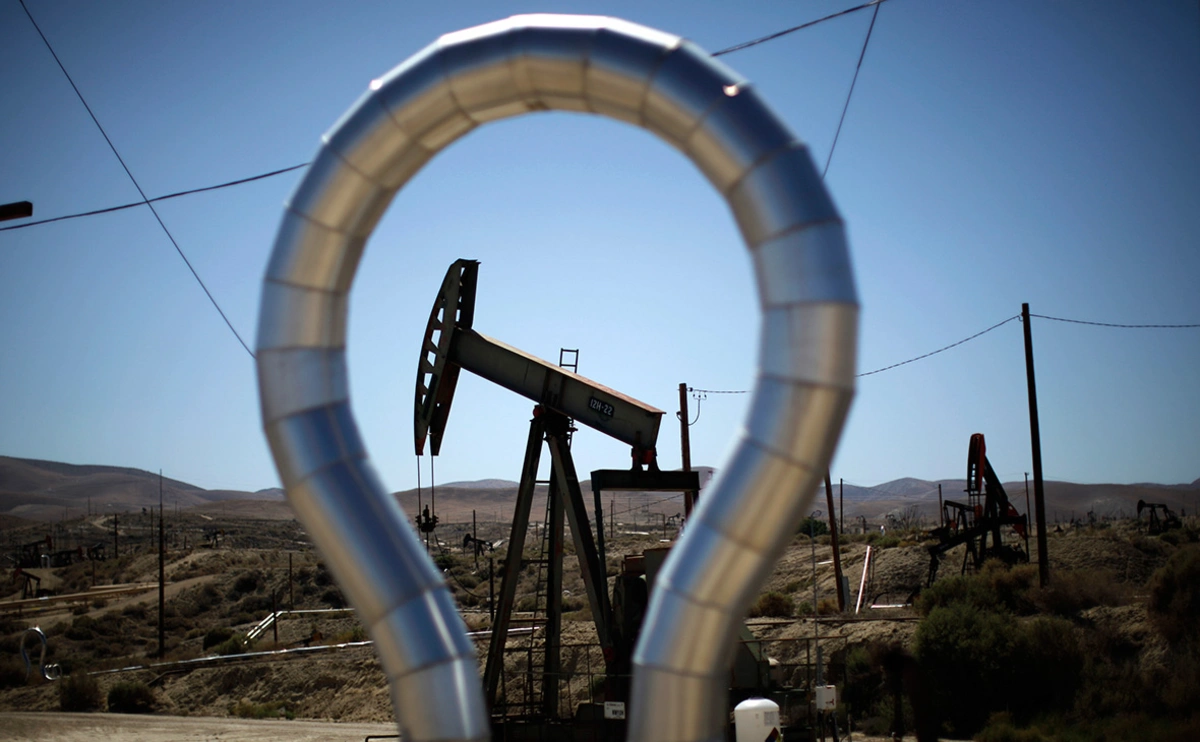
Each dollar of average annual oil price means about $300 million of annual export proceeds and $150 million of budget revenues for Azerbaijan, according to the updated forecasts of the largest banking group in the Netherlands, ING Group, Report informs.
The bank revised its forecasts for the CIS-4 countries (Azerbaijan, Armenia, Kazakhstan, Uzbekistan) taking into account global economic challenges and falling oil prices.
According to the update, Azerbaijan's losses from a reduction in the average oil price by $5 in 2025 and by $11 in 2026 could amount to 2% of GDP over two years. For Kazakhstan, a similar price reduction could lead to an increase in the budget and current account deficit by 0.3-0.6 percentage points of GDP. Every dollar of oil price brings the country $550 million in export revenues and $150 million in fiscal revenues.
ING analysts emphasize that Azerbaijan and Kazakhstan are particularly vulnerable to oil price fluctuations: the share of oil in exports is 88% for Azerbaijan and 55% for Kazakhstan, in the structure of budget revenues - 52% and 22%, respectively.
"For Armenia, the implications are mixed. On the one hand, higher gold prices and lower oil prices should improve the expected current account trajectory by around 1ppt GDP in 2025-26 each, and that could already be the reason behind continued dram appreciation from the already expensive levels. In addition, lower trade exposure to the EU and China (10-20%) compared to oil-producing Azerbaijan and Kazakhstan (50-60%) should better insulate Armenia from the potential slowdown in trade partner activity. On the other hand, the small size of the economy and financial market, combined with country- and region-specific risks, could prevent Armenia from fully benefiting from the capital account and activity side," reads the update.
"Uzbekistan is benefiting from higher gold prices. The flat YTD performance of the soum is actually an improvement compared to steady 3-4% p.a. nominal depreciation vs. the US dollar seen in the previous years. Stronger gold exports could be a factor here. The recent customs data shows it boosted monthly gold sales to around 17 metric tons per month between February and March 2025, volumes last seen 11 months ago. Most likely, this reflects the tactic of capitalising on the stronger gold price environment. To note, Uzbekistan earns $3-4m per $1/oz of gold price annually, depending on the physical volumes of gold exports. Assuming the average gold price stays just above US$3,000 per ounce in 2025, that would mean an increase of annual gold export proceeds from $7.5bn in 2024 to $9.5-10.0bn in 2025."
"Our initial take on the implications of global trade tensions for the CIS region was that, despite the limited direct exposure to the US, the consequences would manifest themselves through indirect channels. These include higher inflationary concerns, expectations of stronger gold and weaker oil prices, and the mitigation of global dollar weakness due to portfolio outflows from high-risk assets," ING Group added.
ING notes that all four countries are facing increased inflation risks. The central banks of Azerbaijan, Kazakhstan, Uzbekistan and Armenia have kept key rates unchanged, despite expectations of a reduction, in order to contain price growth. According to ING, the potential for policy easing in 2025 is extremely limited.
"In all four meetings over the past month, the respective policy rates were kept unchanged, in some cases contrary to signals and market expectations of a cut. The CPI trajectories are generally pointing up, further reinforcing our expectations that the room for key rate cuts for the foreseeable future is extremely low."
According to updated estimates by ING Group, the inflation forecast for the CIS-4 countries has been increased by 0.5-1 p.p. According to ING, the currencies of the CIS-4 countries have not yet received tangible benefits from the weakening of the US dollar (down 8% against major world currencies since the beginning of the year): "The CIS-4 currencies have so far failed to materially benefit from the weakness of the global US dollar. Setting the Azerbaijani manat aside for now, as it is pegged to the US dollar, the year-to-date moves of the currency pairs in the area vary from flat for the Uzbekistani soum to a 1.4-1.5% appreciation of the Armenian dram and Kazakhstani tenge – all against the backdrop of 8% depreciation of the US dollar to the major currencies over the same period. While there are country-specific contributors to this muted reaction to be discussed further, the general take is that in the time of global uncertainty, the capital flowing out of one safe asset is looking for another safe haven. Therefore, the CIS-4 is not a likely receiver of portfolio flows in the current environment."
At the same time, the bank improved its forecast for Uzbekistan’s current account by 1% of GDP for 2025 and 2026, softening expectations for annual devaluation to 3%.
ING Group forecasts Azerbaijan's economic growth at 2.5% in 2025 (previously forecast 3%) and 2.5% in 2026 (unchanged). In addition, the average annual inflation in the country in 2025 will be 5.1% (previously forecast 5.2%), and in 2026 - 5.1% (unchanged).
Author