
 Baku 21° C
COP29 president calls glacier melting one of worst consequences of climate change
- 19 May, 2025
- 13:05
Stay up to date with the top news!
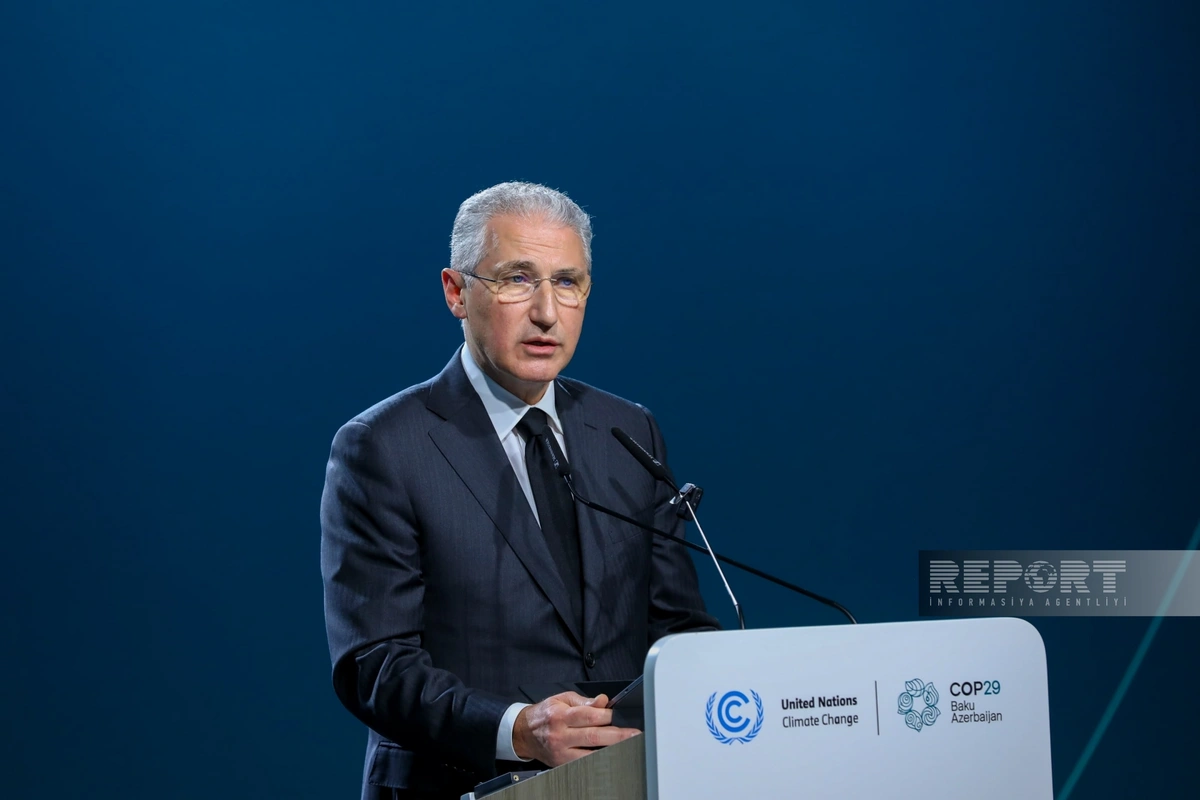
COP29 President, Azerbaijani Presidential Envoy on Climate Issues Mukhtar Babayev has called on developed countries to significantly increase the amount of funding allocated for adaptation and mitigation of the climate crisis in developing countries, Report informs.
In an interview with the Nepalese newspaper The Katmandu Post on the sidelines of the Sagarmatha Sambaad climate summit, he stressed that the current level of funding is insufficient to effectively combat global warming.
"Previously, in 2009, 15 years ago, $100 billion was pledged. In 2022, the figure reached above $100 billion for the first time. And in 2024, donor countries at first proposed only $250 billion. In this case, we started working with our partner countries to push the donor countries in the global north to increase their contributions. Finally, after long discussions, we agreed on at least $300 billion. That is not a fixed figure; it can be more than $300 billion.
But you are absolutely right. There were expectations from different countries, especially the developing world, that the financing would be in trillions. With the requests and demands from developing countries, it was also decided that the COP29 and COP30 teams would prepare a special Baku-to-Belem programme—to increase the contributions from $300 billion to $1.3 trillion. We need other stakeholders, such as multilateral development banks, international financial institutions, and the private sector to bridge the gap between $300 billion and $1.3 trillion.
We have started working on this programme with the Brazilian team [who are hosting COP30] and talked to all parties on their recommendations, comments, and possible advice on developing this programme properly. However, it is still in development," he said.
"Discussing climate issues here in Nepal is crucial. We had several panels, and we participated in discussions and gave speeches. As a keynote speaker, I had a chance to make an intervention. We met with the parties, climate specialists and scientists. All the participants—country leaders and ministers—expressed their worries and concerns over the glaciers in the Himalayas. That’s why it is timely for the government of Nepal to organise such an important meeting.
This meeting is crucial for Nepal, and it is now essential for the country to mobilise resources, engage scientists, learn from the discussions and enhance capacities to prepare adaptation measures as it is not possible to stop climate change, or to postpone it. It is moving very fast, and as you mentioned, global warming is causing significant changes in the environment, substantial changes in biodiversity and major changes in glaciers and other aspects of our daily lives.
At the same time, it was a great pleasure for all of us, especially for the COP29 members, to receive the new Nationally Determined Contributions (NDC) from Honourable Prime Minister KP Oli. He presented this document to the COP29 team, and it’s very ambitious. I think it demonstrates how Nepal is planning to contribute to nature and the climate, and motivates maximum mobilisation of resources to address these problems.
First of all, it is important to organise such forums in different parts of the world. Since the start of this year, we have already visited various countries in Africa, Europe, the US and Latin America. It is also crucial to focus discussions in Asia. Especially in this region, it is vital to bring the challenges, impacts, requests and needs of the countries into the international agenda.
That’s why I think it’s so important that we support such a significant event in Kathmandu. I believe this also conveys another positive message within the context of the preparations for and for COP30 itself. It’s essential to place issues such as the protection of glaciers and water resources at the centre of discussions during COP30 in November."
Author