
 Baku 19° C
UNECE develops new framework guidelines for building decarbonization
- 10 September, 2026
- 10:22
Stay up to date with the top news!
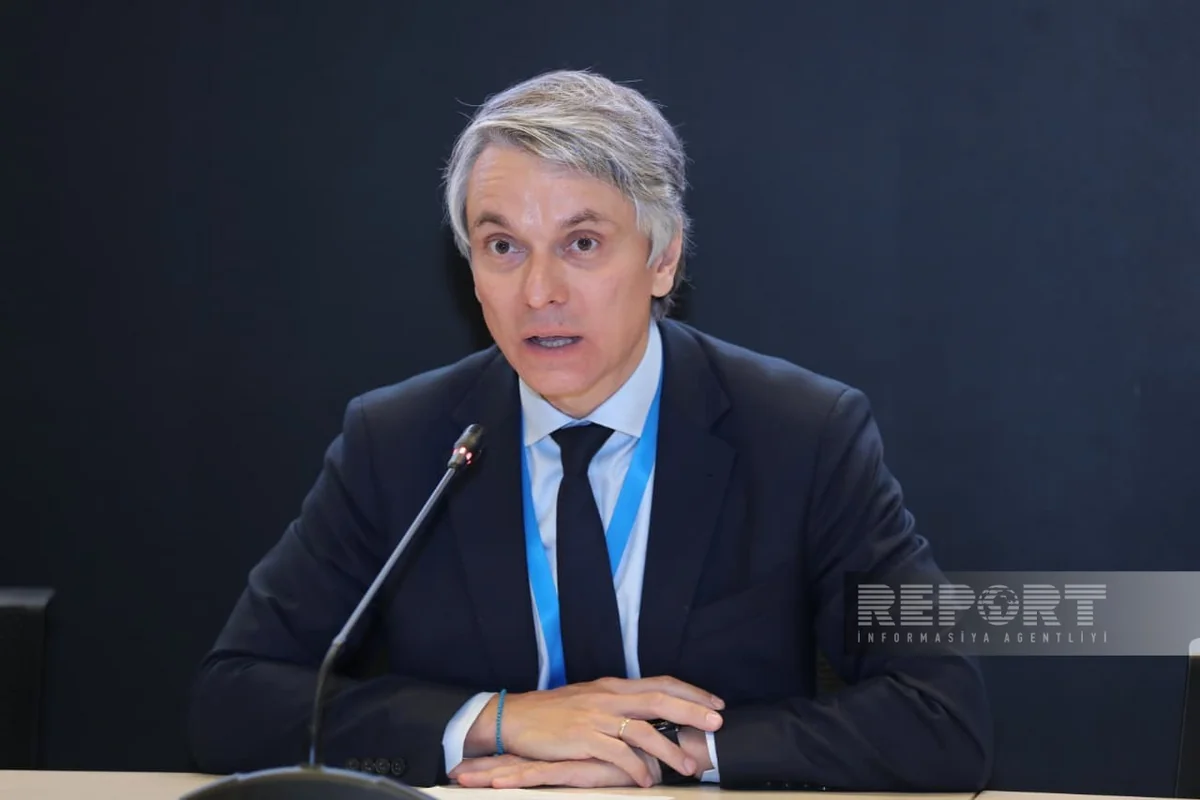
The UN Economic Commission for Europe (UNECE) has developed new framework guidelines for the decarbonization of buildings, Deputy Executive Secretary Dmitry Mariyasin said.
According to Report, he made the remarks on the fourth day of Baku Climate Action Week 2026 (BCAW 2026).
Mariyasin said UNECE advocates a whole-life carbon approach, recognizing that meaningful decarbonization requires addressing both operational and embodied emissions, while treating them differently and applying the appropriate tools to each.
"Operational emissions, meaning emissions associated with the use of buildings, remain critically important. Buildings account for roughly one-third, and even close to 40%, of global energy consumption and emissions. UNECE has been working on this issue for years, including together with the UN Environment Programme (UNEP) and GlobalABC," he said.
Mariyasin noted that this year the Joint Task Force on Energy Efficiency Standards in Buildings will present a new edition of the Framework Guidelines for Energy Efficiency Standards in Buildings.
"This is essentially a new document, a significantly updated version of the existing framework. That framework has been used by governments for years, in at least 56 countries, and has served as the basis for many national energy efficiency standards for buildings. We are now presenting the new edition at a very timely moment ahead of COP31," he said.
According to Mariyasin, the guidelines provide a comprehensive, results-based framework designed to help countries accelerate the transition toward buildings that are not only highly energy efficient, but also low-carbon, resilient and affordable.
He said the framework focuses on an "efficiency first" approach, emphasizing deep renovation of the existing building stock, high-performance new buildings, renewable energy integration and measurable energy efficiency targets.
"This is not an ordinary policy document to be read by ministers from a podium. It is a highly technical set of guidelines intended for practical use by industry professionals," he said.
Mariyasin added that one of the new elements of the guidelines reflects the growing digitalization of buildings.
He highlighted the increasing use of building information modeling (BIM), digital building passports, life-cycle carbon assessments supported by artificial intelligence tools, smart meters and interoperable data platforms.
Author