Baku 24° C
McKinsey: Azerbaijan's capital market needs 7-10x growth in short term
- 23 May, 2025
- 13:21
Stay up to date with the top news!
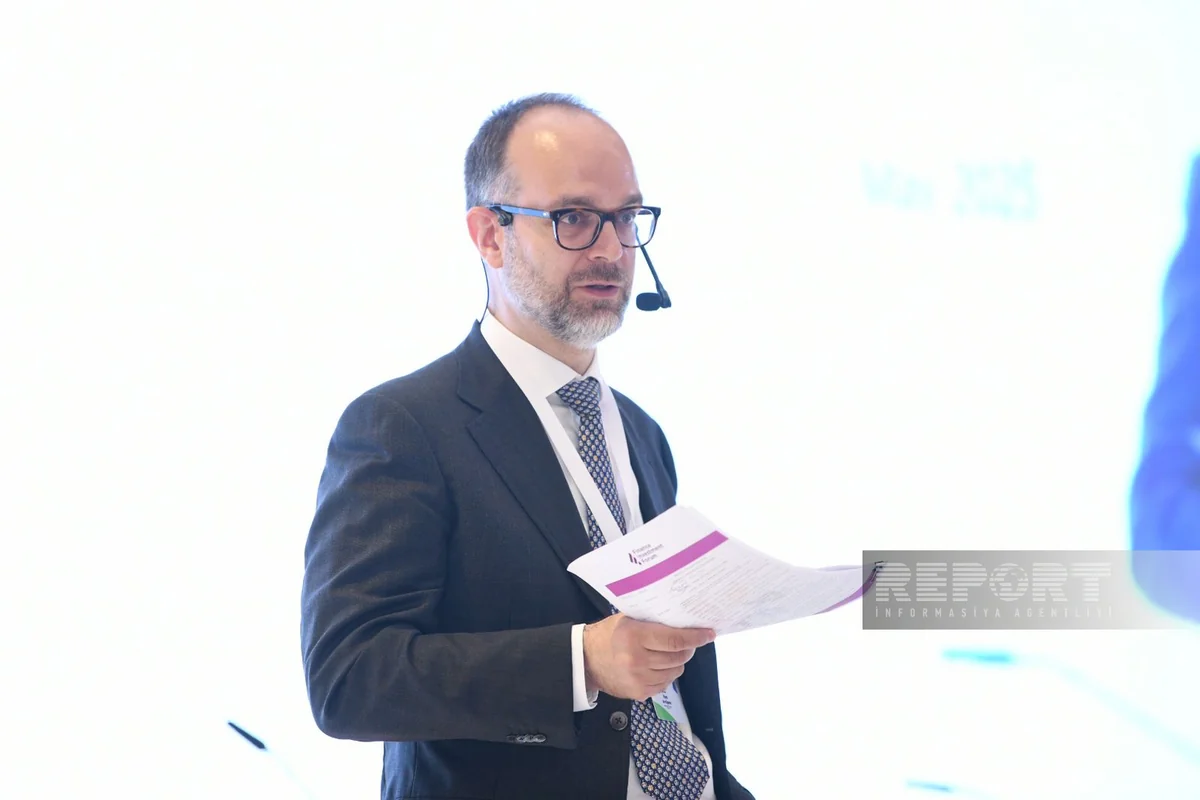
The capital market is a complex ecosystem, and for its full development in Azerbaijan, it is necessary not only to have issuers, but also to form a broad base of institutional investors, as well as access to various financial instruments, Ilya Arkhipov, a partner at the consulting company McKinsey & Company, said during the Financial Investment Forum held in Baku, Report informs.
He noted that the capital market functions as an integrated system in which all participants are involved.
"There are have issuers - the state, large companies, as well as small and medium businesses (SMEs). For example, in European countries and the US, small and medium businesses actively place bonds. But this market itself cannot develop without other key elements, especially without institutional and retail investors. In Azerbaijan, a lot of work still needs to be done in this direction," Arkhipov added.
He emphasized that for the full functioning of capital investments, all components of the ecosystem - shares, debt securities, derivatives, alternative instruments, trading platforms, intermediaries, management companies and exchanges - must be mature, balanced and mutually supportive, ensuring liquidity and trading volumes.
"Despite certain positive developments, the market is not yet developing at the proper pace. If we compare it with other developing countries or regional leaders - Uzbekistan, Georgia, Kazakhstan - it becomes obvious that Azerbaijan is noticeably lagging behind. Moreover, we are not talking about nominal volumes, but about the depth of the market, the ratio of capitalization to GDP. According to these indicators, Azerbaijan lags behind Hong Kong by 100 times, South Africa - by 40 times, Uzbekistan and Georgia - by about half, Kazakhstan - by seven times," he emphasized.
Arkhipov added that with a comparable level of economic, industrial and institutional development, it is the capital market in Azerbaijan that is significantly lagging behind.
"In order to achieve real growth, Azerbaijan needs to analyze in detail all the key elements of the market and focus on creating conditions for a multiple increase in its volumes - at least twofold, and ideally seven to ten times in the short term. The problem is not the number of issues - the problem is capitalization. There are not enough investors on the market. For example, in Georgia, shares of 28 companies are traded, in Azerbaijan - about 37. However, in terms of activity, the market in Azerbaijan is significantly inferior. When we look at who exactly is investing, it becomes clear: there is a lack of investors and liquidity. There are five times fewer retail investors in Azerbaijan than in Pakistan (in relative terms), 30 times fewer than in Egypt, and 50 times fewer than in South Africa," he said.
According to the expert, the key difference between countries with developed capital investments is the high share of institutional investors.
"There are very few such players in Azerbaijan. It is institutional investors who build trust, create liquidity, ensure stability and serve as the basis for the influx of retail investors. In addition, the country needs to expand the range of available market instruments. Derivatives are especially important - they allow hedging risks, ensure stability and make investments in basic assets more attractive. Private direct investment funds are already operating in Georgia, and the derivatives market is developed in Kazakhstan. In Azerbaijan, such instruments are just beginning to appear: green bonds have been launched, private funds are being created. But in order to develop these areas, it is first necessary to ensure liquidity in the basic market - shares and bonds," Arkhipov added.
Author