Baku 19° C
Documentary 'Crude & Ink: Stories Written in Oil' premieres in Baku
- 04 November, 2026
- 13:48
Stay up to date with the top news!
The documentary "Crude & Ink: Stories Written in Oil", jointly produced by SOCAR and AnewZ television channel, was premiered at the Nizami Cinema Center, Report informs referring to SOCAR.
The event was attended by Leyla Aliyeva, Vice President of the Heydar Aliyev Foundation, government officials, members of the diplomatic corps accredited in Azerbaijan, and representatives of the public.
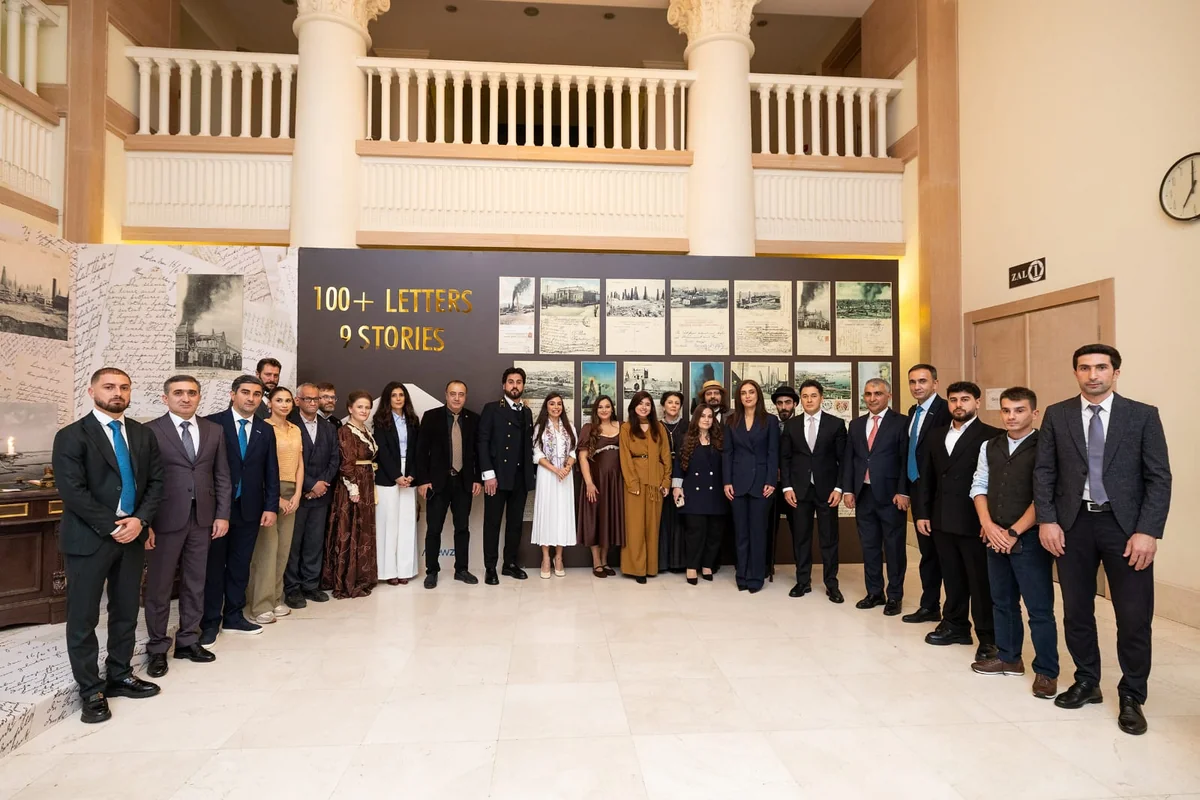
Prior to the screening, Leyla Aliyeva, Vice President of the Heydar Aliyev Foundation, met with the film's creative team, and commemorative photographs were taken.
Speaking at the premiere, Rufat Hamzayev, CEO of AnewZ television channel, said that the idea for the documentary originated from 103 historical postcards dating back to the early 20th century, preserved in SOCAR's museum collection. He noted that the film tells the story of the oil boom in Baku approximately a century ago, how the city attracted people from different countries around the world during that period, and the profound changes brought about by the development of the oil industry.
Noting that President Ilham Aliyev had declared this year the "Year of Urban Planning and Architecture" in Azerbaijan, Rufat Hamzayev added that, through 103 historical postcards and nine personal stories, the documentary presents viewers with information preserved to this day about the impact of oil on Baku's architecture and culture, as well as the lives of people who left their mark on the city's history.
The documentary "Crude & Ink: Stories Written in Oil" was then screened.
The film's central narrative revolves around Baku's rapid transformation a century ago, its oil derricks, streets and port, as well as the personal stories of the people who lived in the city. The production took approximately six months, with artificial intelligence used to animate historical postcards, bring archival photographs to life, recreate the visual atmosphere of the period, and develop certain elements of the musical arrangements.
The documentary also features an exclusive interview with Irina Trofimova-Khomitskaya, a descendant of Iosif Goslavsky, who played an important role in shaping Baku's architecture.
Author