Baku 24° C
Palestine presents roadmap for transition to green economy
- 20 May, 2025
- 14:07
Stay up to date with the top news!
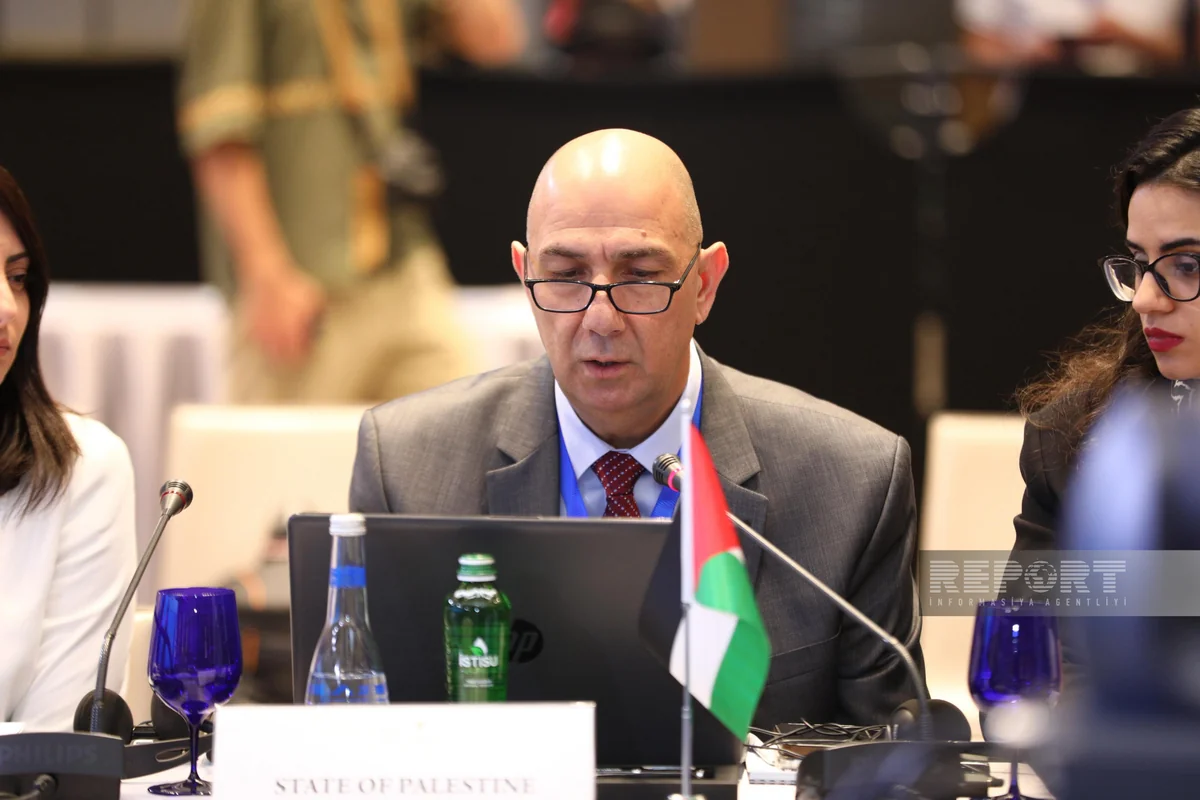
Small and medium-sized businesses (SMEs) in Palestine constitute approximately 95% of all businesses in the country and are considered one of the main pillars of economic activity, employing more than 80% of the labor market, said Nahid Salameh Ibrahim Qudsi, representative of Palestine's Ministry of National Economy, Report informs.
He made the remark at the 8th plenary session of the Business Council of the Conference on Interaction and Confidence Building Measures in Asia (CICA) held in Baku.
Qudsi noted that the integration of SMEs into the green economy is not just an economic initiative, but also a strategic path leading to self-sufficiency and sustainable prosperity in the country:
"In Palestine, SMEs are considered the backbone of the economy. However, unlike other countries, Palestinian entrepreneurs operate under restrictions on freedom of movement and limited resources. Nevertheless, many successful business examples have formed in agriculture, renewable energy, construction, handicrafts, and service sectors."
Qudsi stated that according to UN reports, the green economy is based on principles of human well-being, social equality, and environmental sustainability:
"For Palestine, these principles are not abstract ideas, but an integral part of our lifestyle. In this regard, the Ministry of National Economy, together with public and private sector partners, is leading the implementation of a roadmap that will ensure the transition to a green economy. The roadmap covers four main directions.
The first direction - green financing - involves creating a Green Innovation and Transition Fund for environmental certification of SMEs and modernization of renewable energy projects.
The second direction - regulatory reforms - includes applying environmental standards in public procurement and offering tax and customs incentives for sustainable practices.
The third direction - capacity building - involves implementing the concept of green entrepreneurship in education and creating a regional green business development center. The final direction covers the development of key sectors. This includes support for agroecology, sustainable construction, renewable energy, cooperatives, and areas where tradition meets innovation."
The ministry official added that Palestine places great importance on the support of international partners in this process: "This support is important in terms of developing customized financing tools for SMEs, technology transfer, innovation exchange, and expanding regional cooperation opportunities. We see the elimination of barriers to access to 'green technologies,' markets, and resources within the framework of this partnership."
Author