
 Baku 19° C
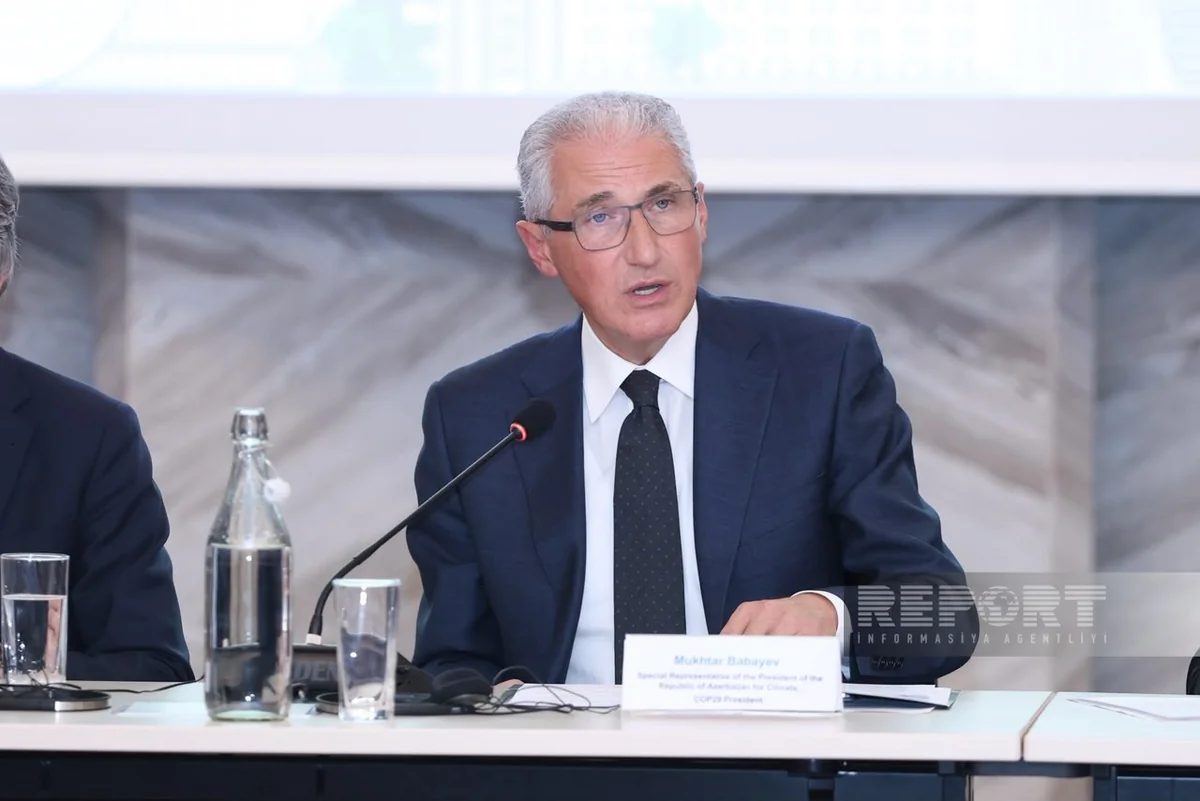
Climate change reshaping investment models and economic structures, Mukhtar Babayev says
- 09 September, 2026
- 15:47
Stay up to date with the top news!
Climate change is already altering investment models, business competitiveness, and the structure of economies, Representative of the President of Azerbaijan on Climate Issues Mukhtar Babayev stated at a round table during Baku Climate Action Week 2026 (BCAW 2026), Report informs.
According to him, climate goals are ultimately realized through decisions made in the real sector of the economy.
"According to World Bank data, the private sector in developing economies provides 90% of jobs, 75% of investments, and over 70% of output. Therefore, its role is key. However, the cost of capital, access to technology, infrastructure, and institutional capacity vary significantly across countries. The level of technological readiness also depends on the industry. Many technologies in renewable energy and electrification have already become commercially viable and competitive," Babayev said.
At the same time, he noted that many solutions for the cement, steel, and chemical industries, as well as aviation and shipping, remain too expensive, require developed infrastructure, or have not yet reached commercial maturity for large-scale application.
"We must deploy working technologies while accelerating innovation and technology transfer in areas where solutions are still under development. Funding volumes reflect the scale of the challenge. According to recent OECD data, about $30 billion in private finance was mobilized for developing countries in 2024, representing little more than a fifth of total climate finance. Calls alone to increase private funding will not change the situation; private capital is driven by risk-return ratios," Babayev stressed.
He emphasized that guarantees, blended finance, and risk-sharing mechanisms are necessary to facilitate project financing.
"Banks must also integrate climate finance into their core operations. Climate factors need to be factored into daily banking and investment decisions. Physical climate risks, water scarcity, carbon risks, and technological shifts can directly affect asset values. The same principle applies to ESG approaches," Babayev concluded.
Author