 Baku 21° C
Ambassador: Moldova considering broad range of cooperation with Azerbaijan in gas sector - INTERVIEW
- 09 December, 2025
- 13:49

Stay up to date with the top news!
Relations between Moldova and Azerbaijan have become dynamic and systemic in recent years. Political contacts, economic cooperation, energy projects, and the development of agro-industrial and green initiatives have become an important part of the bilateral agenda.
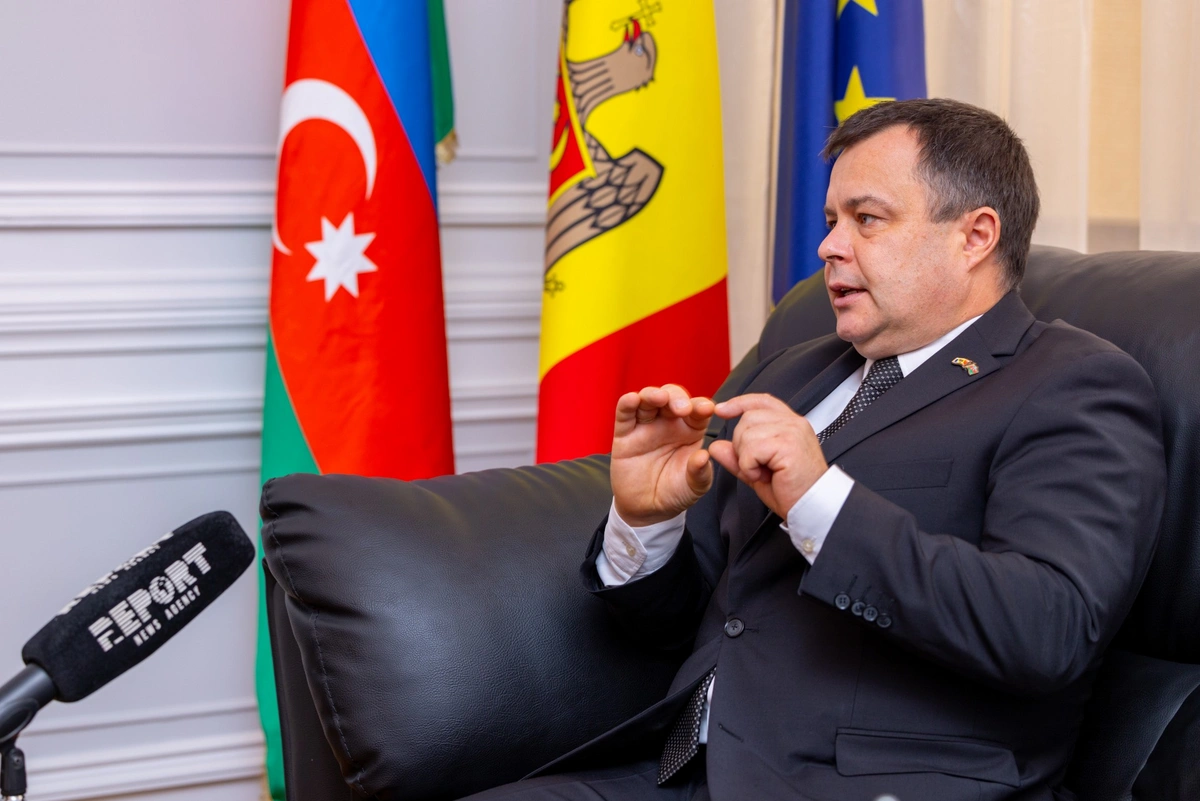
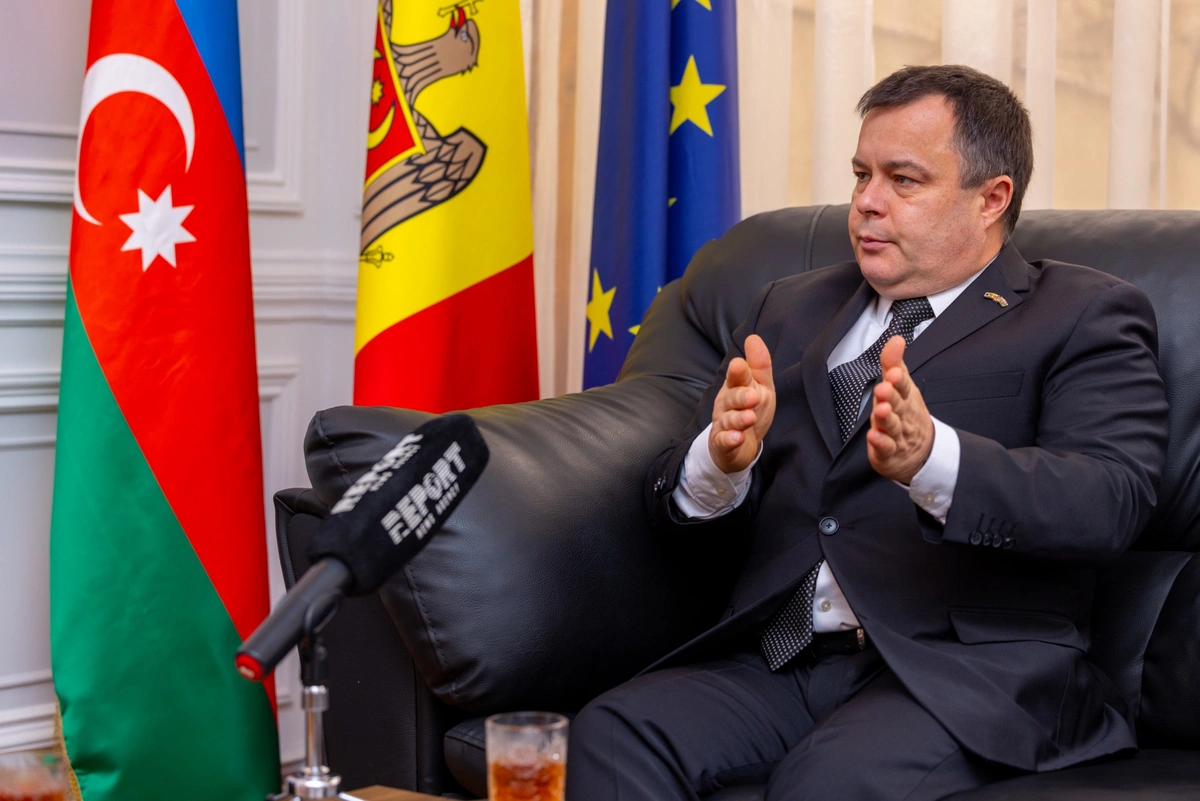
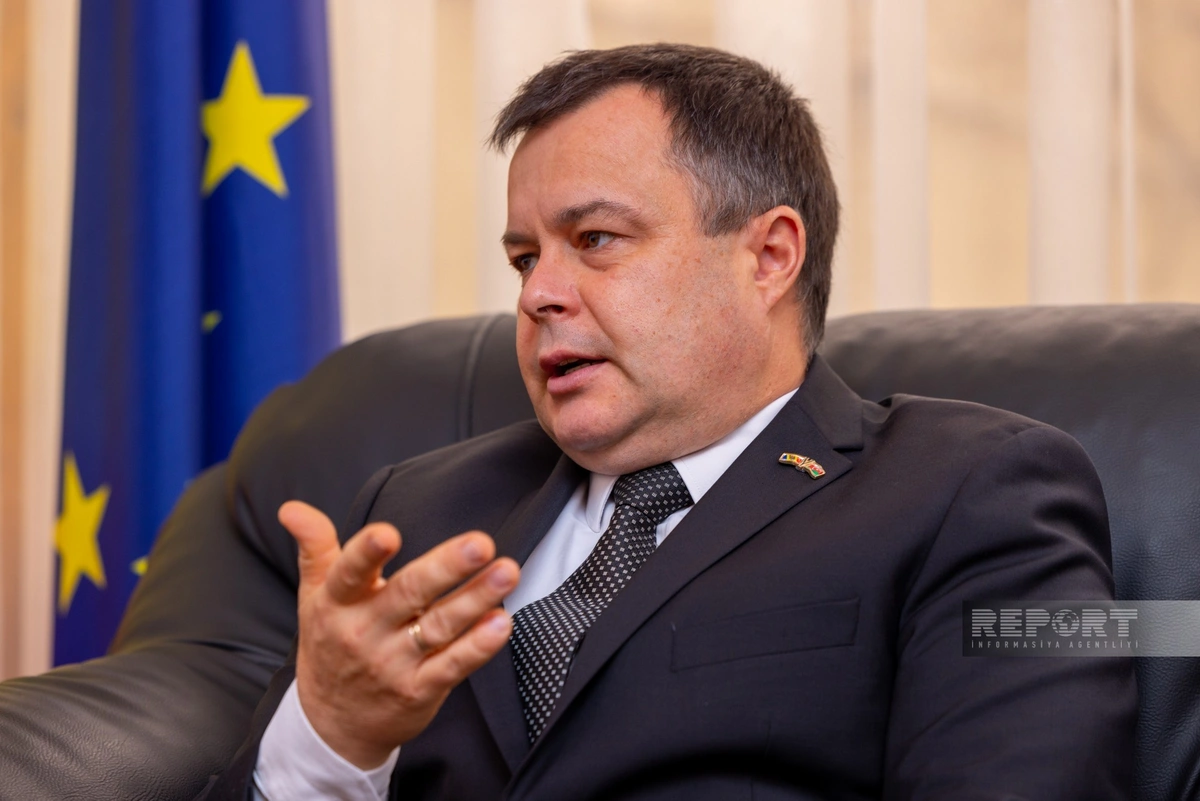
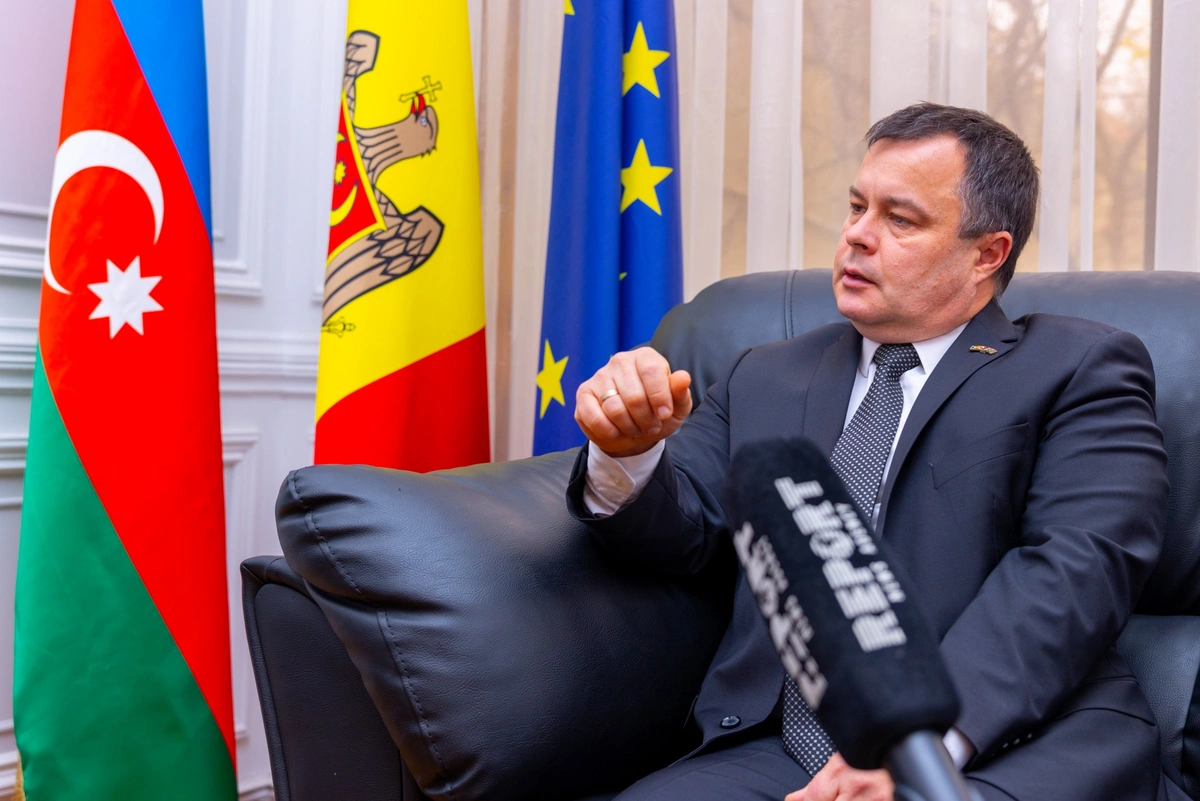
Moldova's Ambassador to Azerbaijan, Alexandr Esaulenco, told Report about prospects for cooperation, current agreements, the implementation of energy and agricultural projects, and Moldova's plans for European integration.
- How do you assess the current level of political interaction between Moldova and Azerbaijan?
- In recent years, political contacts between our countries have become much closer and more systemic. I would say that today Moldova and Azerbaijan have reached the level of a substantive political partnership, based not on isolated protocol visits, but on regular dialogue and a shared agenda.
At the head of state level, a key milestone was the meeting between Moldovan President Maia Sandu and Azerbaijani President Ilham Aliyev on the sidelines of the European Political Community summit in Copenhagen (in October 2025 – ed.). This meeting allowed the parties to clarify their visions on key issues, from energy security to the development of transport corridors and our country's European integration.
Equally significant was the meeting between the heads of foreign affairs agencies. At the Munich Security Conference, Moldovan Deputy Prime Minister and Foreign Minister Mihai Popșoi held a detailed meeting with Azerbaijani Foreign Minister Jeyhun Bayramov. The two sides reaffirmed their commitment to making political consultations regular and to using the intergovernmental commission on economic cooperation as a key tool for advancing specific projects.

In addition, Deputy Prime Minister Vladimir Bolea visited Baku, numerous contacts were held at the level of the Minister of Energy and ministers of relevant agencies, and Moldova's participation in the Baku Energy Week and in meetings of the Southern Gas Corridor and Green Energy Advisory Councils. All of this demonstrates that our relations have acquired sustainable momentum.
Political dialogue between Moldova and Azerbaijan is particularly important in the current context – against the backdrop of Russian aggression against Ukraine, the transformation of energy and transport routes, and the growth of hybrid threats. It is important for us to exchange assessments, coordinate approaches, and support each other in international organizations. In this sense, the level of political interaction can be characterized as constructive, trusting, and results-oriented.
- What important bilateral agreements between Moldova and Azerbaijan are currently being prepared or ready for signature? What areas do they cover?
- During the reporting period, we managed to significantly update and expand the legal framework. Some documents have already been signed and are moving into practical implementation, while others are in the final stages of approval.
Of the most recently signed agreements, I would highlight the following: an intergovernmental agreement on the mutual exchange and protection of classified information; the minutes of the 6th meeting of the Intergovernmental Commission on Economic Cooperation; a memorandum on cooperation in the veterinary field between the competent agencies of the two countries; and a memorandum on cooperation in the field of renewable energy sources between specialized agencies of Moldova and Azerbaijan.
At the same time, documents are being discussed concerning: simplifying conditions for road transport and developing logistics; cooperation in digital transformation and e-governance; deepening cooperation between institutions promoting exports and attracting investment; and expanding cultural and educational exchanges.
Thus, we are not talking about isolated initiatives, but rather a comprehensive update of the legal framework – from energy and the agro-industrial complex to transport, security, and the humanitarian agenda.

- Is Moldova considering expanding cooperation with SOCAR, particularly in the area of Azerbaijani gas supplies?
- Yes, we are very seriously considering the prospects for deepening cooperation with SOCAR. For Moldova, which has consciously moved away from critical dependence on a single supplier and single route for gas in recent years, diversification of sources has become a key element of national security.
In this spirit, Azerbaijan and SOCAR are natural partners for us. During Deputy Prime Minister Vladimir Bolea's visit to Baku (in April 2025 – ed.), meetings were held with SOCAR management to discuss possible cooperation formats – from direct commercial contracts to participation in regional supply schemes through the Greece-Bulgaria-Romania-Moldova interconnectors.
We are considering not only traditional gas supplies but also a broader range of cooperation: the use of underground storage facilities, joint risk and peak load management solutions, and the exchange of experience in gas market liberalization. All of this fits into both the EU's energy security agenda and the interests of our countries.
- Is Moldova interested in joining the Black Sea energy cable project?
- The high-voltage cable project under the Black Sea, which is intended to connect the power systems of Azerbaijan, Georgia, and EU countries, is certainly of strategic interest to Moldova. It fits into the overall idea of creating a "green belt" from the Caspian to Europe and opens up new opportunities for electricity trade.
At this stage, Moldova is not a direct party to the framework agreement. However, being synchronized with the European ENTSO-E network and closely linked to the Romanian power grid, we see this project as potentially important for the entire region.

Our interest is twofold. On the one hand, we see the prospect of gaining access to additional volumes of clean energy, which helps us meet climate goals and reduce vulnerability to external shocks. On the other hand, we are considering the possibility of using Moldovan infrastructure as part of a broader electricity transmission system between the EU and the South Caucasus countries.
As the project progresses, we are ready to discuss options for deeper engagement with our partners if this meets Moldova's interests and the logic of a pan-European energy system.
- How can Chisinau and Baku intensify the work of the Intergovernmental Commission on Economic Cooperation, and when is its next meeting scheduled?
- The Commission has already proven its usefulness – its April meeting in Baku concluded with the signing of a substantive protocol and a major business forum. Our task now is to transform this platform into a permanent "driver" of economic projects.
In my opinion, to intensify the work of the Commission, it is necessary to:
• develop a specific package of initiatives for each meeting in advance – with the participation of businesses, regional authorities, and industry associations;

• create several sectoral working groups – on energy, agribusiness, the digital economy, and tourism – which will meet more frequently than the Commission itself.
According to the agreements reached, the next meeting of the Intergovernmental Commission is scheduled to take place in Chisinau in 2026. We have already begun preliminary consultations with the Azerbaijani side on the agenda structure and format of the accompanying business forum. We hope that by the end of this meeting, we will be able to present entrepreneurs and the public with a list of tangible results – new contracts, investment projects, and joint initiatives.
Furthermore, a key priority on the 2026 agenda is holding a meeting of the joint Moldovan-Azerbaijani commission on road transport, as well as initiating negotiations on the liberalization of road freight transport between the two countries.
- You've already visited the liberated territories of Azerbaijan. Moldova has a highly developed agriculture sector, including winemaking. Therefore, is there any interest from Moldovan companies in implementing agricultural projects in Karabakh and Eastern Zangazur?
- Visits to the liberated territories are very impressive. On the one hand, the scale of destruction and the tasks of demining and reconstruction are enormous; on the other, the potential for agricultural and processing projects is truly colossal.
Given the profile of the Moldovan economy, our companies' interest naturally centers on several niches:
- viticulture and wine production – from the supply of planting material and vineyard establishment technology to the creation of processing facilities;
- horticulture, nut growing, and vegetable growing using modern drip irrigation and storage systems;

- supplies of environmentally friendly plant protection products and biological preparations, which are already available on the Azerbaijani market;
- joint projects for the processing of agricultural raw materials and the export of finished products.
Naturally, any activity in these territories must take into account the priorities of the Azerbaijani government, security issues, and the gradual restoration of infrastructure. However, in the medium and long term, the participation of Moldovan companies could become an additional contribution to the development of Karabakh and Eastern Zangazur, while simultaneously opening up new promising markets for our entrepreneurs.
- How do you assess the results of the recent parliamentary elections in Moldova and their potential impact on the country's future development and foreign policy?
- These elections took place in an extremely difficult context. On the one hand, Russia's ongoing war against Ukraine near our borders; on the other, large-scale hybrid pressure on Moldova, including disinformation, attempts to interfere in the electoral process, and the use of financial and criminal schemes to influence domestic politics.
Despite this, the elections took place and were generally considered competitive and transparent, and Moldovan citizens confirmed their support for the course of European integration and reform. This is an important signal both domestically and to external partners: society, recognizing the complexity of the situation, is opting for democracy and strengthening statehood.
From a foreign policy perspective, no radical shifts are expected. Moldova will continue to advance the EU accession negotiations; support Ukraine and condemn aggression against it; and develop pragmatic cooperation with its neighbors and regional partners, including Azerbaijan, in energy, trade, transport, and security matters.
For the Azerbaijani side, this means continuity and predictability-important conditions for the implementation of long-term projects.

- Moldova has applied to join the European Union. When, in your opinion, can negotiations between the parties begin?
- The negotiation process has already begun. After submitting its application for membership and receiving candidate country status, Moldova held the first EU-Moldova Intergovernmental Conference in 2024, officially launching negotiations.
Among the key stages of the Republic of Moldova's integration into the European Union, the following should be noted: On September 22, 2025, the bilateral screening process, which began in July 2024, was completed. The final item of analysis was Chapter 33 - Financial and Budgetary Provisions, coordinated by the Ministry of Finance. This stage marks the completion of the comparative analysis of national legislation with the European Union acquis and the transition to preparations for accession negotiations.
On November 11, 2025, a series of important events dedicated to assessing the current situation and identifying priorities for the Republic of Moldova's European path took place in Chisinau. European Commissioner for Enlargement Marta Kos participated in these events. A key event was the National Conference "Enlargement Report 2025: Achievements and Future Priorities of the Republic of Moldova," attended by Prime Minister Alexandru Munteanu, who reaffirmed the government's commitment to continuing the reforms necessary to advance the accession process to the European Union.
The discussions covered six thematic areas: core values, internal market, competitiveness and inclusive growth, the green agenda and sustainable connectivity, natural resources and agriculture, and foreign relations. Particular attention was paid to the challenges associated with reform implementation. A joint press conference by Deputy Prime Minister for European Integration Cristina Gherasimov and EU Commissioner Marta Kos emphasized three key messages: the country is moving in the right direction; a period of intensive work to align with European standards lies ahead; and national unity is crucial for success.
The Moldovan leadership has set itself the goal of being ready for EU accession by 2030. This is an ambitious but realistic horizon, provided we maintain the reform momentum and secure continued political support from member states.
It is important that Moldova's European track complements, rather than replaces, our cooperation with our regional partners. On the contrary, deepening EU integration makes us a more reliable and predictable partner for Azerbaijan – with more transparent rules, a clear regulatory environment, and access to European programs and markets.
- What steps do Moldova and Azerbaijan plan to take to combat climate change and develop cooperation on green energy?
- The climate agenda and energy transition are increasingly prominent in our bilateral relations. Azerbaijan, which hosted COP29 last year, is actively demonstrating its desire to become a regional hub for renewable energy development and green electricity exports. Moldova, for its part, is undergoing its own transformation – increasing the share of renewable energy sources, working on energy efficiency, and decarbonizing the economy.
Our cooperation is structured in several areas:

- implementation of the already signed memorandum of cooperation in the field of renewable energy, which provides for the exchange of experience, the participation of companies from both countries in solar and wind generation projects, and the discussion of opportunities for joint participation in regional initiatives;
- Moldova's regular high-level participation in the Baku Energy Week and ministerial meetings on the Southern Gas Corridor and green energy, where approaches to reducing emissions and creating a sustainable energy architecture are discussed;
- exploring opportunities to align the green corridor projects from the Caspian to Europe with the EU's plans to develop trans-European networks, so that our country can also benefit from new clean energy transmission routes.
We also view the green agenda through the prism of security. The more sustainable, diversified, and climate-neutral energy sources in the region, the less room there is for political and energy blackmail. In this sense, cooperation between Moldova and Azerbaijan in the field of green energy is a contribution not only to the environment, but also to a more stable and predictable future for our entire region.
Author
Photo