
 Baku 10° C
From oil to high tech: How Hanoi and Baku are building an economic bridge
- 30 July, 2025
- 11:04
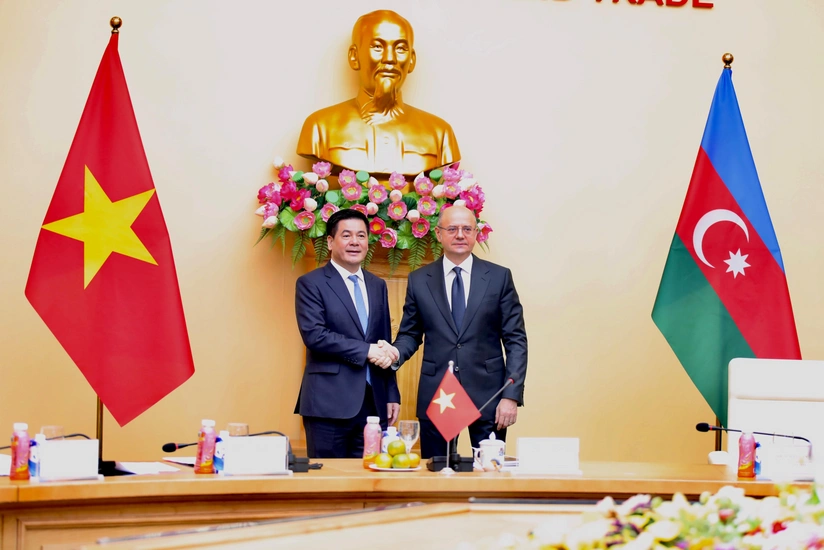
A newly forged cooperation framework between Vietnam and Azerbaijan is being materialised, paying the way for businesses of both countries to explore opportunities, Report informs, citing the article in Vietnam Investment Review.
Vietnam’s Ministry of Industry and Trade (MoIT) and Azerbaijan’s Ministry of Energy over a week ago organised the third meeting of the Vietnam-Azerbaijan Intergovernmental Committee on Economic-Trade and Scientific-Technical Cooperation in Hanoi.
The meeting followed the successful state visit to Azerbaijan by Vietnamese Party General Secretary To Lam in May, during which the two countries elevated their cooperation to a strategic partnership.
At the meeting, Vietnam and Azerbaijan agreed on 17 potential cooperation fields with almost 60 specific activities for the 2025–2027 period, aiming to expand bilateral ties in a substantive, effective, and long-term manner.
“Both sides have reaffirmed their intention to strengthen collaboration in the oil and gas industry, regarding it as a strategic long-term priority. They have agreed to effectively carry out the MoU on energy cooperation signed between the two ministries,” said the MoIT’s Department of Foreign Market Development.
The article also notes that Azerbaijan is known globally as a large oil and natural gas producer and exporter. Oil and gas extraction has an extensive history in this country, and its capital city, Baku, was the birthplace of mechanised oil extraction and transportation.
It is also noted that a few years ago, Vietnam’s state-run oil and gas giant Petrovietnam inked a strategic cooperation deal with the State Oil Company of Azerbaijan Republic, a wholly state-owned national oil and gas company headquartered in Baku.
At the meeting, the two nations expressed interest in exploring new sectors, including renewable energy, energy transition, and ICT, along with high-tech and emerging industries such as semiconductors, AI, cloud computing, green transformation, and the circular economy.
They also reached consensus about increasing mutual visits at all levels, including business missions, and in organising economic forums and seminars to help businesses explore investment and trade opportunities. Both sides also agreed to implement a cooperation model at the Vietnam-Azerbaijan Business Council.
“Both sides expressed their willingness to promote substantive and comprehensive economic cooperation, to make effective use of concluded documents, and to enhance bilateral economic cooperation mechanisms,” said a joint statement released after the visit. “Both sides will propose measures to harness opportunities and create breakthroughs in trade and investment cooperation to achieve a level of bilateral trade commensurate with the strategic partnership.”
According to the MoIT, bilateral trade hit $702.5 million in 2022, up 730 per cent as compared to that in 2011. However, due to numerous difficulties, the figure went down to $250 million in 2023 and only nearly $52 million last year. In the first three months of this year, it stood at more than $100 million.
Vietnam’s main exports to Azerbaijan include computers, mobile phones and spare parts, and aquatic products, while importing from Azerbaijan crude oil and oil-based products.
Minister of Industry and Trade Nguyen Hoang Long said that the two nations have complementary economic structures. Vietnam’s strengths consist in exporting light industrial goods and high-quality agricultural products, with textiles and farming being key sectors for potential export growth to Azerbaijan.
Conversely, Azerbaijan is well-positioned to supply Vietnam with essential commodities such as crude oil, cotton fiber, and raw materials for the textile industry, among other products in high demand on the Vietnamese market.
Under the joint statement, the two countries have also agreed to step up exploration of solutions to help businesses make effective use of the existing cooperation mechanisms and frameworks to advance bilateral investment and trade activities.
“Both sides also agreed to step up the exchange of experience in railways, roads, airways and sea routes development and to advance collaboration in operating the Trans-Caspian International Transport Route, with the aim of enhancing connectivity,” the statement read.
Author