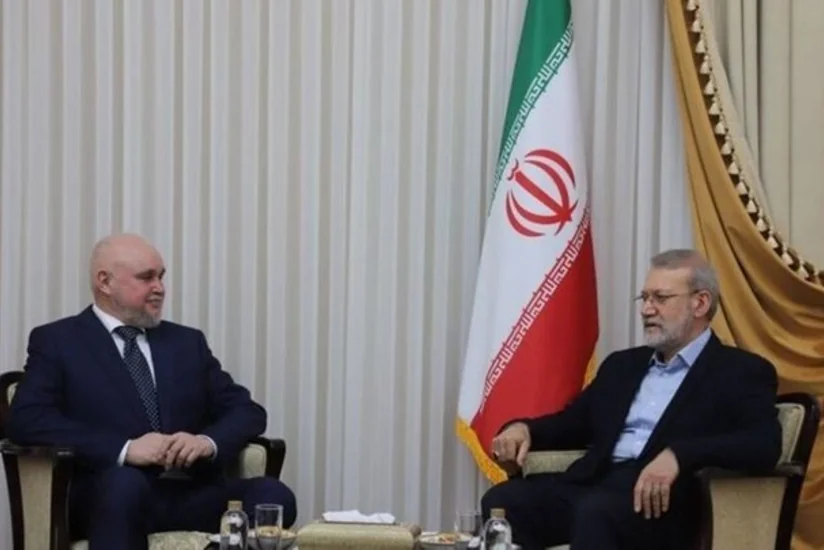
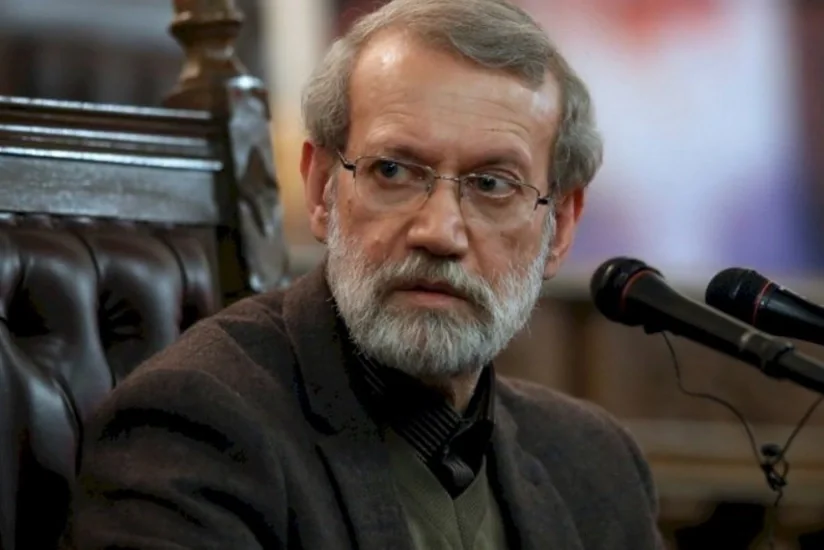
Ali Ardashir Larijani (Persian: علی لاریجانی) is a prominent Iranian statesman, philosopher, diplomat, and one of the most influential politicians of the Islamic Republic of Iran in the 21st century. Serving as the Speaker of the Iranian Parliament (Majlis) for a record 12 years (from 2008 to 2020), he earned a reputation as a masterful negotiator and a moderate conservative capable of finding a delicate balance between radical elites and reformers.
In the realities of 2026, despite being disqualified from participating in recent presidential elections, Larijani remains a crucial "shadow" figure in Tehran's politics, heavily influencing strategic decisions through his role in the Expediency Discernment Council.
Ali Larijani was born in 1957 in the holy Shiite city of Najaf (Iraq) into the family of the prominent Ayatollah Mirza Hashem Amoli. Belonging to the highly influential religious and political Larijani clan (his brothers also held top posts in the judiciary and government) largely predetermined his career trajectory.
Interestingly, by education, Larijani is an intellectual with a broad academic outlook. He graduated with honors from the Sharif University of Technology with a degree in Computer Science and Mathematics, and later earned a Ph.D. in Western Philosophy from the University of Tehran.
His political path began in the ranks of the Islamic Revolutionary Guard Corps (IRGC). In the 1990s, he served as the Minister of Culture and Islamic Guidance, and then headed the state broadcasting company, IRIB, for an entire decade.
Larijani gained special international prominence between 2005 and 2007 while serving as the Secretary of the Supreme National Security Council of Iran. It was in this role that he acted as the chief negotiator with the West regarding the Iranian nuclear program. Unlike the radical President Mahmoud Ahmadinejad, Larijani preferred subtle, calculated diplomacy, which ultimately led to his resignation due to deep ideological differences with the president.
In 2008, Ali Larijani was elected Speaker of the Islamic Consultative Assembly (the Majlis). In this post, he proved himself to be a true master of political compromise.
Larijani's main historical achievement in parliament was his unwavering support for the Joint Comprehensive Plan of Action (JCPOA)—the famous 2015 nuclear deal. Despite fierce resistance from radical conservatives, Larijani, utilizing his immense authority and the tacit backing of Supreme Leader Ali Khamenei, managed to push the agreement through parliament in just 20 minutes. This landmark event cemented his status as a "pragmatist" ready for dialogue with the West in order to lift devastating economic sanctions.
Larijani's political fate in the 2020s became a vivid illustration of the ongoing transformation of Iranian power dynamics. Having put forward his candidacy in the 2021 presidential elections, and then again during the snap elections in 2024, he was unexpectedly disqualified both times by the Guardian Council.
The exclusion of a politician of this caliber was widely attributed to the tightening of the domestic political course in Iran. The ultra-conservative wing considered Larijani too close to the reformist camp (in particular, to former President Hassan Rouhani) and viewed him as too inclined to make concessions on the international stage.
Nevertheless, by 2026, Larijani has not left the political orbit. As a senior member of the Expediency Discernment Council, he continues to act as an influential advisor to the Supreme Leader. Amid the highly complex geopolitical situation in the Middle East and ongoing economic pressure, Larijani's pragmatic experience has once again proven to be in high demand behind the closed doors of Tehran's power centers.
For Azerbaijan, the figure of Ali Larijani has always been of special interest. During his years as Speaker, he repeatedly visited Baku on official trips, consistently advocating for the strengthening of bilateral economic and cultural ties.
Larijani has traditionally adhered to a more measured and diplomatic rhetoric regarding the Republic of Azerbaijan compared to some radical elements within the Iranian establishment. He frequently emphasized the historical and religious commonality of the two nations, actively supporting the development of major transport corridors (in particular, the North-South project). Today, as Baku and Tehran outline new contours of regional security in the South Caucasus, the measured, pragmatic approach architected by politicians like Larijani serves as an important foundation for constructive bilateral dialogue.

 Baku 17° C