The price of oil is the current spot or futures value of one barrel of benchmark (reference) crude oil on the global market. Because oil is one of the most critical global energy resources and the foundational raw material for the chemical industry, the dynamics of its value have a fundamental impact on the global economy, inflation levels, transportation costs, and geopolitical stability.
Oil prices are established on international commodity exchanges (such as NYMEX in New York or ICE in London) and depend on a complex combination of macroeconomic, political, and financial factors.
The formation of the value of a barrel of oil is based on the classic law of supply and demand, but it possesses a number of specific market characteristics:
Physical Supply and Demand: The ratio between the volume of production by exporting countries and the level of consumption by importers. Demand is directly dependent on the growth rates of the global economy, the activity of the transportation sector, and industrial production.
The Influence of Cartels (OPEC+): The Organization of the Petroleum Exporting Countries (OPEC) and its allied states artificially regulate supply volumes. By setting production quotas, the cartel seeks to avoid a glut of raw materials and maintain prices at an acceptable level for producers.
Geopolitical Factors: Military conflicts, revolutions, sanctions, or threats to shipping security in key transit hubs (the Strait of Hormuz, the Red Sea, the Suez Canal) bake a so-called "geopolitical premium" into the price due to the risk of sudden supply disruptions.
Speculation in Financial Markets: The vast majority of oil is traded through financial derivatives—futures and options contracts. The actions of hedge funds and traders can cause sharp fluctuations in quotes that do not always reflect a real physical deficit or surplus of the commodity.
The US Dollar Exchange Rate: Traditionally, international oil trading is conducted in US dollars. A stronger dollar makes oil more expensive for buyers using other currencies, which typically puts downward pressure on demand and leads to lower oil quotes (and vice versa).
A massive variety of crude oil grades are extracted around the world, differing in density (light/heavy) and sulfur content (sweet/sour). To standardize exchange trading, benchmarks—or reference grades—are used:
Oil Grade Region of Extraction Characteristics Market Significance Brent North Sea Light, sweet (low sulfur) The primary price benchmark for nearly 70% of all global crude grades exported to Europe, Africa, and Asia. WTI (West Texas Intermediate) Texas, USA Very light, sweet The main benchmark for the North American market. Historically trades at a slight discount to Brent due to logistical factors. Dubai / Oman Persian Gulf Medium/Heavy, sour The base benchmark for assessing the value of oil exported from Middle Eastern countries to the Asia-Pacific region.Note: The price of most regional grades (e.g., Urals, Arab Light, or the high-quality Azeri Light) is calculated using specific formulas with a discount or premium to one of the benchmark grades, depending on their physical and chemical properties and transportation costs.
The history of oil prices is characterized by high cyclicality and periods of severe shocks:
The 1973 Oil Crisis: An embargo imposed by Arab members of OPEC led to a fourfold spike in prices (from $3 to $12 per barrel), triggering a global economic recession.
The 2008 Peak: Amidst the rapid industrial growth of the Chinese and Indian economies, the price of a barrel of Brent reached its absolute all-time high in July 2008—$147.27.
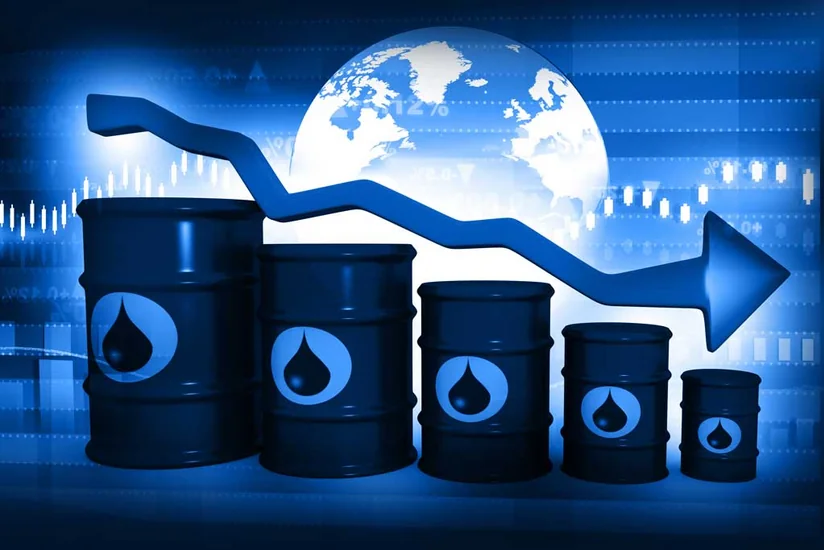
The Shale Revolution (2014–2015): The introduction of hydraulic fracturing (fracking) technologies led to a sharp increase in US shale oil production. The resulting market oversupply crashed prices from $100 down to $40 per barrel.
The Corona-Crisis (2020): Due to global lockdowns caused by the COVID-19 pandemic and a catastrophic drop in fuel demand, on April 20, 2020, the price of WTI May futures went negative for the first time in history (plunging to minus $37 per barrel). Producers were forced to pay buyers to take the oil due to a severe shortage of physical storage capacity.

 Baku 16° C