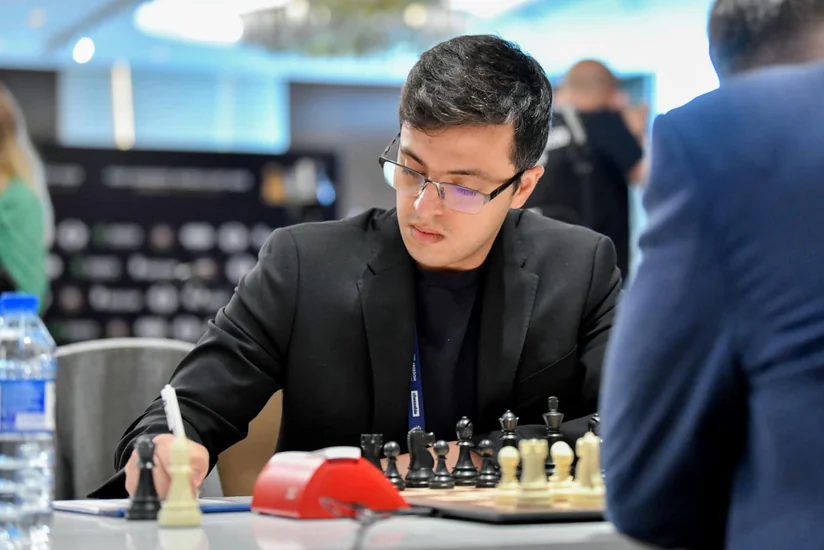
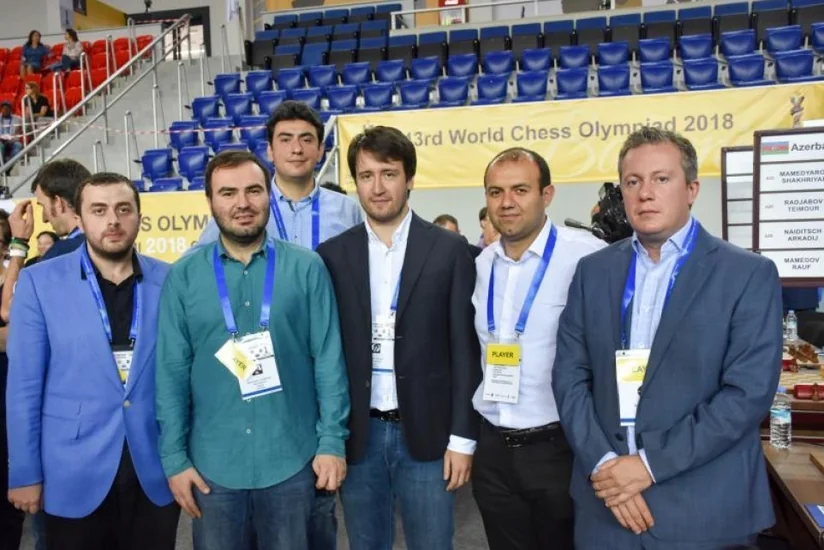
Nijat Azad oglu Abasov (born May 14, 1995, Baku) is an Azerbaijani chess player and international grandmaster (2011). For many years, he was considered a solid professional with a rating of around 2600+; however, the events of 2023–2024 elevated his career to a fundamentally new, elite level, making him one of the most discussed figures in world chess.
The sports department of Report.az highlights the key stages of Abasov's career that transformed him from a strong grandmaster into a national hero of intellectual sports.
August 2023 became a watershed in Nijat's career. The World Cup, held in his hometown of Baku, turned out to be the tournament of his life. Starting as the 69th seed, Abasov produced a series of incredible upsets (victories over favorites), demonstrating phenomenal stamina.
Who Abasov defeated on his way to the semifinals:
Anish Giri (Netherlands): A top-10 player in the world. Abasov's victory was the tournament's first major sensation.
Peter Svidler (Russia): A legendary grandmaster and multiple-time champion of Russia.
Salem Saleh (UAE): The strongest chess player in the Middle East.
Vidit Gujrathi (India): One of the leaders of the formidable Indian school.
In the semifinals, Nijat lost to 16-time world champion Magnus Carlsen, and in the third-place match, to Fabiano Caruana. His final 4th place finish at the World Cup was a historic achievement, proving that with the right motivation and preparation, Abasov is capable of defeating chess "heavyweights."
By finishing 4th at the World Cup, Abasov earned the right to participate in the 2024 Candidates Tournament after Magnus Carlsen officially declined his spot. This event returned Azerbaijan to the planet's premier chess tournament (Teimour Radjabov and Shakhriyar Mamedyarov had previously competed there).
Performance Analysis: In Toronto, Abasov was the lowest-rated player among the magnificent eight. The tournament proved to be a colossal test of endurance. Although Nijat finished in 8th place without a win (with several losses and a series of draws), this performance provided invaluable experience:
A Test of Resilience: Playing 14 consecutive classical games against the best chess players on the planet (Nakamura, Nepomniachtchi, Caruana, Gukesh) represents a level of resistance Abasov had not previously faced on a regular basis.
Defense and Tenacity: In several games, Nijat demonstrated stubborn defense in grueling positions, taking crucial half-points away from favorites and thereby directly influencing the final distribution of places in the tournament.
Chess analysts highlight several pillars upon which Nijat Abasov's game is built:
Nerves of Steel in Tiebreaks: The World Cup showed that Abasov feels exceptionally comfortable in shortened time controls (rapid and blitz). In stressful situations, where the cost of an error is at its peak, he maintains his composure better than many higher-rated opponents.
Fundamental Opening Preparation: Nijat frequently works as a second (in particular, he assisted Teimour Radjabov). This analytical work behind the scenes has endowed him with a profound understanding of opening schemes and the ability to find non-obvious ideas with the help of computer engines.
Solid Positional Play: Abasov is not prone to unjustified risks. He prefers solid, robust positions where he can methodically outplay his opponent or confidently hold a draw with the black pieces.
Nijat Abasov has proven that hard work, psychological resilience, and the ability to peak at the right moment can shatter any rating hierarchies. His success at the World Cup in Baku served as a powerful stimulus for the new generation of Azerbaijani chess players, demonstrating that the global chess elite is within reach.

 Baku 26° C