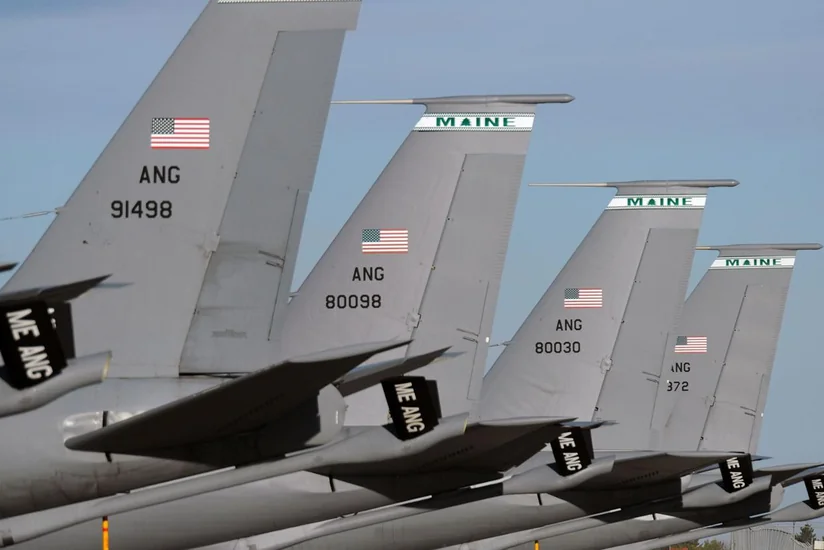
The Boeing KC-135 Stratotanker is an American four-engine, specialized multi-role military transport and aerial refueling aircraft, designed by the Boeing Company in the early 1950s. For over half a century, it has remained the backbone of the strategic aerial refueling fleet for the United States Air Force (USAF) and several NATO allied nations.
Amid modern global conflicts, including the protracted war in Eastern Europe and the unprecedented crisis in the Middle East in the spring of 2026, the KC-135 acts as a primary "force multiplier." These specific aircraft allow American fighters, bombers, and reconnaissance drones to remain airborne for days and execute strikes at intercontinental ranges.
The development of the KC-135 began at the height of the Cold War when the US Strategic Air Command required a jet-powered tanker capable of flying at the same speeds and altitudes as the new B-52 Stratofortress jet bombers. The design was based on the Boeing 367-80 prototype (which also served as the foundation for the famous Boeing 707 passenger airliner).
First Flight: August 31, 1956.
Entry into Service: June 1957.
Modernization: Despite its considerable age, the aircraft's airframe proved so successful that the KC-135 fleet has undergone a series of deep modernizations. The most significant upgrade was the replacement of the old turbojet engines with modern CFM International F108 (CFM56) turbofans. This increased fuel efficiency by 25%, reduced noise levels, and boosted thrust, transforming the older models into the modern KC-135R and KC-135T variants.
The KC-135 Stratotanker is essentially a colossal flying fuel cistern. Unlike standard transport aircraft, the fuel in a KC-135 is housed in special tanks integrated directly into the lower fuselage and the wings. This design leaves the upper cargo deck free to carry up to 37 tons of cargo or 83 passengers (for medical evacuation or troop transport).
Basic Tactical and Technical Specifications (KC-135R Variant):
Crew: 3 members (Aircraft Commander, Co-pilot, and Boom Operator).
Maximum Takeoff Weight: 146,000 kg (322,500 lbs).
Maximum Transferable Fuel Load: Up to 90,700 kg (200,000 lbs).
Cruising Speed: 853 km/h (530 mph) at an altitude of 9,000 m (30,000 ft).
Service Ceiling: 15,200 m (50,000 ft).
Range (transferring 68 tons of fuel): 2,419 km (1,500 miles).
Ferry Range: Up to 17,766 km (11,040 miles).
The primary method for transferring fuel from a KC-135 is the Flying Boom. This is a rigid, telescopic tube equipped with aerodynamic control surfaces, located at the rear of the aircraft.
The process requires the utmost precision and skill:
The receiving aircraft (recipient) takes up a position just a few meters directly below the tail of the tanker.
The Boom Operator, lying prone in a specialized glass-paneled observation pod in the tail of the KC-135, uses joysticks to control the boom's "wings," physically "plugging" the nozzle into the fuel receptacle of the fighter or bomber.
Fuel is then pumped under high pressure at a rate of up to 4,500 liters (1,200 gallons) per minute.
To refuel US Navy and NATO allied aircraft that use the probe-and-drogue system, a special flexible hose adapter can be attached to the end of the KC-135's rigid boom.
By early 2026, while the US Air Force has been gradually introducing the newer Boeing KC-46 Pegasus tankers, the decades-proven KC-135s remain the undeniable workhorses of the Pentagon.
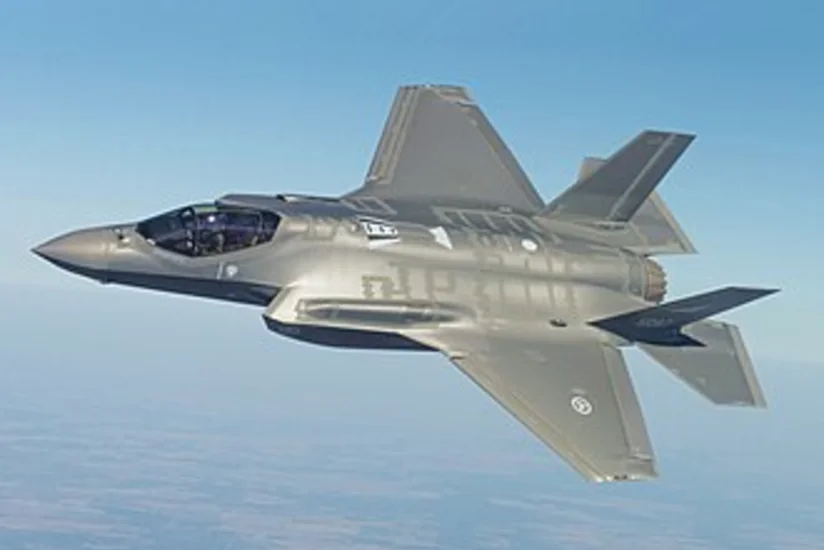
In March 2026, during the large-scale aerial operations of the US-Israeli coalition against Iran, the KC-135s provided a critical "air bridge." Deployed at bases in Qatar (Al Udeid) and the United Arab Emirates, these tankers enabled fifth-generation F-35 fighters and B-1B Lancer strategic bombers to conduct precision strikes on deep underground nuclear and missile facilities in enemy territory without making intermediate landings.
Without the KC-135 fleet, the American military machine's concept of global dominance and rapid response would be physically impossible.

 Baku 19° C