Baku 17° C
Envoy: Cooperation with International Commission on Missing Persons - priority of Azerbaijani diplomacy
- 15 September, 2023
- 11:55
Stay up to date with the top news!
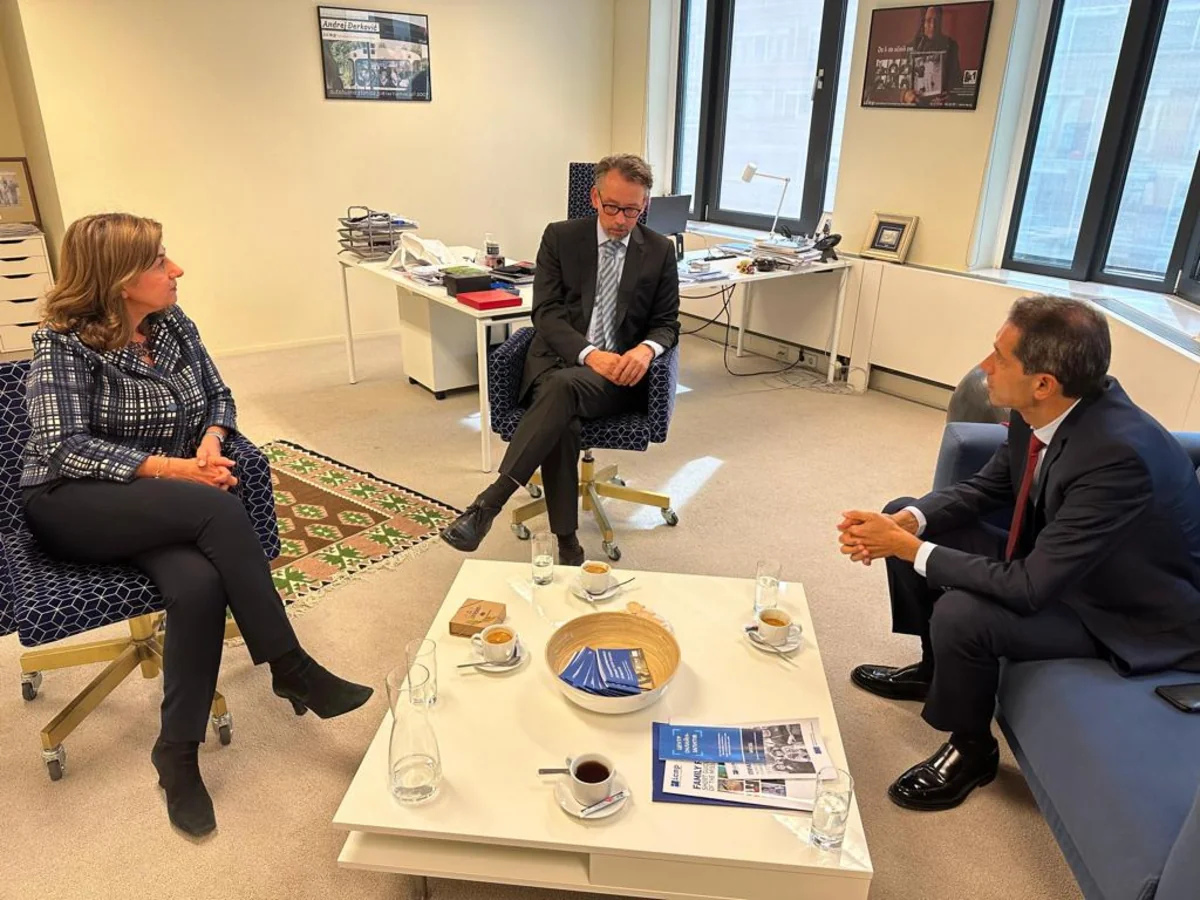
Ambassador of Azerbaijan to the Netherlands Rahman Mustafayev in an interview with Report spoke about Azerbaijan’s cooperation with the International Commission on Missing Persons (ICMP):
- An international conference on the problem of missing persons opens in Baku on September 18, in which a high-ranking representative of the ICMP will take part. Could you please tell us about our country’s cooperation with this organization headquartered in The Hague?
- ICMP was created on the initiative of US President Bill Clinton in 1996. The organization's original mandate was to help determine the fate of nearly 40,000 missing people during the 1991-1995 conflict in the former Yugoslavia. In 2004, the ICMP's mandate was extended to all countries of the world and today covers missing people not only from conflict, but also from human rights violations, organized crime, human trafficking, climate disasters and illegal migration. Today, the commission operates in more than 40 countries around the world and is the main intergovernmental organization that deals with issues of missing persons.
As for our cooperation, since 2022 it has been carried out through the presidential administration, the Ministry of Foreign Affairs and other ministries and departments of Azerbaijan in order to clarify the fate of 3,890 citizens of our country missing during the Armenian-Azerbaijani conflict.
- As you know, the ICMP delegation visited Azerbaijan in June of this year. What were the goals of this mission and its results?
- During the visit, the delegation of the commission set itself the task of assessing the state of our country’s institutional, legal, scientific and technical capabilities to solve the problem of missing persons; communicate with the families of the missing; establish contacts with relevant ministries and departments, forensic laboratories, NGOs and other organizations. Currently, based on the results of this trip, an assessment report is being prepared, which will make a comprehensive analysis of the state of this problem in Azerbaijan and prepare proposals for its solution.
- Is the commission ready to really help Azerbaijan in solving this problem?
- During 2023, I had several meetings with the leadership of the ICMP, in July I also met with the chairman and members of the Board of Directors of the commission, who oversee the activities of this organization and its secretary general. These are the most experienced diplomats and retired politicians who perfectly understand the importance of this issue for Azerbaijan, for our society, for the families of the missing and are ready to provide us with comprehensive legal, scientific, technical and other assistance in finding and identifying those missing. In what form this will be done is the topic of the next stage. After our side familiarizes itself with the report and its recommendations, it will agree with the commission on the tasks and directions for further bilateral cooperation.
My main impression from all these meetings is that the members of the board and the secretary-general understand that without closing this tragic page in our history and without restoring justice, lasting peace in the region and sustainable normalization of Armenian-Azerbaijani relations are impossible.
- What areas do you think the cooperation with ICMP may cover?
- First of all, we are talking about such important areas of interaction as improving our regulatory framework in this matter, increasing the technical equipment of laboratories and establishing their cooperation with leading European centers of forensic medicine, using the highest standards for collection, storage, protection of and accounting on DNA data, increasing the efficiency of cooperation between all participants in the search for missing persons - government agencies, families of missing persons, civil society, international organizations. ICMP has extensive experience in these matters. Out of almost 8,000 victims of the tragedy in Srebrenica in July 1995, 7,017 people were identified, including 6,981 using DNA samples.
The humanitarian and human rights aspect is also extremely important. Families of missing people have the right to truth and justice, an effective investigation into crimes committed against their loved ones, reparations and compensation, and perpetuation of the memory of the dead. They also have the right to demand from international organizations the punishment of those responsible for war crimes against their relatives and friends and guarantees of non-repetition of such crimes in the future. Therefore, the issue of massive violation of the rights of citizens of our country by Armenia is in the center of attention of Azerbaijani diplomacy.
The human rights sphere is not a one-way street. The unhealthy practice when the Armenian side, regularly “running red lights,” enjoys immunity from any criticism and responsibility, must be stopped.
The political aspect is also closely related to the human rights aspect. The ICMP may act as a witness in courts and tribunals. In particular, the commission cooperated with Interpol in identifying victims of Malaysia Airlines flight MH17; with the Hague Court in the case "Croatia v. Serbia" in March 2014; with the International Criminal Tribunal for the Former Yugoslavia in the trial against Karadzic in April 2012, with the International Criminal Court.
- What is the role of Armenia in this process, which has not yet provided us with any information about the places of mass graves?
- It is for this reason that the ICMP mission visited not only our country, but also Armenia in June, and will work with it to ensure its cooperation and provide our side with information about the places of mass and non-mass burials of our citizens.
Returning again to Srebrenica, I note that precisely because Croatia and Serbia were open to cooperation with Bosnia and Herzegovina and signed relevant agreements with it in July 2019, 95 mass graves and 349 separate sites with the remains of victims of the tragedy were identified on the territory of BiH Srebrenica, and 57 people were prosecuted by BiH courts for committing war crimes.
Author