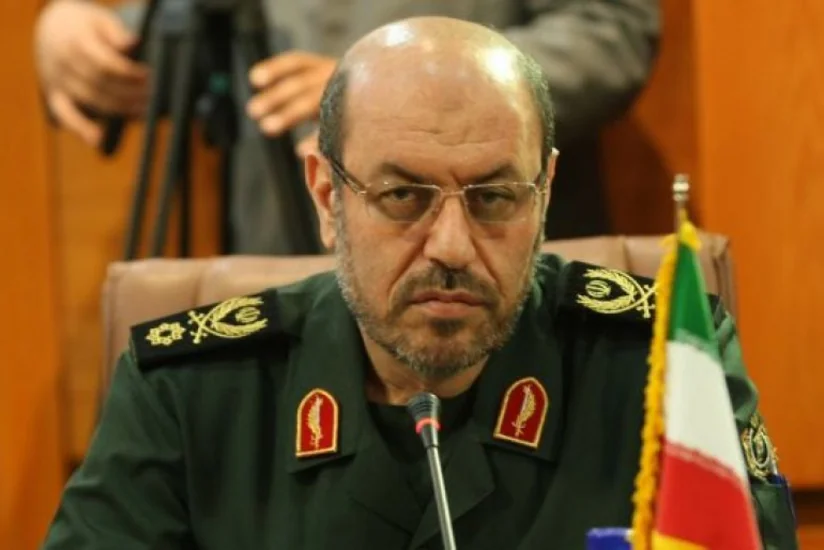
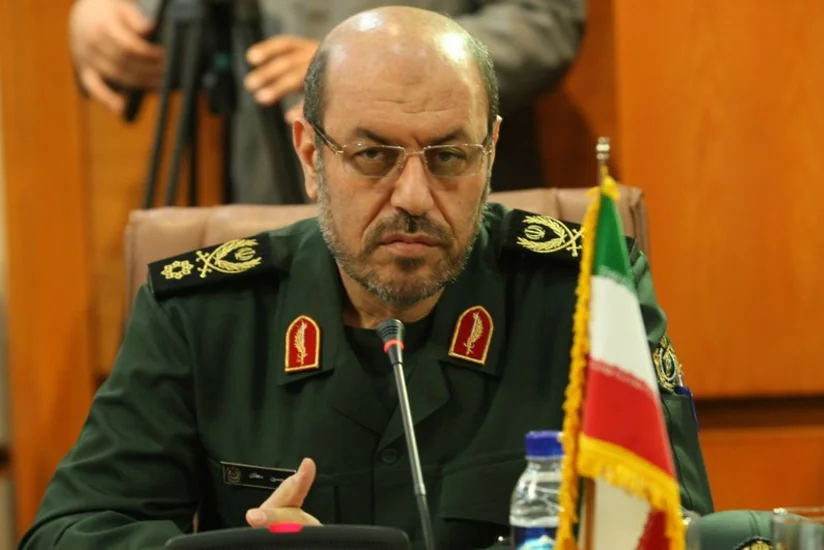
Hossein Dehghan (Persian: حسین دهقان) is a prominent Iranian state and military figure, a brigadier general in the Islamic Revolutionary Guard Corps (IRGC), a former Minister of Defense, and one of the most trusted advisors to Supreme Leader Ali Khamenei.
While in the past decade the world knew Dehghan primarily as the architect of Iran's missile program and a tough military negotiator, by the Spring of 2026, his role has fundamentally transformed. Now heading the immensely powerful Foundation of the Oppressed (Bonyad-e Mostazafan), Dehghan has become the key manager of the "resistance economy," ensuring the financial stability of the Islamic Republic amidst an unprecedented war in the Middle East and total sanctions.
Hossein Dehghan was born in 1957 in the village of Poudeh (Isfahan Province). His youth coincided with the 1979 Islamic Revolution, the ideas of which he embraced unconditionally, joining the ranks of the newly formed IRGC.
Dehghan possesses a brilliant educational background: he earned a Ph.D. in management from the University of Tehran, which later made him a rare archetype for Iran—a "technocrat-general."
His finest hour as a military strategist arrived in the early 1980s. At the height of the Lebanese Civil War, Dehghan was appointed commander of the IRGC forces in Syria and Lebanon (1982–1984). It was he who played a fundamental, historic role in the formation, training, and ideological nurturing of the Hezbollah group. The ties Dehghan forged with the Shiite militias of the Levant more than forty years ago continue to serve Tehran's interests well into 2026.
Despite his radical past in the IRGC, Dehghan has always been characterized by his pragmatism. This trait allowed him to serve as Minister of Defense in the government of the moderate President Hassan Rouhani.
As head of the defense establishment, Dehghan is remembered for two strategic achievements:
Diplomatic Breakthrough with Russia: He successfully concluded the highly complex negotiations with Moscow for the delivery of S-300 anti-aircraft missile systems, breaking through a multi-year international embargo.
The Missile Shield: Dehghan shifted the focus of the Iranian military-industrial complex from classic weaponry to the mass production of high-precision ballistic missiles and strike unmanned aerial vehicles (UAVs), laying the very foundation of Iran's modern military doctrine.
In late 2023, Supreme Leader Ali Khamenei made a strategic decision, appointing Hossein Dehghan as the head of the Foundation of the Oppressed (Bonyad-e Mostazafan).
By 2026, this Foundation is a colossal economic conglomerate, accountable neither to the parliament nor the government, but answering directly and solely to the Supreme Leader. The Foundation controls hundreds of enterprises across petrochemicals, construction, energy, agriculture, and finance, generating a massive portion of Iran's GDP.
Under the crushing weight of the military and sanction crisis in the Spring of 2026, Hossein Dehghan essentially acts as a national crisis manager. His primary objective is to utilize the Foundation's vast resources to bypass Western sanctions, fund strategic state programs, and maintain social stability (subsidizing the poorest segments of the population) while the state treasury is depleted by war.
For the Republic of Azerbaijan, Hossein Dehghan is a highly familiar figure. During his tenure as Minister of Defense, he visited Baku on multiple occasions, meeting with Azerbaijan's top political and military leadership.
Unlike many radical ideologues in Tehran who have indulged in provocative rhetoric directed at Azerbaijan, Dehghan has always maintained a strictly pragmatic line. He possesses a deep understanding of the military-technical potential of the Azerbaijani army and has consistently advocated for predictable relations in the South Caucasus.

 Baku 25° C