Afghanistan

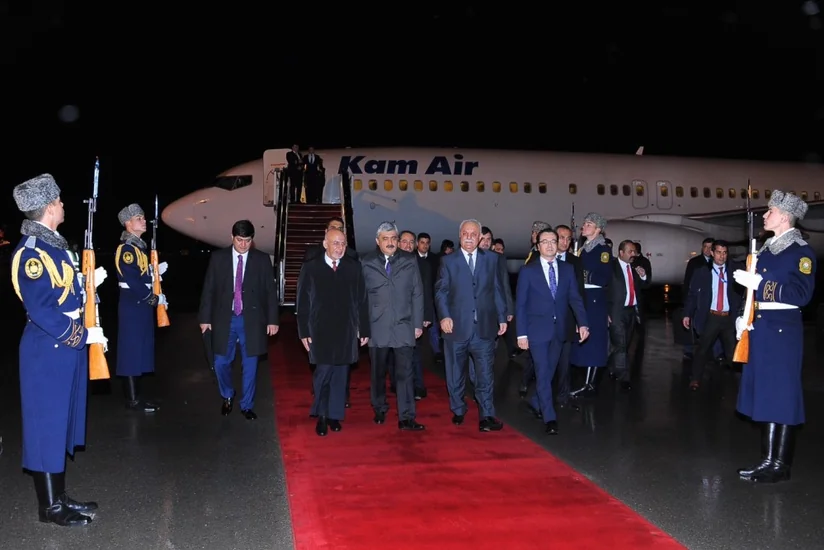
Afghanistan President arrives in Azerbaijan
Foreign policy

Afghanistan President arrives in Azerbaijan

  • 30 November, 2017
  • 13:58
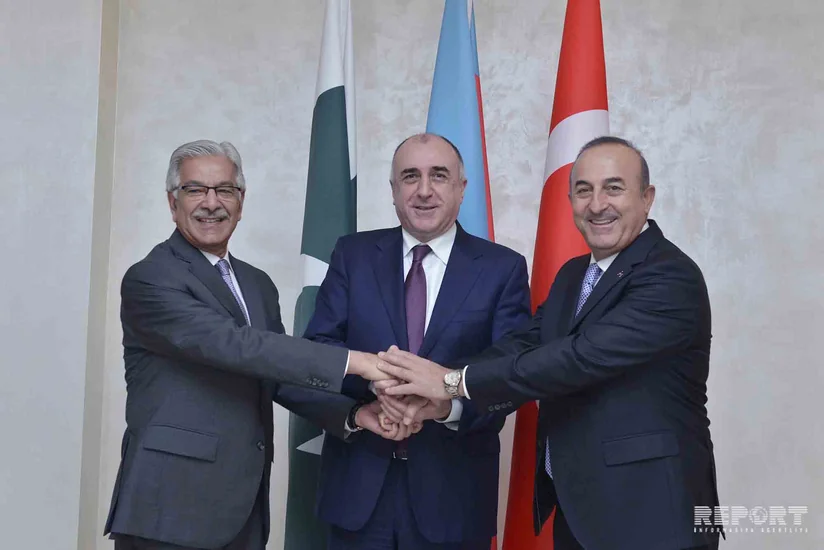
Meeting of Azerbaijani, Pakistan and Turkish FMs lays foundation of a new block - COMMENT
Analytics app.type.article

Meeting of Azerbaijani, Pakistan and Turkish FMs lays foundation of a new block - COMMENT

  • 30 November, 2017
  • 13:35
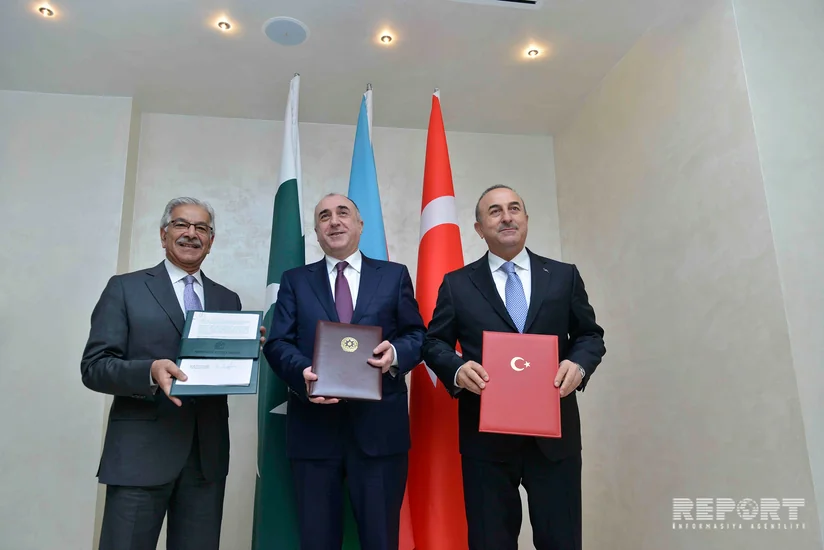
Baku Declaration of Azerbaijani, Turkish and Pakistani foreign ministers - FULL TEXT
Foreign policy

Baku Declaration of Azerbaijani, Turkish and Pakistani foreign ministers - FULL TEXT

  • 30 November, 2017
  • 10:40
Chief of Staff: Military cooperation between Azerbaijan and NATO is very broad
Military Photo

Chief of Staff: Military cooperation between Azerbaijan and NATO is very broad

  • 29 November, 2017
  • 08:07
Ambassador: Afghanistan supports Azerbaijan in Karabakh conflict settlement
Karabakh

Ambassador: Afghanistan supports Azerbaijan in Karabakh conflict settlement

  • 27 November, 2017
  • 08:44
Azerbaijan and Afghanistan to sign five important documents
Foreign policy

Azerbaijan and Afghanistan to sign five important documents

  • 27 November, 2017
  • 08:11
Ambassador: Afghanistan grateful to Azerbaijan for partnership and support
Foreign policy

Ambassador: Afghanistan grateful to Azerbaijan for partnership and support

  • 27 November, 2017
  • 07:55
Afghan ambassador: We are grateful to Azerbaijani President for increasing number of peacekeepers
Foreign policy

Afghan ambassador: We are grateful to Azerbaijani President for increasing number of peacekeepers

  • 27 November, 2017
  • 07:40
Paloméros: NATO appreciates Azerbaijan's engagement in peacekeeping operations
Foreign policy

Paloméros: NATO appreciates Azerbaijan's engagement in peacekeeping operations

  • 24 November, 2017
  • 06:05
President Ilham Aliyev: Azerbaijan to increase number of peacekeepers in Afghanistan
Foreign policy Photo

President Ilham Aliyev: Azerbaijan to increase number of peacekeepers in Afghanistan

  • 23 November, 2017
  • 10:00
Ramiz Mehdiyev attends 5th meeting of CIS Security Council secretaries in Moscow
Foreign policy

Ramiz Mehdiyev attends 5th meeting of CIS Security Council secretaries in Moscow

  • 23 November, 2017
  • 05:11
Elmir Velizade: Azerbaijan contributes to Islamic cooperation
Foreign policy

Elmir Velizade: Azerbaijan contributes to Islamic cooperation

  • 22 November, 2017
  • 12:35
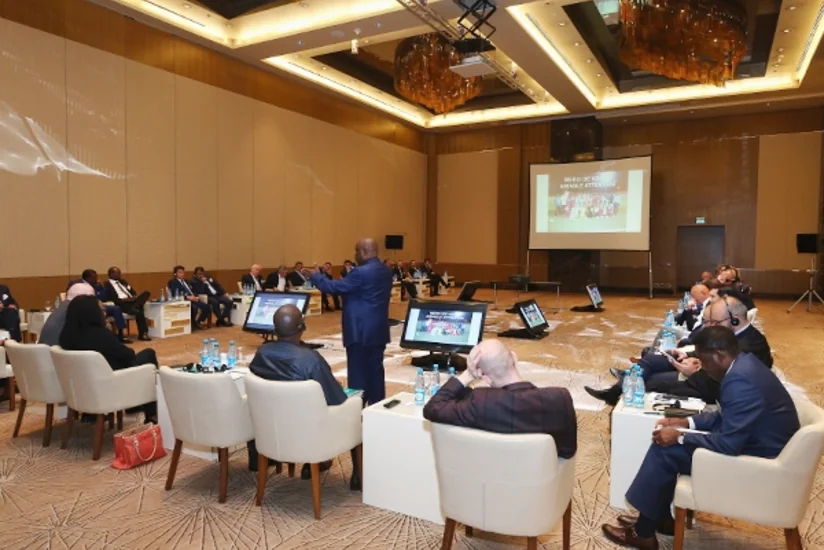
Baku plays host to FIFA Executive Football Summit
Football Photo

Baku plays host to FIFA Executive Football Summit

  • 22 November, 2017
  • 08:30
Media: US State Secretary is accused of violating federal law
Other countries

Media: US State Secretary is accused of violating federal law

  • 21 November, 2017
  • 09:42
Elkhan Mammadov: We will host FİFA Summit with great pleasure”
Football

Elkhan Mammadov: "We will host FİFA Summit with great pleasure”

  • 20 November, 2017
  • 09:58
New FIFA President to visit Azerbaijan for first time
Football

New FIFA President to visit Azerbaijan for first time

  • 20 November, 2017
  • 08:04
1 ... 142 143 144 145 146 147

Afghanistan: History, Geography, Demographics, and Economy

Afghanistan (officially the Islamic Emirate of Afghanistan) is a landlocked, mountainous country located at the crossroads of Central and South Asia, bordered by Pakistan to the east and south, Iran to the west, Turkmenistan, Uzbekistan, and Tajikistan to the north, and China to the far northeast. Spanning over 652,000 square kilometers with a population estimated at over 40 million people, Afghanistan possesses a turbulent and profound history, exceptional geostrategic significance, and a deeply diverse multi-ethnic cultural fabric shaped by centuries of trade, conquest, and geopolitical rivalry.

1. Historical Background and Geopolitical Crossroads

Ancient Trade and Empires: For millennia, the territory of modern Afghanistan served as a vital nexus of the Great Silk Road, connecting empires of the Mediterranean, Persia, India, and China. It witnessed the reigns of the Achaemenids, Alexander the Great, the Mauryas, Kushans, and various Islamic dynasties.

The "Graveyard of Empires": During the 19th and 20th centuries, Afghanistan maintained its independence through fierce resistance against foreign domination, serving as a buffer state between the British Empire and Tsarist Russia ("The Great Game"), and later withstanding the Soviet military intervention (1979–1989).

Modern Era and Taliban Rule: Following decades of civil war, foreign intervention, and the 20-year Western military campaign led by the United States, foreign troops withdrew in August 2021, leading to the return of the Taliban to power and the establishment of the Islamic Emirate, which remains unrecognized internationally.

2. Geography, Topography, and Climate

Rugged Mountains: The country's topography is overwhelmingly mountainous and rugged, dominated by the Hindu Kush mountain system, which divides the country into distinct regional basins and makes internal transportation historically challenging.

River Systems and Valleys: Key river systems, including the Amu Darya, Helmud, and Kabul rivers, sustain fertile valleys and agricultural basins, though much of the country experiences an arid to semi-arid continental climate with harsh, freezing winters and scorching summers.

3. Demographics and Cultural Heritage

Multi-Ethnic Society: Afghanistan is home to numerous ethnic groups, primarily the Pashtuns, Tajiks, Hazaras, and Uzbeks, united largely by Islamic traditions and shared cultural practices, with Pashto and Dari serving as the official languages.

Ancient Monuments: The country holds an irreplaceable cultural heritage, famously highlighted by historical sites such as the Bamiyan Valley (home to ancient Buddhist monuments) and the city of Herat, renowned for its exquisite Islamic architecture.

4. Economy and Natural Resources

Subsistence Agriculture: The domestic economy relies heavily on traditional agriculture, livestock herding, and small-scale trade, with wheat, fruits, nuts, and cotton serving as staples.

Mineral Wealth: Afghanistan possesses vast, largely unexploited reserves of critical minerals and hydrocarbons, including extensive deposits of lithium, copper, iron ore, rare earth elements, and natural gas, which hold immense potential for future economic development.