
 Baku 24° C
IATA supports raising threshold for compensation for flight delays
- 06 June, 2026
- 17:51
Stay up to date with the top news!
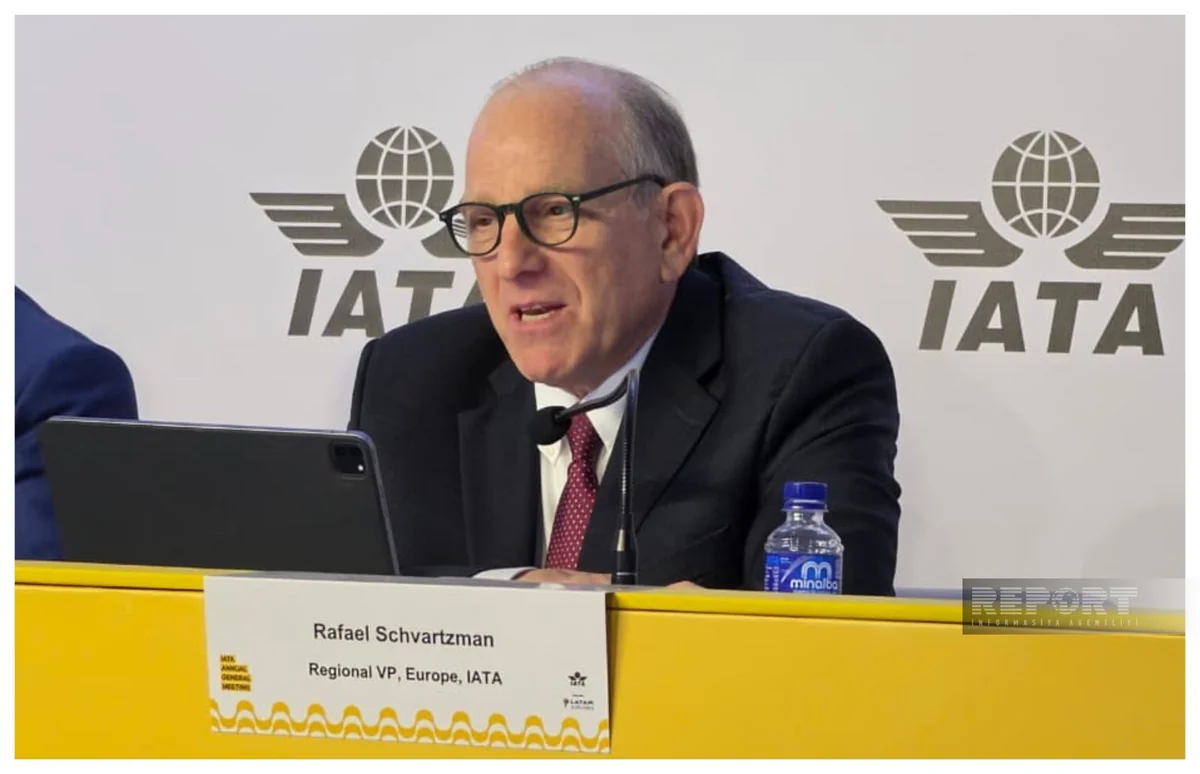
The EU passenger rights regulation EU261 costs the aviation industry approximately €8 billion annually, while the vast majority of passengers never receive the compensation it provides for, Rafael Schvartzman, Regional Vice President for Europe of the International Air Transport Association (IATA), said at a press conference held during the 82nd Annual General Meeting (AGM) and the World Air Transport Summit (WATS) of IATA.
Report quotes him as saying negotiations between the European Parliament and the Council of the EU on reforming EU261 are in their final stage, but the process itself has been significantly delayed.
"Instead of developing a practical reform, aviation has become an object of political debate, and the negotiations are addressing operational issues whose specifics are not always fully understood by policymakers. The Council of the EU has set the right goals: the rules should be simpler, more balanced, easier to apply, and should help preserve connectivity and Europe"s competitiveness. However, the current proposal does not meet these requirements. We have clearly stated our position: if the reform does not bring significant improvements, it is better to keep the current system and return to the discussion later," Schvartzman said.
He stressed that EU261 is not an effective tool for improving airline punctuality, as airlines are already motivated to minimize delays.
"The regulation already costs the industry around €8 billion annually, or about €8 per passenger, although 99% of passengers never directly benefit from it. Moreover, the current rules may encourage airlines to cancel flights rather than risk delays exceeding the three-hour threshold, after which compensation becomes mandatory.
That is why we have advocated increasing the compensation threshold for flight delays to five hours. The Council of the EU"s compromise proposal sets four hours for short-haul flights and six hours for long-haul flights, which can be seen as a step in the right direction. However, if the European Parliament continues to insist on a three-hour threshold, maintaining the status quo may be the least painful option," the IATA vice president noted.
According to him, any future reform must take into account that many delays occur due to factors beyond airlines" control.
"The crisis caused by the war in Iran once again reminded us that airlines regularly face extraordinary circumstances for which they should not be held responsible. The same applies to air traffic control issues. In Europe, delays caused by this factor have doubled over the past decade. Ultimately, EU261 should work more effectively in the interests of both passengers and airlines, contributing to the competitiveness of the European economy," Schvartzman emphasized.
Author