United Nations

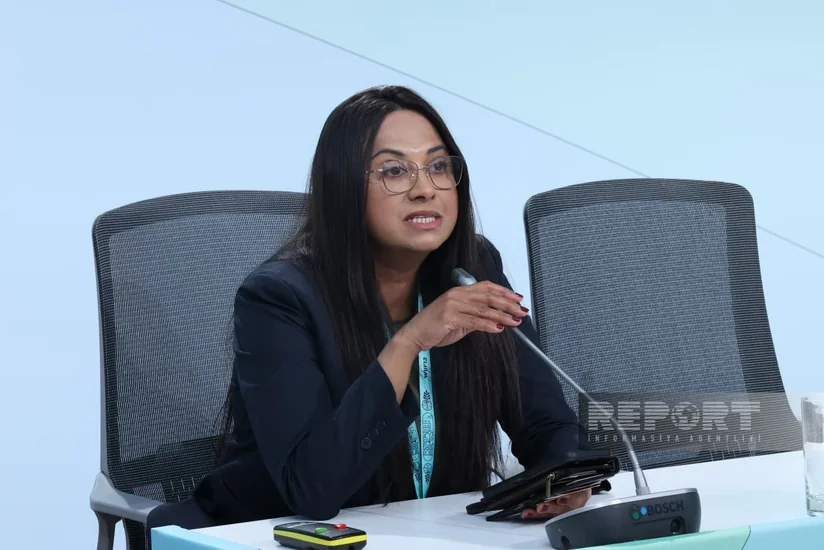
UN official: 2.8B people worldwide live in places without adequate housing conditions
Foreign policy

UN official: 2.8B people worldwide live in places without adequate housing conditions

  • 20 May, 2026
  • 10:01
Javier Torner: UNECE has prepared master plans for cities of Ukraine
Other countries

Javier Torner: UNECE has prepared master plans for cities of Ukraine

  • 20 May, 2026
  • 09:25
Javier Torner: UNECE is working on creating integrated database for housing planning
Foreign policy

Javier Torner: UNECE is working on creating integrated database for housing planning

  • 20 May, 2026
  • 09:14
ESCAP expert: Cities face interconnected risks and require integrated management
Infrastructure

ESCAP expert: Cities face interconnected risks and require integrated management

  • 20 May, 2026
  • 09:13
Sanjeevani Singh: In ESCAP countries, approximately 700 million people live in informal settlements
Foreign policy

Sanjeevani Singh: In ESCAP countries, approximately 700 million people live in informal settlements

  • 20 May, 2026
  • 09:10
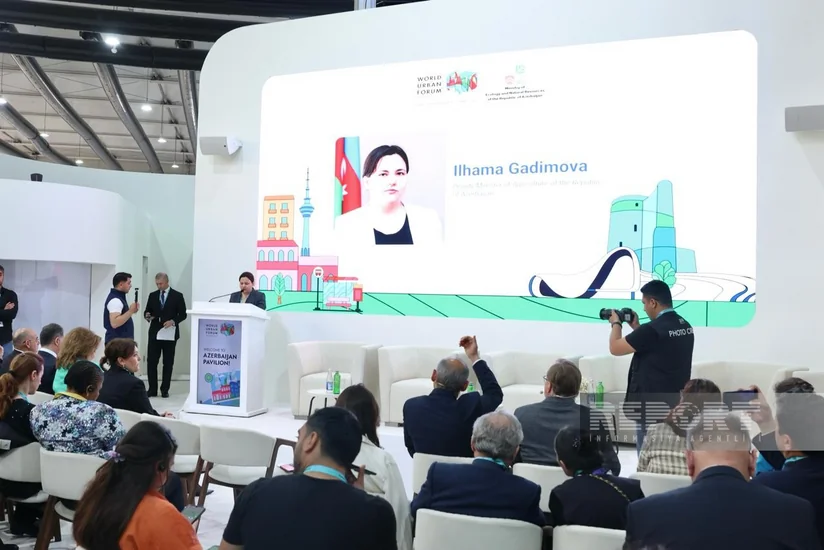
Event on Early Warning and Climate-Resilient Cities held as part of WUF13
Foreign policy

Event on "Early Warning and Climate-Resilient Cities" held as part of WUF13

  • 20 May, 2026
  • 08:57
Azerbaijani, Turkish MPs discuss urban planning cooperation
Milli Majlis Photo

Azerbaijani, Turkish MPs discuss urban planning cooperation

  • 20 May, 2026
  • 01:38
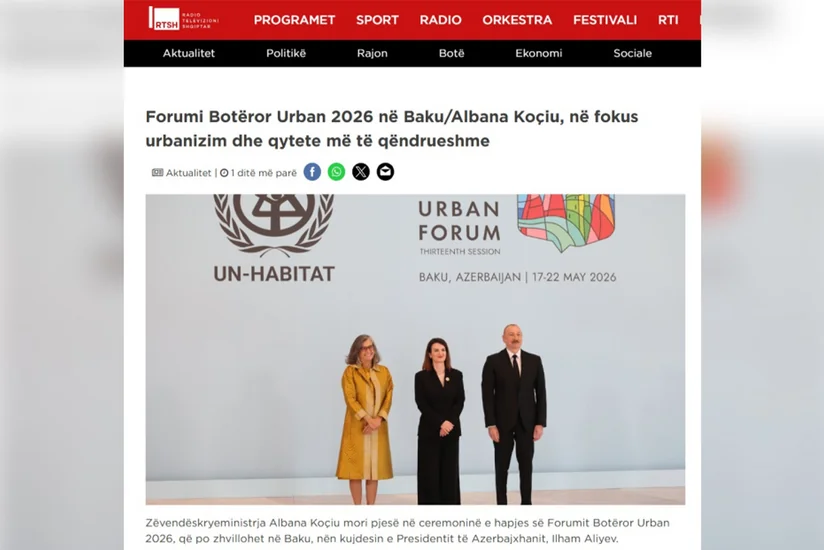
Global media widely covers WUF13 in Baku
Media Photo

Global media widely covers WUF13 in Baku

  • 20 May, 2026
  • 01:34
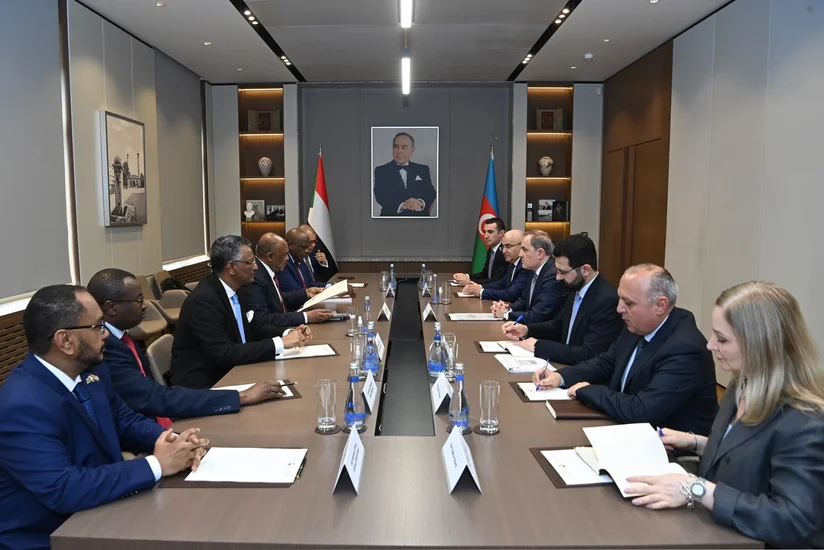
Azerbaijan, Sudan discuss expanding bilateral cooperation
Foreign policy Photo

Azerbaijan, Sudan discuss expanding bilateral cooperation

  • 20 May, 2026
  • 01:25
WUF13 hosts panel on UNESCO creative cities, sustainable urban planning
Infrastructure Photo

WUF13 hosts panel on UNESCO creative cities, sustainable urban planning

  • 20 May, 2026
  • 01:21
WUF13 hosts dialogue on climate-resilient cities in Caspian region
Foreign policy

WUF13 hosts dialogue on climate-resilient cities in Caspian region

  • 20 May, 2026
  • 00:20
Emin Amrullayev meets newly appointed UNESCO education official
Education and science

Emin Amrullayev meets newly appointed UNESCO education official

  • 20 May, 2026
  • 00:18
Fifth ministerial meeting on urban planning, climate may be held during COP31 in Türkiye
Infrastructure

Fifth ministerial meeting on urban planning, climate may be held during COP31 in Türkiye

  • 20 May, 2026
  • 00:10
UN-Habitat: Promoting local materials important for sustainability in housing construction
Infrastructure

UN-Habitat: Promoting local materials important for sustainability in housing construction

  • 20 May, 2026
  • 00:08
Ombretta Tempra calls for expanded environmental standards in housing construction
Infrastructure

Ombretta Tempra calls for expanded environmental standards in housing construction

  • 20 May, 2026
  • 00:07
UN-Habitat groups urban planning recommendations into six thematic areas
Infrastructure

UN-Habitat groups urban planning recommendations into six thematic areas

  • 20 May, 2026
  • 00:01
1 ... 42 43 44 45 46 ... 103

United Nations: Structure, Core Purposes, Principal Organs, and Operations

United Nations (commonly known as the UN) is a global international organization founded on October 24, 1945, following the devastation of World War II, with the primary mandate to maintain international peace and security, develop friendly relations among nations, and promote international cooperation. Succeeding the ineffective League of Nations, the UN currently unites nearly all recognized sovereign states worldwide—totaling 193 member states.

1. Fundamental Purposes and Principles

Peace and Security: Preventing armed conflict, mediating international disputes through diplomatic channels, and deploying peacekeeping missions to stabilize post-conflict zones.

Human Rights and Sustainable Development: Safeguarding fundamental human freedoms, combating discrimination, eradicating extreme poverty, providing humanitarian relief, and executing the ambitious Sustainable Development Goals (SDGs).

2. Principal Organs of the UN

General Assembly: The main deliberative, policymaking, and representative organ of the UN, comprising all member states (each holding a single vote) to debate global issues and adopt non-binding resolutions.

Security Council: The powerful executive organ bearing primary responsibility for maintaining international peace and security. It consists of 15 members, including five permanent veto-wielding powers—often known as the P5 (China, France, Russia, the United Kingdom, and the United States)—and ten rotating non-permanent members elected for two-year terms.

Secretariat: The administrative engine of the organization, headed by the Secretary-General, carrying out day-to-day operations, field missions, and research.

International Court of Justice (ICJ): The principal judicial organ of the UN, located in The Hague, Netherlands, which adjudicates legal disputes submitted by states and provides advisory opinions on legal questions.

Economic and Social Council (ECOSOC): The central platform coordinating economic, social, and environmental work across the vast network of UN specialized agencies.

3. Specialized Agencies, Programs, and Funds

Global Network: The UN system encompasses numerous autonomous specialized bodies and operational programs addressing specific global challenges, including the World Health Organization (WHO), UNESCO, UNICEF, the UN Development Programme (UNDP), and the UN High Commissioner for Refugees (UNHCR).