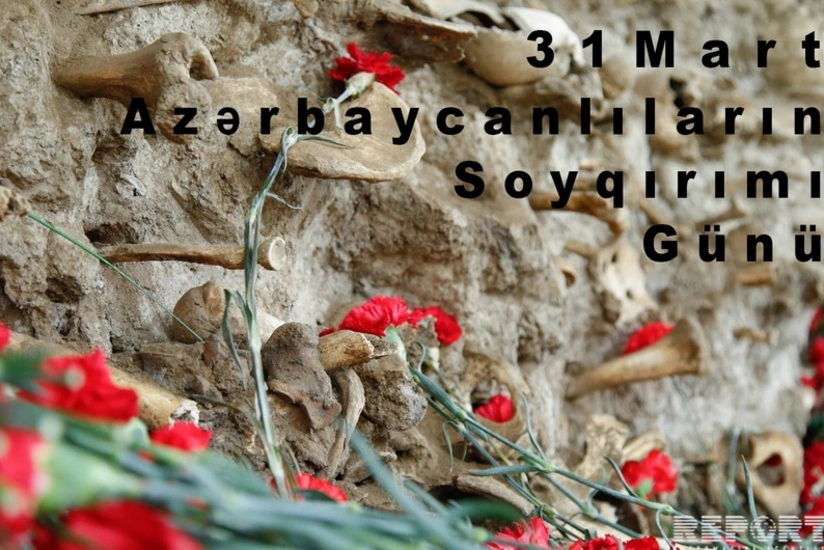
March 31, Azerbaijan observes one of the most tragic dates in its history — the Day of Genocide of Azerbaijanis. The events of the spring of 1918 constituted an unprecedented act of mass terror aimed at the ethnic cleansing and extermination of the Azerbaijani population on their historical lands.
Today, in 2026, when Azerbaijan has fully restored its territorial integrity and sovereignty, reflecting on the events of a century ago is not about cultivating a victim complex, but rather a crucial act of preserving historical memory and preventing such crimes in the future.
The tragedy that unfolded from March 30 to April 3, 1918, was not a spontaneous riot. It was a meticulously planned punitive operation carried out by the armed formations of the Armenian "Dashnaktsutyun" party, supported by the Bolshevik leadership of the Baku Soviet (Baku Commune), headed by Stepan Shaumyan.
Taking advantage of the political chaos that followed the collapse of the Russian Empire, the combined Bolshevik-Dashnak forces, under the pretext of combating "counter-revolutionary elements," unleashed ruthless terror against the peaceful Muslim population.
The Epicenter — Baku: In just a few days in Baku, more than 12,000 peaceful Azerbaijanis were murdered with exceptional cruelty. The city's historical buildings (including the editorial office of the "Kaspiy" newspaper, the Ismailiyya building, and the Taza Pir Mosque) were subjected to artillery fire and burned down.
Expansion of the Massacre's Geography: The slaughter was not confined to the capital. Punitive detachments carried out mass pogroms in Shamakhi, Guba, Khachmaz, Lankaran, Hajigabul, Salyan, and Zangezur.
Scale of the Losses: According to the estimates of the Extraordinary Investigation Commission, created later by the government of the Azerbaijan Democratic Republic (ADR), the death toll reached tens of thousands. Hundreds of Azerbaijani villages were completely wiped out.
During the years of Soviet rule, the truth about the March 1918 events was carefully concealed or distorted by ideological clichés (presented merely as the "suppression of the Musavatist mutiny"). Historical justice was restored only after Azerbaijan gained its independence.
The turning point was the Decree of the National Leader Heydar Aliyev dated March 26, 1998, "On the Genocide of Azerbaijanis".
This historic document fulfilled three fundamental tasks:
Provided a clear and uncompromising political and legal assessment of the 1918 events specifically as an act of genocide.
Officially established March 31 as the Day of Genocide of Azerbaijanis.
Initiated the systematic and scientifically grounded exposure of Armenian nationalism in the international arena.
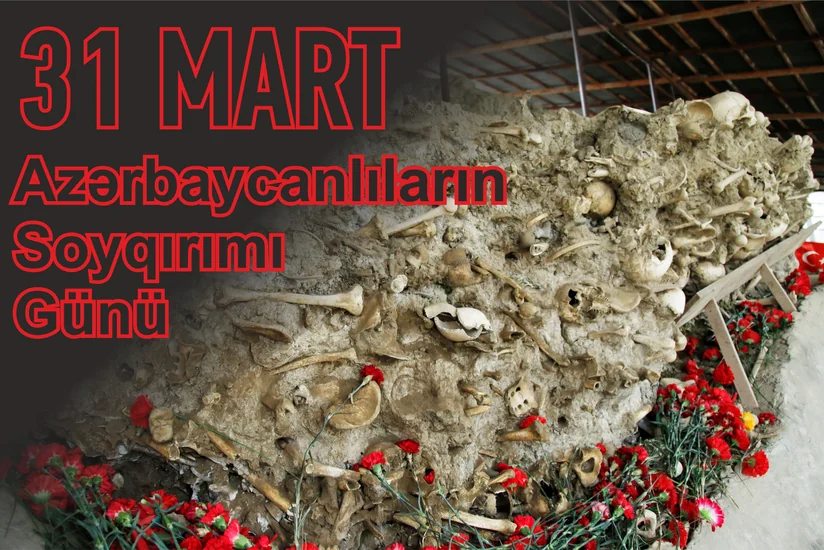
For the modern generation of Azerbaijanis, the memory of March 31 rests on undeniable material evidence. The discovery of the Guba mass grave in 2007 and the creation of the Genocide Memorial Complex on its site became visible, blood-chilling proof of the Dashnaks' atrocities.
The analytical department of Report.az emphasizes: amidst ongoing global information wars, conveying the truth about the March genocide to the international community remains a top priority for diplomacy and the diaspora. The presence of a strong state and a combat-ready army today is the primary and only guarantee that the events of 1918 on Azerbaijani soil will never be repeated.
March 31 is a day of profound mourning, but simultaneously a day of national solidarity. Honoring the memory of tens of thousands of innocent victims, modern Azerbaijan demonstrates to the world its unwavering will to defend its people, its statehood, and its historical truth.

 Baku 26° C