
 Baku 17° C
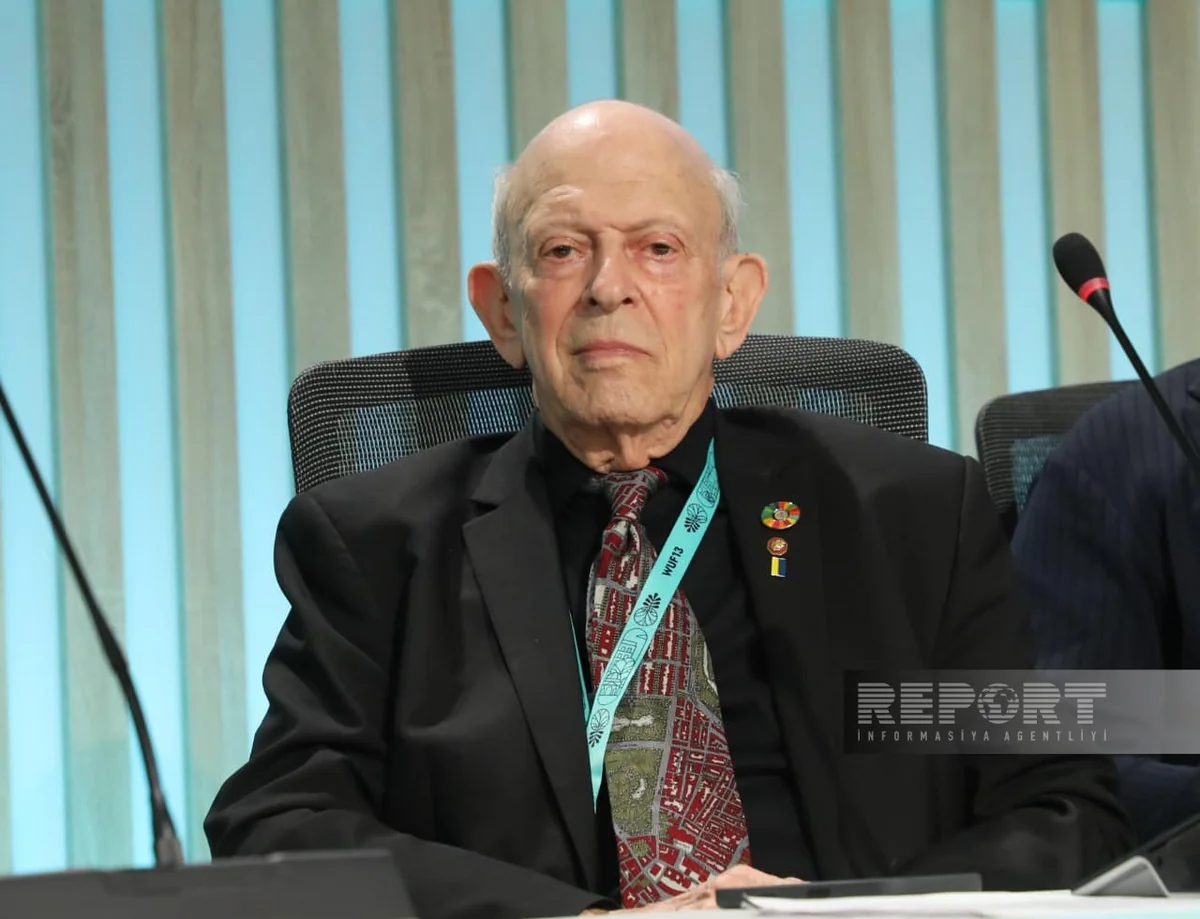
Jay Brown outlines key elements of Recovering Future concept at WUF13
- 21 May, 2026
- 14:03
Stay up to date with the top news!
Sustainable cities are impossible without guaranteed access to safe housing, services, and protection from forced displacement, Habitat Professional Forum Co-Chair Lance Jay Brown said during discussions at the 13th session of the World Urban Forum (WUF13) in Baku, Report informs.
He stated that the Recovering the Future concept is directly linked to the six key dialogues of WUF13 and offers a new approach to urban recovery after disasters.
Brown noted that the first dialogue focuses on inclusive cities and communities, and the concept itself is based on a human rights-based approach: "Recovery cannot be measured solely by the number of homes or infrastructure restored. It must guarantee human dignity, community participation, safe housing, access to services, and protection from displacement."
According to him, special attention must be paid to residents of informal settlements, migrants, refugees, indigenous peoples, and the elderly, as these groups suffer the most from the impacts of disasters.
Speaking about the second dialogue, dedicated to housing and the right to the city, Brown emphasized that the lack of safe and affordable housing forces low-income communities to settle in floodplains, on unstable slopes, and in ecologically degraded areas: "This leads to repeated population displacement and increased vulnerability to disasters."
He said the concept emphasizes the need for strategic linkages between housing policies and recovery programs at the local, national, and international levels.
The third dialogue focuses on climate and environmental resilience, Brown noted.
According to Brown, climate resilience cannot be achieved solely through engineering solutions and requires restoring the connection between cities, landscapes, and ecosystems.
He also noted that weak urban governance remains one of the main obstacles to a transformative recovery: "Resilient cities require not only physical infrastructure, but also strong institutions, transparent systems, and long-term public trust."
Speaking about the future of cities, innovation, and partnerships, Brown emphasized that the concept rejects a return to the previous "normal," which in many cases was already unsafe and unjust.
He noted that the concept promotes interdisciplinary collaboration between architects, urban planners, engineers, lawyers, environmentalists, health professionals, and the communities themselves: "Resilience is not simply the ability to survive shocks. It is the ability to create more just, inclusive, adaptive, and humane cities and communities."
The main goal of the concept is to give people hope for a safer, more equitable, and more climate-resilient life.
Author