
 Baku 24° C
Ten priority projects identified to triple trade volume along Middle Corridor
- 18 June, 2026
- 20:28
Stay up to date with the top news!
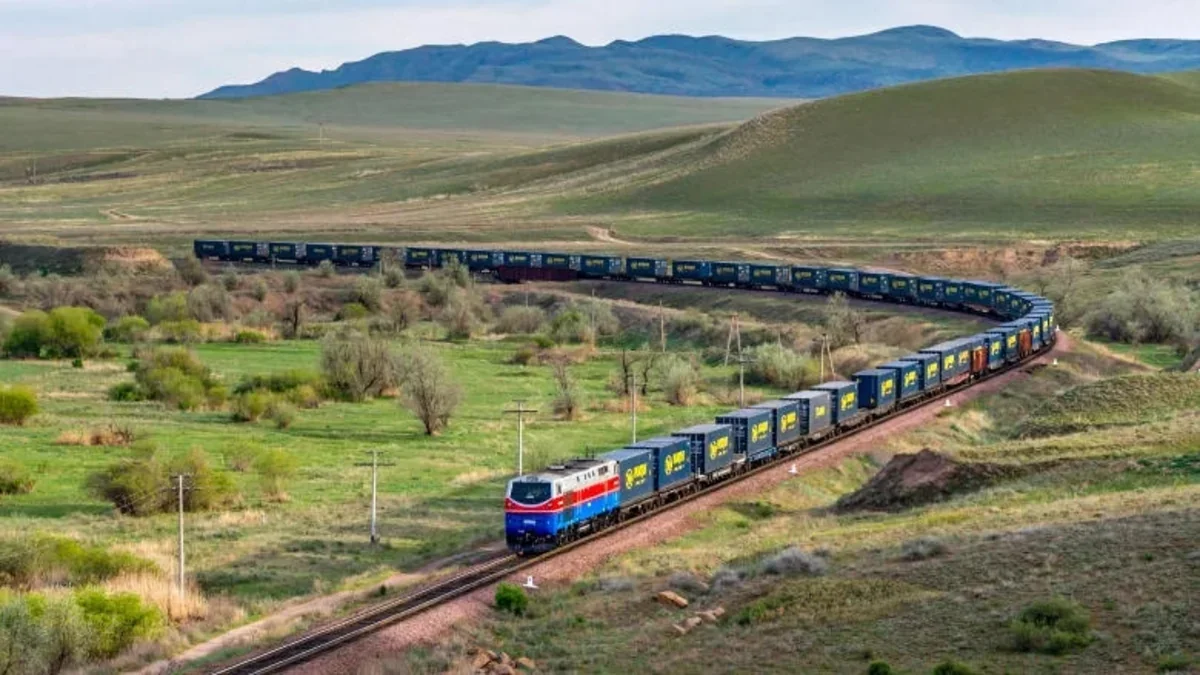
To triple trade volumes along the Middle Corridor (the Trans-Caspian International Transport Route, TITR), ten priority infrastructure and logistics transformations must be implemented in strategically important regions.
According to Report, citing the analytical and consulting platform Elevate Crossroads, the most urgent task in Central Asia is the construction of a railway bypass around Almaty. Currently, all freight rail traffic passes through the center of Kazakhstan's largest city, and the construction of a bypass line would significantly reduce pressure on the urban transport hub and increase train speeds.
In addition, the launch of a new railway route between Uzbekistan and Kazakhstan would enable shippers to use direct connections, eliminating lengthy delays at border crossings. At present, border-crossing procedures take a considerable amount of time. Environmental concerns also require attention: due to climate change, the water level of the Caspian Sea continues to decline, negatively affecting port operations. As a result, the Port of Aktau urgently needs equipment upgrades and expanded berthing capacity to improve cargo-handling efficiency.
In the Black Sea region, the main challenge remains the shortage of rolling stock, particularly locomotives in Georgia, which leads to longer delivery times. The acquisition of new wagons and locomotives could substantially increase the corridor's capacity and overall efficiency. At the same time, railway infrastructure on the Akhalkalaki–Türkiye border section should be modernized, along with an expansion of the local station.
Large-scale work is also required at seaports. Georgia's Port of Poti reached its capacity limits as early as 2023. Expanding its cargo-handling capabilities and improving rail links between the port and inland areas would allow it to accommodate more container vessels and reduce container transit times. Experts identify the Sivas–Kars–Georgia border railway section as the most critical bottleneck in the Middle Corridor's rail infrastructure, requiring urgent modernization.
To prevent logistical congestion around Istanbul, the construction of a high-capacity overland railway line across the Bosphorus via the Third Bridge is envisaged. On the European side, substantial investments are needed in the port and railway infrastructure of Romania and Bulgaria to strengthen domestic and cross-border transport links with Central Europe.
Finally, the tenth key measure along the entire Middle Corridor is the comprehensive improvement of trade facilitation conditions, including better management of border procedures, enhanced service quality, and accelerated digital transformation of all processes.
It should be recalled that the TITR is an international transport corridor connecting China with European countries through Kazakhstan, the Caspian Sea, Azerbaijan, and Georgia. The TITR Association provides information support, facilitates the simplification of administrative procedures, promotes a competitive environment, and seeks to maximize efficiency for participants from various countries, including those not geographically located along the route.
According to statistics from Kazakhstan's Ministry of Transport, cargo volumes transported along the route have shown steady growth: 759,000 tonnes in 2019, 783,000 tonnes in 2020, 586,000 tonnes in 2021, 1.485 million tonnes in 2022, 2.764 million tonnes in 2023, and 4.484 million tonnes in 2024.
Data from the Organization of Turkic States show that cargo volumes transported through the Middle Corridor reached 4.7 million tonnes in 2025 and are expected to increase by another 10% by 2027. By that year, the corridor's annual capacity could reach 10 million tonnes, boosting Azerbaijan's transit potential and creating opportunities to attract additional investment into infrastructure projects.
The target freight volume for the Trans-Caspian International Transport Route by 2030 has been set at 11.4 million tonnes.
Author