
 Baku 22° C
Indian architect explains importance of WUF13
- 16 May, 2026
- 22:53
Stay up to date with the top news!
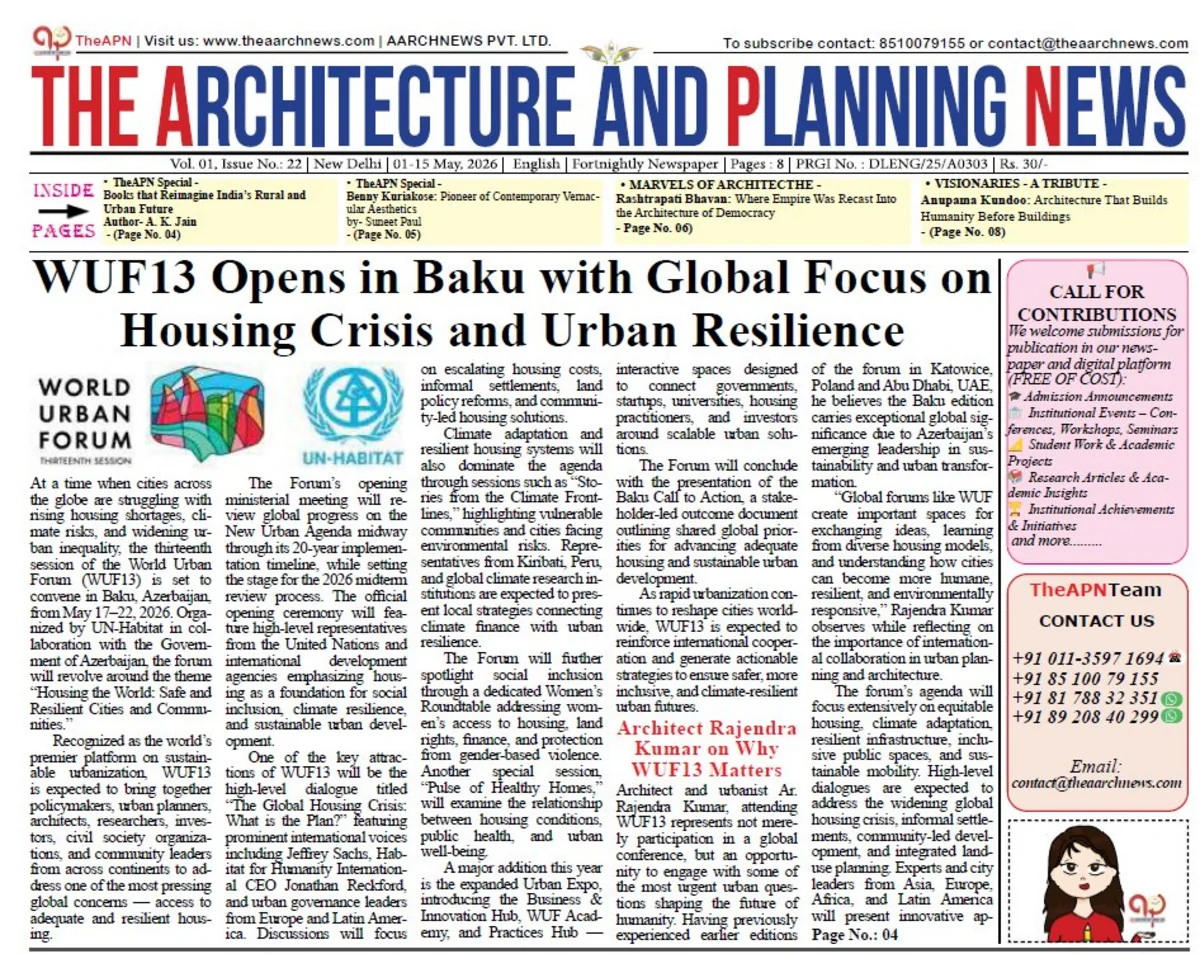
Indian architect, urbanist and academic Rajendra Kumar, who is globally recognized for his work in environmentally sensitive architecture and sustainable development, has explained in his latest article why the 13th Session of the World Urban Forum (WUF13), hosted by Azerbaijan, is important.
Report informs that Kumar's article was published in TheAPN (The Architecture and Planning News).
Referring to Azerbaijan's ancient architectural and urban planning experience and the topics to be discussed at the forum, the architect said the country's urban traditions, located on the Silk Road and reflected in heritage sites such as Icherisheher, the Palace of the Shirvanshahs and the historic center of Shaki, would all be approaches aimed at strengthening urban resilience while improving the quality of architectural life.
According to him, WUF13 will focus on climate-sensitive urbanization. Kumar said the forum would explore ways to adapt public infrastructure to growing environmental risks, especially in regions already facing the severe impacts of climate change.
The Indian architect said discussions linking climate finance, urban governance and local implementation are likely to shape future international urban policies. He said the forum also offers an important opportunity to understand the rapidly developing city of Baku itself. From the Old City to modern symbols such as the Heydar Aliyev Center and the Flame Towers, Baku reflects the complexities of balancing modernization with cultural identity and heritage preservation, he added.
Kumar noted that Azerbaijan's successful hosting of COP29 and then WUF13 demonstrates the country's growing commitment to international dialogue on sustainability, climate action, architecture and future-ready urban development. He said the Azerbaijani president's order declaring 2026 the "Year of Urban Development and Architecture" further highlights the country's efforts to strengthen its architectural heritage while advancing sustainable and inclusive urban growth.
He said modern development projects such as the White City and major reconstruction projects in Shusha show the country's ambition to create sustainable and resilient urban environments for the future.
Kumar said the discussions arising from WUF13 are particularly relevant for Indian cities. As India continues to urbanize rapidly, challenges related to affordable housing, informal settlements, environmental sensitivity, mobility and public infrastructure require integrated and people-centered planning approaches, he said. He added that global forums such as WUF13 offer valuable lessons on how cities can balance growth and sustainability while preserving cultural identity and improving social equity.
Beyond policy discussions, the forum is expected to strengthen international cooperation among governments, universities, design institutes, researchers and creative professionals, Kumar said. He noted that such exchanges could lead to future partnerships, academic initiatives, exhibitions, publications and intercultural cooperation in architecture and urban development.
As the world seeks practical solutions to growing urban crises, WUF13 in Baku is a timely reminder that the future of cities will depend not only on infrastructure and technology, but also on inclusiveness, resilience, cultural continuity and collective global action, he added.
Prominent Indian architect, urbanist, and academician Rajendra Kumar, globally recognized for his work in environmentally sensitive architecture and sustainable development, in his recent article explains why #WUF13 hosted by Azerbaijan matters. pic.twitter.com/F1UMVIDuXD
— Azerbaijan in India (@AzEmbassyIndia) May 16, 2026
Author