
 Baku 19° C
Belgrade hosts Strategic Streams 2026 international conference
- 30 June, 2026
- 23:51
Stay up to date with the top news!
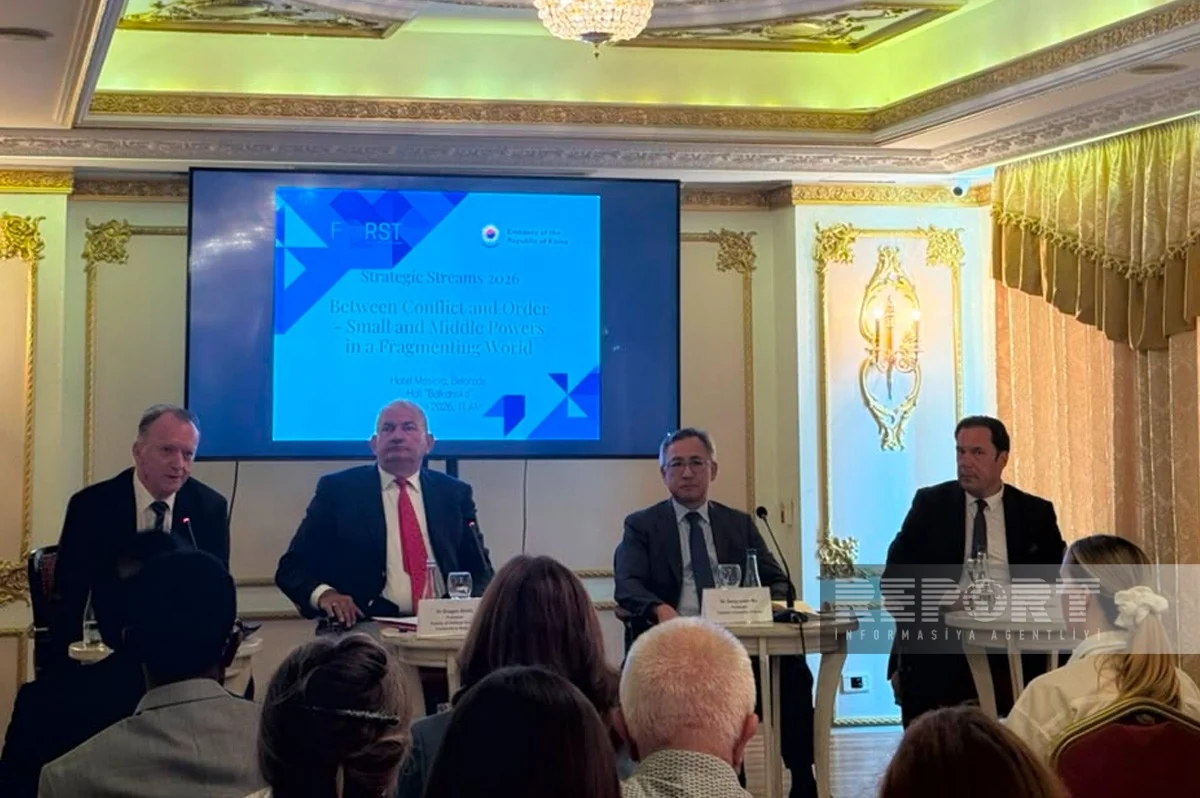
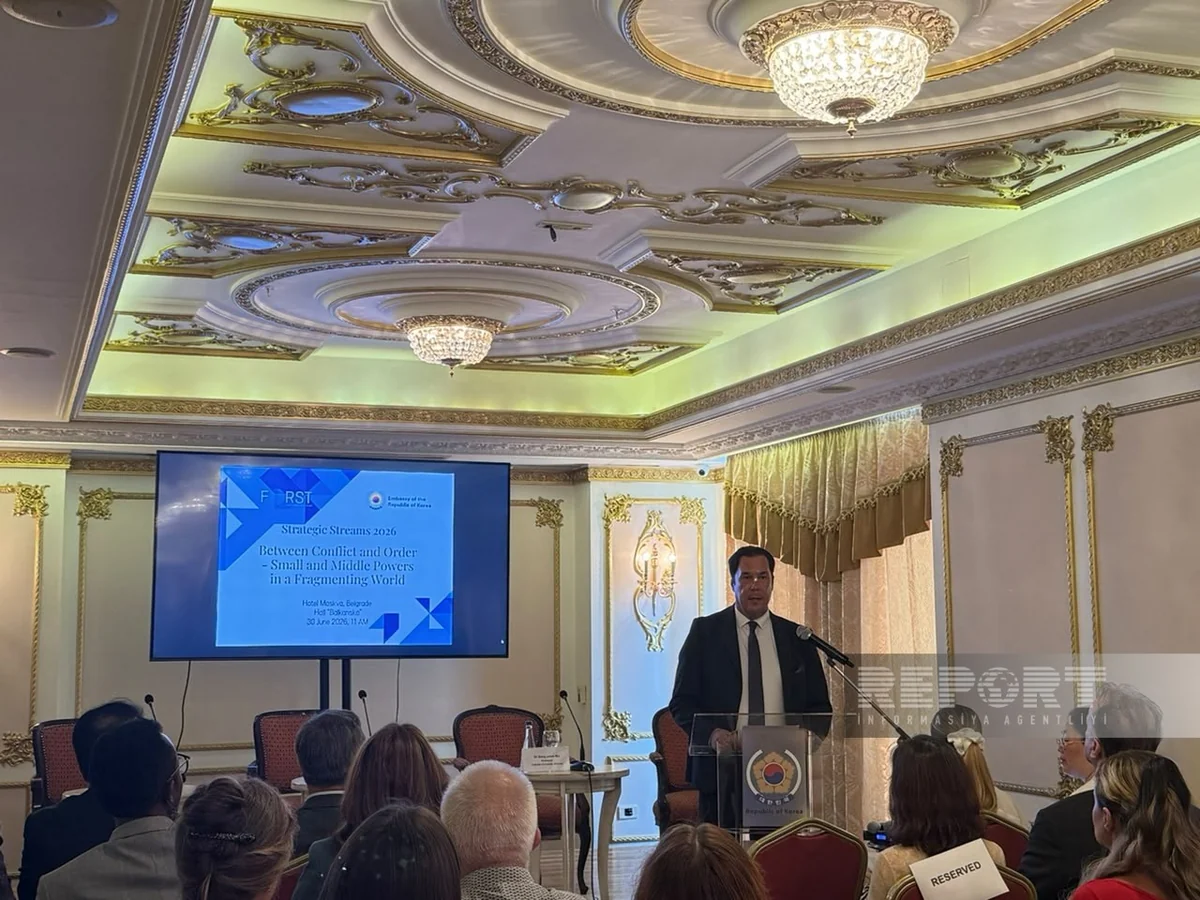
The international conference Strategic Streams 2026 has been held in Belgrade, the capital of Serbia.
Report's Balkan bureau informs that the event, organized with the support of the Forum for Strategic Studies (FORST) and the Embassy of South Korea in Serbia, was dedicated to the topic "Between Conflict and Order: Small and Middle Powers in a Fragmenting World."
Azerbaijan's Ambassador Extraordinary and Plenipotentiary to Serbia Kamil Khasiyev also attended the conference.
In his remarks, FORST President and former member of the Serbian National Assembly Dr. Neven Cvetićanin first spoke about the organization's purpose.
"When we started our work, our main idea was to help understand major strategic transformations as they happen, not after they become history. Today, the need for such strategic thinking seems greater than ever," he said.
Cvetićanin stressed that the international order is going through a deep and rapid transformation.
"We are witnessing a period in which several major strategic processes are taking place at the same time. The first is the war in Europe, the second is instability in the Middle East, the third is growing strategic competition between major powers, the fourth is the transformation of the global economy, especially after recent developments in the Middle East, the fifth is increasing competition in energy and advanced technologies, and finally, the gradual shift of the center of world politics toward the broader Eurasian and Indo-Pacific regions. That is why we chose this year's conference topic. The main strategic question many countries are asking today is how stability can be preserved amid growing instability," he said.
Sang-Yoon Ma, former director-general for policy planning and strategy at the Ministry of Foreign Affairs of South Korea and a professor at the Catholic University of Korea in Seoul, said small and medium powers must now define their own path.
"In such a rapidly changing environment, medium, and perhaps small, states face at least three persistent dilemmas. The first is the dilemma of alignment and economics. Close alignment with a major power brings clear advantages - security guarantees, access to markets and technology, diplomatic support and so on. However, if that major power creates a system of various alliances and arrangements, asymmetric dependencies emerge. At the same time, attempts to reduce excessive dependence on China, the United States or any other partner may be perceived as weakened loyalty, which can create pressure from different directions," he said.
According to him, the second dilemma is the dilemma of interdependence and resilience. Many middle powers, including South Korea, are deeply integrated into global supply chains. Key sectors such as automobiles, semiconductors, petrochemicals and steel are linked to major markets and closely connected production networks. While interdependence brings prosperity, it also creates vulnerability.
"Export controls, tariffs and sudden regulatory changes have shown governments that economic interdependence can quickly become a source of risk. Therefore, strengthening defense capabilities, industrial competitiveness and supply chain resilience is becoming not only an economic issue, but also a strategic agenda item," he said.
He said the third dilemma is the dilemma of normative positioning. Particularly in the post-Cold War period, middle powers have claimed a special role as supporters and sometimes initiators of new rules in areas such as human rights, development and conflict management.
The professor noted that these choices require constant adjustment and recalibration.
"Over the past decade, South Korea's industrial strength and middle-power diplomacy have moved from a marginal position to the center of the Asia-Pacific region. Against the backdrop of intensifying US-China competition, the New Southern Policy was advanced. It was a targeted strategy to reduce Korea's dependence on China and strengthen ties with ASEAN and India," he said.
Author