
 Baku 29° C
Reversible Reactions in Industrial Processes: Equilibrium Control and Optimization
- 28 July, 2026
- 15:04
Abstract
Reversible reactions have been and continue to be a vital part of industrial chemistry, ranging from various chemical processes like the Haber process to optimizing higher yield and reaction rate. This paper clarifies the basic principles of chemical equilibrium and how to optimize yield - also covering the advantages it brings to the environment and economy. Furthermore, key variables affecting equilibrium position - mostly temperature, pressure, concentration, and catalysts - are looked into in depth.
The study also focuses on useful industrial processes, such as the Haber process for production of ammonia, the Contact process for sulfuric acid synthesis, and lastly, hydrogenation reactions used in food and petrochemical industries. Each example will be studied further in the paper, explaining how the reactions have been changed to get more product and in a faster rate, also considering the cost efficiency and sustainability (as they both play a crucial role for economy and the environment). These will also include the engineering optimization, some being recycling unreacted reactant, continuous vs batch processing, and heat management systems.
In addition, the theoretical background about chemical equilibrium will be discussed, such as Le Chatelier"s Principle, the equilibrium constant (K) with reference to various graphs and charts. It concludes that successful industrial application of reversible reactions depends on changing equilibrium conditions to achieve a balance between thermodynamic favorability and kinetic feasibility.
Introduction
Reversible reactions are chemical processes where the reactants can react to form products, and at the same time the products can react to form reactants. Reversible reactions are most of the time shown with the sign: ⇌. These reactions can reach a state of dynamic equilibrium, where the rate of forward reaction (reactants forming products) is equal to the rate of reverse reaction (products forming reactants) and the reaction is taken place in a closed system. In this case, the concentrations of all species are constant. Equilibrium can also be shifted into either side of the reaction and is explained by a key principle Le Chatelier"s Principle, which states that when a system at equilibrium is changed in specific conditions such as temperature, pressure, or concentration, the equilibrium shifts to the opposite of that change. This principle is used in industry to maximize the intended product and at the same time keep an efficient rate. Many real-world processes, such as the Haber process and Contact process, apply these principles.
To elaborate, achieving optimal conditions might not be as simple, as the factors that increase the yield can also reduce the rate of the reaction, and vice versa. Therefore, industries must carefully balance these constraints and apply the best conditions. Furthermore, the economical and environmental consequences of these processes should also be considered, which will be discussed later in the report as well.
Theoretical Background
Le Chatelier"s Principle and factors affecting equilibrium
A vital concept in chemical equilibrium is the Le Chatelier"s Principle, which predicts how a reaction will respond to a certain change made to the conditions. It states that when conditions of a dynamic equilibrium, such as concentration, temperature, or pressure, are changed, the equilibrium shifts to the counteract of that change.
Several factors influence the position of equilibrium in a reversible reaction. First, concentration of compounds highly affects the position. Increasing reactant concentration for instance pushes the system toward product formation, while increasing product concentration favors the reverse reaction. Le Chatelier"s Principle is also applied here: when the concentration of reactants increases, the equilibrium shifts to the opposite (meaning products) side, so more product is formed. At a microscopic level, this shift occurs because a higher concentration of reactant particles leads to more frequent effective collisions, increasing the rate of the forward reaction until a new equilibrium is established.
Next, temperature is also a vital factor. Temperature not only changes the position of an equilibrium, but also the equilibrium constant which will be elaborated on later. In exothermic reactions (reactions where heat is released and external temperature increases, increasing the temperature shifts the equilibrium towards reactants. This happens as the forward reaction releases energy (as its an exothermic reaction), so products have lower energy. When temperature increases, particles gain more energy and it makes it easier for products to turn back into reactants, so equilibrium shifts toward the reactant side. Conversely, in endothermic reactions(reactions where heat is absorbed and external temperature decreases, higher temperatures favor product formation.
In reactions involving gases, pressure changes influence equilibrium by changing volume. According to Le Chatelier"s Principle, increasing pressure shifts equilibrium to the side with fewer gas molecules, while decreasing the pressure shifts it to the side with more gas molecules. To elaborate, increasing the pressure increases how close the particles are to each other, as the volume decreases. So when pressure is increased, they collide more frequently, thus the side with more moles of gas has more particles reacting. Consequently, equilibrium shifts to the side with fewer gas molecules in order to reduce the pressure.
Lastly, catalysts increase the rate at which equilibrium is reached but do not change the position or the equilibrium constant. Catalysts provide an alternative reaction route with lower activation energy. As a result, more particles have enough energy to successfully react so both the forward and backward reactions are increased equally.
Equilibrium diagrams
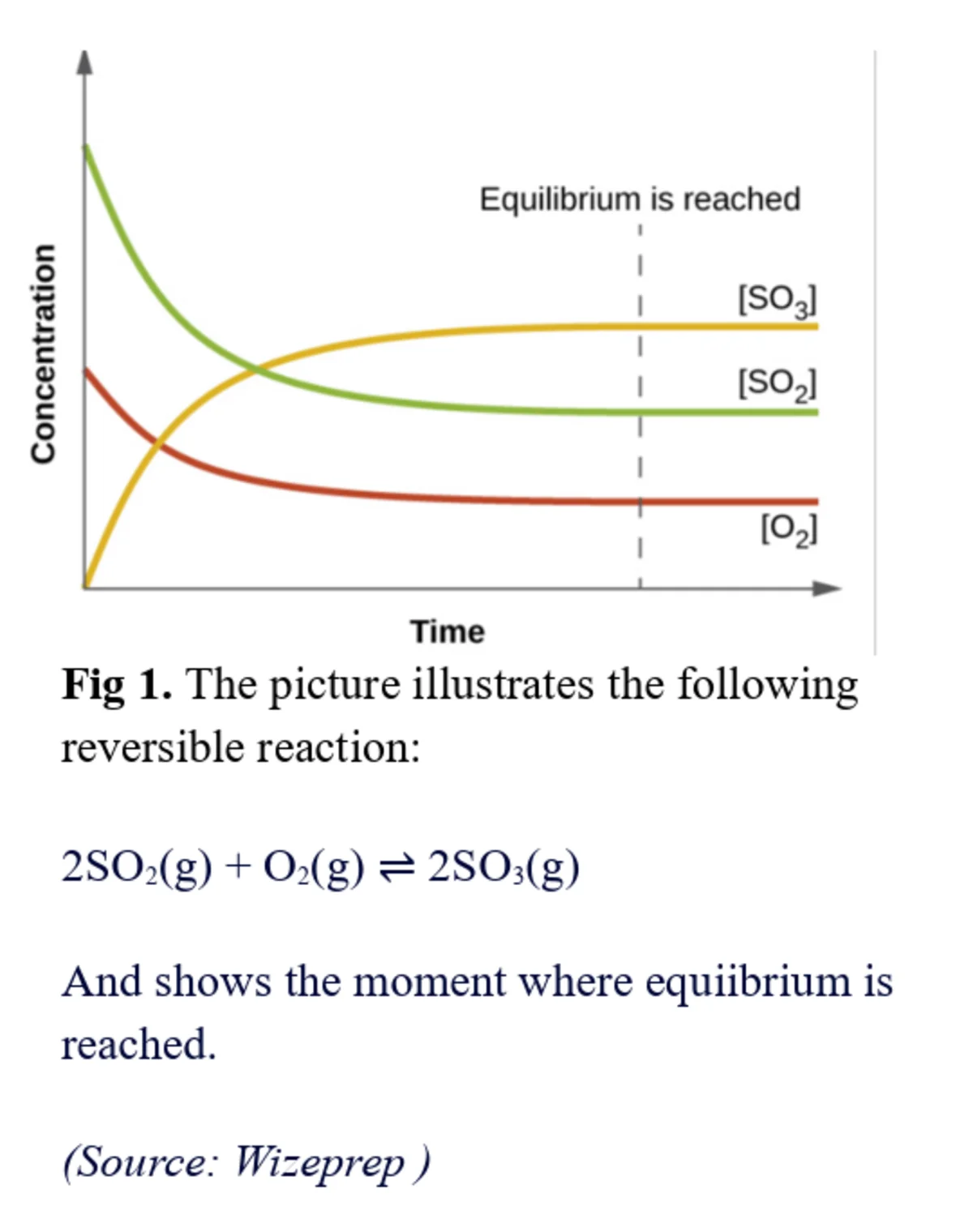
Equilibrium diagrams provide a visual representation of how reactions behave over time and under changing conditions. One of the most common diagrams is the concentration vs. time graph, which shows how reactants and products change until equilibrium is reached. Once it is reached, the concentrations become constant, indicating that the rate of forward and backward reactions is equal.
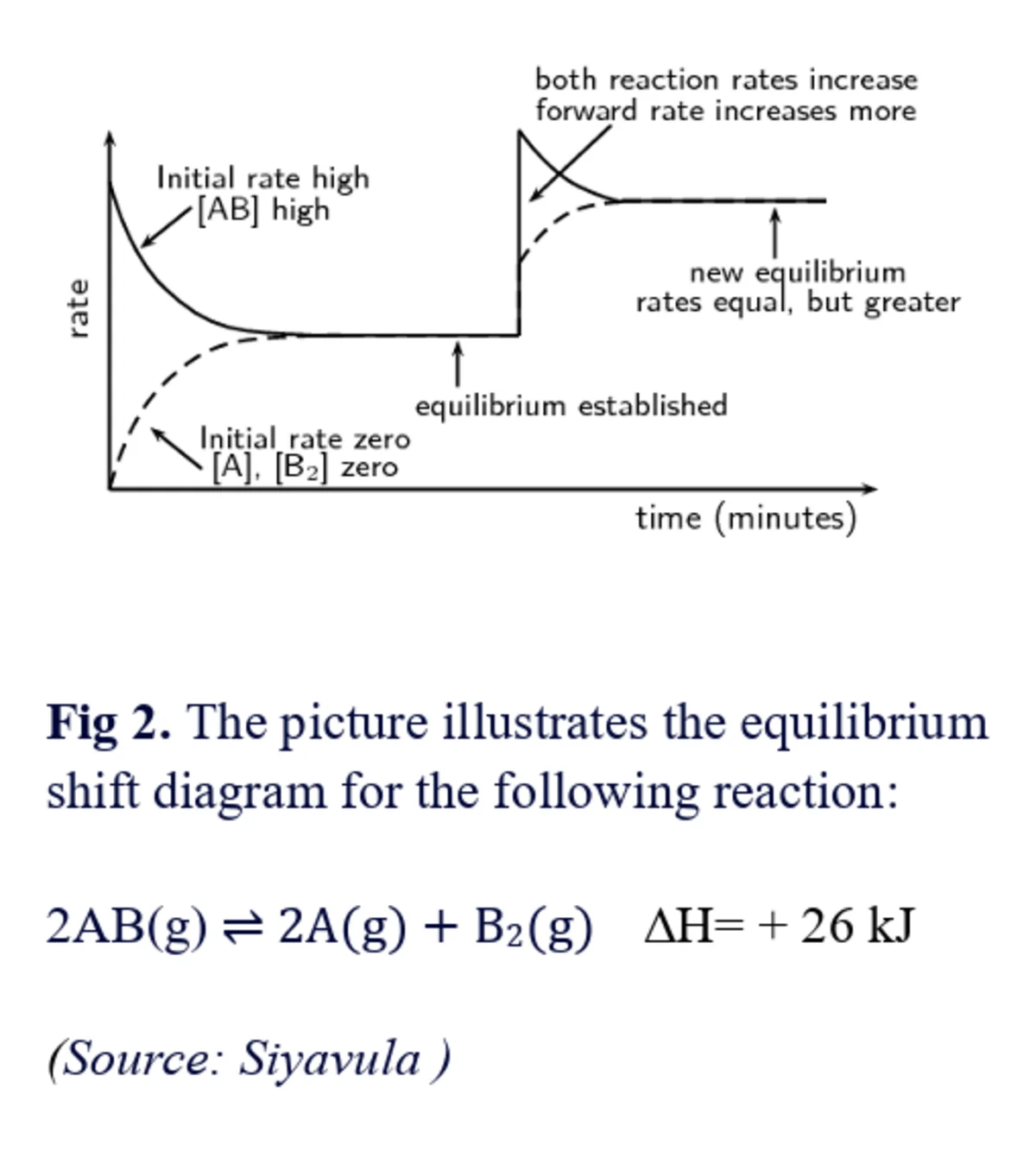
Another vital type is the equilibrium shift diagram, which shows how changes in conditions (such as temperature or pressure) affect the position of equilibrium. These diagrams are useful for understanding the nature of equilibrium and predicting reaction outcomes.
Equilibrium constant
The equilibrium constant is a quantitative measure of position of equilibrium. It is derived from the Law of Mass Action, which states that the rate of a reaction is proportional to the product of concentration of reactants. For a general reversible reaction aA + bB ⇌ cC + dD, the equilibrium constant in terms of concentration is given as:
Kc= ([C]c [D]d ) / ([A]a [B]b)
For gaseous reactions, the equilibrium constant can also be expressed in terms of partial pressure, denoted as Kp. It is given by:
Kp= ((PC) c (PD) d ) / ((PA) a (PB) b )
When the value of the constant is more than 1, then it means that the products are favored, whereas when it is less than 1 the reactants are favored. When it is close to 1 both sides are equally favored. It is also important to mention that K only changes with temperature, otherwise it is constant.
Examples of Industrial
Processes Haber
Process Reaction equation:
𝑁2(𝑔)+3𝐻2(𝑔)⇌2𝑁𝐻3(𝑔)
Conditions:
Temperature: ~400-450 degree
Celsius Pressure: 200 atmospheres
Catalyst: finely powdered iron
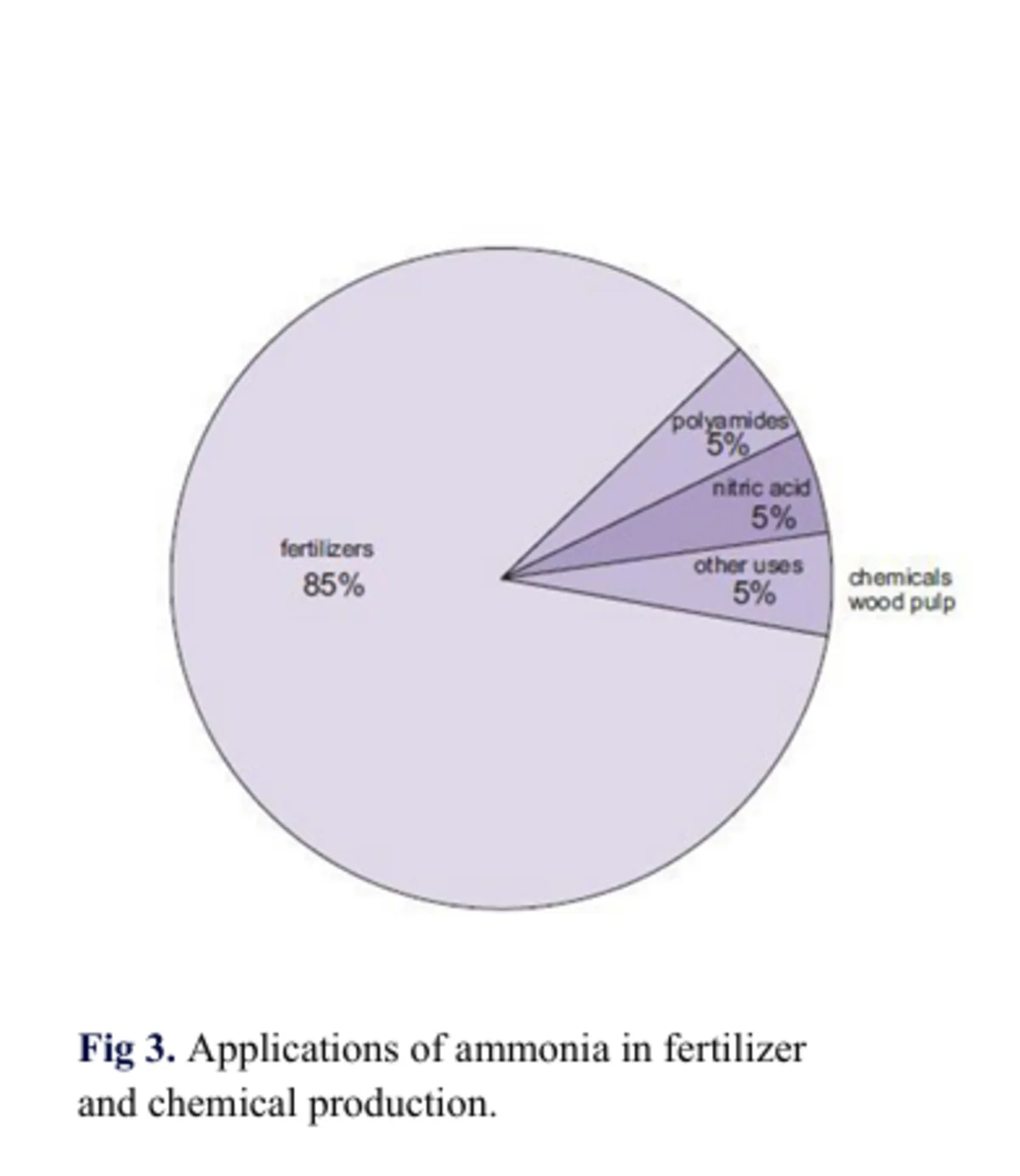
Ammonia is a crucial compound that is used to produce mainly fertilizers such as urea, ammonium salts, and solutions of ammonia.
Ammonia ranks second, to sulfuric acid, as the chemical with the largest production. In 2025, 204 million metric tons of ammonia was produced, which was an increase from the previous year.
The hydrogen is manufactured by many different ways such as from natural gas, naptha, coal, and biomass. The most common way is from natural gas, where methane reacts with steam to produce carbon monoxide and 3 moles of hydrogen. The organic compounds will contain sulfur compounds and hydrogen sulfide, which must be removed using zinc oxide, otherwise they will poison the catalyst needed for the manufacture of synthesis gas. The nitrogen is directly obtained from the fractional distillation of the atmospheric air. In the production, it is important that ammonia is produced faster than it is decomposed.
Contact Process
Reaction equation:
2SO2(𝑔)+O2(𝑔)⇌2SO3(𝑔)
Conditions:
Temperature: ~450-500 degree Celsius
Pressure: 1-2 atmospheres
Catalyst: vanadium (V) oxide
The Contact Process is one of the most vital processes in industry. Sulfuric acid is used in many different ways, but mostly in phosphate fertilizers.
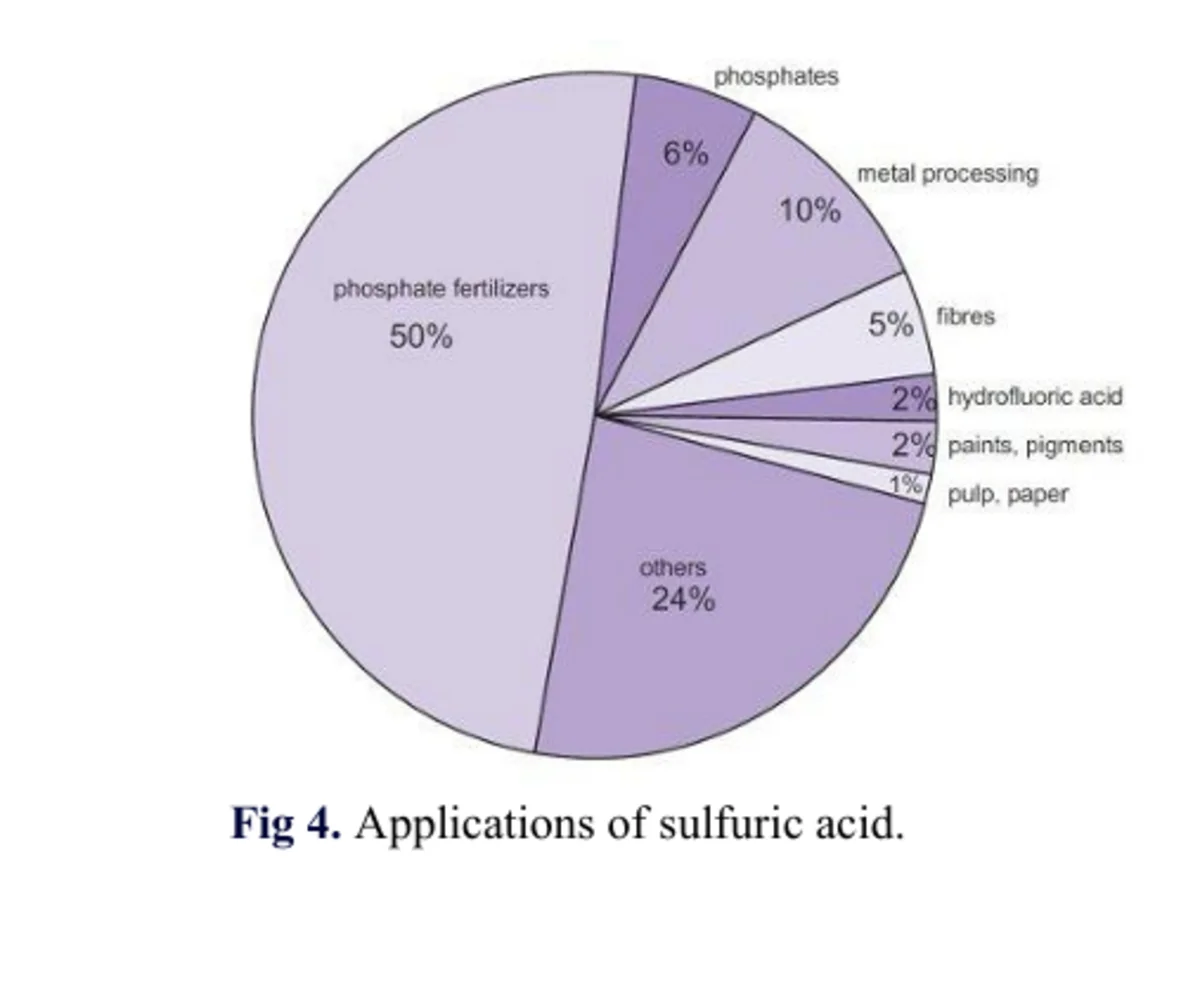
The production of sulfuric acid consists of four vital stages. The first stage being extraction of sulfur, the second conversion of sulfur to sulfur dioxide, the third conversion of sulfur dioxide to sulfur trioxide, and lastly the conversion of sulfur trioxide to sulfuric acid.
In the first stage, sulfur is extracted from natural gas and oil; however, they contain impurities which must be removed before use. Another source of sulfur is as sulfur dioxide by metal refining. Many metal ores occur as sulfides and are roasted to form an oxide and sulfur dioxide, for example in the manufacture of lead:
2PbS(s) + 3O2(g) → 2PbO(s) + 2SO2(g)
Other metals can be copper, nickel, or zinc.
Then Sulfur is sprayed into a furnace and burnt in blast of dry air at about 1300 K to produce sulfur dioxide.
S(s) + O2(g) → SO2(g)
In the third stage, also known as the Contact process. The conditions have been optimized to increase both the rate and yield, using Le Chatelier"s principle. Lastly, sulfur trioxide is converted to sulfuric acid. However, water itself cannot be used for absorption as there is a large temperature rise, and a sulfuric acid mist is formed, which is difficult to handle. Instead, sulfuric acid of about 98% concentration is used. This is kept at this concentration by addition of water and removal of acid at that concentration. To keep the temperature at about 400 K, the heat is removed by heat exchangers. The equation is:
SO3(g) + H2O(I) → H2SO4(I)
Hydrogenation Hydrogenation reactions are among the most important reaction classes in the production of both bulk and fine chemicals. These reactions are also reversible, and are affected when conditions are changed.
When adding hydrogen atoms to an organic compound, double or triple bonds are reduced to single bonds. This reduction enables the formation of C-C single bonds from alkenes and alkynes, C-O bonds from ketones, aldehydes, or esters, and C-N bonds (amines) from amines or nitriles.
There are various types of hydrogenation reactions such as reduction hydrogenation, hydrogenolysis, and catalytic hydrogenation. These reactions are typically carried out using metal catalysts, such as nickel or palladium, which increase the rate by lowering the activation energy.
There are many problems arising from this process such as catalyst poisoning, high energy requirements, and the formation of undesirable by-product, which will be discussed later in the paper.
Engineering Optimization
Compromise between rate and yield
In industrial chemistry, reaction conditions are rarely chosen to maximize either rate or yield alone. Rather, a compromise is found between the two factors to get an optimum reaction. The reason for this is because the conditions that favor the yield, do not always favor the rate.
For example, temperature is often the biggest factor affecting this compromise as in exothermic reactions, temperature has to be decreased to increase yield; however, when this is done it severely decreases the rate and makes the process economically disadvantageous. So a temperature is found that would produce most yield in the shortest time.
As a result, industrial processes are designed using conditions that provide an acceptable reaction rate while maintaining a sufficiently high yield. The Haber Process demonstrates this principle well: although a lower temperature would produce more ammonia, a temperature of approximately 450°C is used to ensure that ammonia is produced at a practical rate. Similarly, the Contact Process uses a temperature of around 450°C as a compromise between achieving a favorable sulfur trioxide yield and maintaining a sufficiently fast reaction. The optimum conditions are often found using equilibrium-yield, rate, and cost curves. The maximum points are found and compared to identify the best option. The optimum temperature is determined experimentally by balancing equilibrium yield, reaction rate, and economic considerations, rather than by maximizing a single factor.
Recycling unreacted reactants
In many industrial equilibrium processes, complete conversion of reactants into products is challenging. Therefore, unreacted reactants are separated from the reaction mixture and recycled back into the reactor. This increases the yield without requiring any other condition changes, which may change the production costs.
For instance, in the Haber Process, only some of the nitrogen and hydrogen gases react during the first pass in the reactor. After the product (ammonia) is removed, the remaining reactants are passed through the reactor again. This improves the efficiency of the process and contributes to sustainability by minimizing raw material consumption and energy losses.
Continuous vs batch processing
Industrial production can be carried out using either continuous or batch processing systems. In batch processing, reactants are put into the reactor, allowed to react for a specific time period, and then removed for the next batch to enter the reactor. This method provides flexibility and is often used in production of pharmaceuticals and chemicals, where small changes in product is required.
On the other hand, continuous processing involves the constant input of reactants and removal of products while the reaction is taking place. This method is often used in equilibrium processes like the Haber and Contact processes. Continuous processing allows conditions to be optimal to improve efficiency, and shifts the equilibrium towards the product side as reactants are constantly removed.
Compared with batch processing, continuous systems generally offer higher production rates, lower operating costs, and better product quality, making them the preferred choice in industry. Heat management systems Most reversible reactions, like hydrogenation reactions, are exothermic, meaning that they release heat when reacting. Managing such high temperatures can be challenging: an excessive heat can cause problems such as a rapid increase in temperature or decomposition of the reactants. One common method is the use of heat exchangers, which transfer thermal energy between process streams. In exothermic reactions like Haber and Contact processes, excess heat is removed to maintain optimum temperature and protect the equipment from overheating. The excess heat can be reused elsewhere in the plant, reducing energy consumption and cost. Reaction calorimetry is used to find thermodynamic and kinetic parameters, which are vital for the optimization of chemical processes and safety evaluations. Accurate measurements are essential for reliable data, otherwise risk of accidents and environmental consequences will arise.
Environmental and Economical Evaluations
Many industrial equilibrium processes require large amounts of energy to maintain the high temperatures and pressure. Such conditions greatly affect the operating costs and emissions. As a result, industries must carefully balance production efficiency with energy requirements to minimize costs and environmental impact. Even a small improvement in energy efficiency can result in significant economic savings because many plants operate continuously for a long time.
Despite its importance in fertilizer production, the Haber Process has a significant environmental impact due to carbon dioxide (CO2) emissions. The reaction does not produce CO2 directly; however, carbon dioxide is produced mainly during the production of hydrogen. Hydrogen is formed by methane reacting with steam to produce hydrogen and carbon monoxide, which is further reacted with steam to produce carbon dioxide.
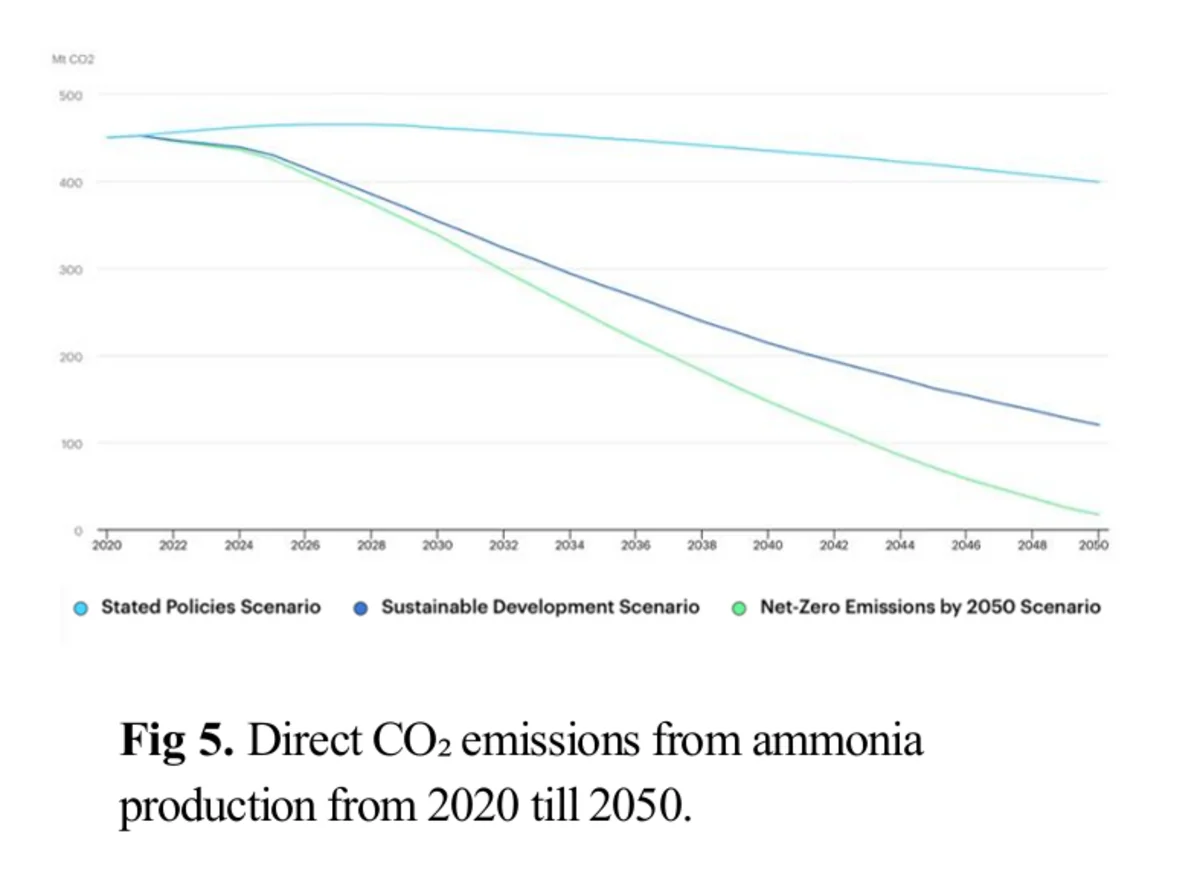
The production of carbon dioxide has significant environmental consequences. As a greenhouse gas, carbon dioxide traps heat in the Earth"s atmosphere, leading to global warming and climate change. However, action has been taken throughout the past couple of decades to decrease the production of carbon dioxide.
As seen from the graph, various different approaches have been used to decrease the total emissions. One way, was the use of ‘green" hydrogen, produced by the electrolysis of water using renewable electricity instead of natural gas. Furthermore, catalysts also reduce the amount of emissions as the time taken for the reaction to complete is less with a catalyst. These significantly reduced the carbon dioxide emissions.
Another way of reducing the CO2 emissions is by using hydroxylated graphene. Exploiting the polarity difference between N2/H2 and NH3, as well as the universal proton acceptor behavior of NH3, a strong shift of the equilibrium of the HaberBosch process towards ammonia has been demonstrated. This increases the yield of ammonia, thus requiring less carbon dioxide to be emitted.
Hydrogenation reactions, like Contact process, can also have potential environmental impacts. Specifically, due to the use of catalysts and solvents, which can generate waste and potentially harm the environment. To alleviate these potential environmental impacts, scientists are now utilizing chemical reaction modeling and simulation software to reduce the use of hazardous materials. By using computer simulations, engineers can predict the outcome of the reaction and optimize the conditions to minimize waste and reduce the use of harmful chemicals. Additionally, reaction modeling can be used to identify alternative, more environmentally friendly catalysts, and solvents, which can further reduce the impact of the reaction on the environment. By using chemical reaction modeling to design and optimize hydrogenation reactions, it is possible to minimize waste and reduce the environmental impact while maintaining or improving the efficiency and cost of the reaction.
Conclusion
Chemical equilibrium is a key concept in chemistry and plays an important role in many industrial processes. This paper has demonstrated how equilibrium is established and how some certain factors affect it. Moreover, it has shown how the equilibrium constant helps simplify the demonstration.
The Haber Process, Contact Process, and hydrogenation reactions demonstrate how these principles are applied in industry. Since the conditions that give the highest yield do not always produce the fastest reaction, industries must find a balance between reaction rate and product yield. Different ways of improving efficiency while reducing waste and energy use have also been shown, such as recycling, continuous processing, and heat management systems.
Finally, a balance between economic success and environmental consequences must take place, which has also been discussed in the paper. As technology continues to improve, chemical engineers will be able to design processes that are both more efficient and more environmentally friendly.
Written By: Orkhan Mardanli
School: Landau School, Azerbaijan
Teacher: Mr Kamran Mammadli
References:
• Hydrogenation Reactions https://www.mt.com/nz/en/home/applications/L1_AutoChem_Applications/L2_Reaction Analysis/hydrogenation.html
• Haber Process https://www.essentialchemicalindustry.org/chemicals/ammonia.html
• Contact Process https://www.essentialchemicalindustry.org/chemicals/sulfuric-acid.html
• Ammonia Market Demand: Early 2025 Sees Price Recovery After Steep 2023 Decline (2025) https://www.alchempro.com/industry-article/10571/ammonia-market-demandearly-2025-sees-price-recovery-after-steep-2023-decline
• The Haber Process Made Efficient by Hydroxylated Graphene (2016) https://arxiv.org/abs/1603.08041
• Direct CO₂ emissions from ammonia production, 2020-2050 (2021) https://www.iea.org/dataand-statistics/charts/direct-co2-emissions-from-ammonia-production-2020-2050
• Equilibrium https://www.wizeprep.com/textbooks/undergrad/chemistry/4017/sections/104641
• Chemical Equilibrium https://www.siyavula.com/read/za/physical-sciences/grade12/chemical-equilibrium/08-chemical-equilibrium-03